Quick Answer
FeCoNiCr High Entropy Alloys are multicomponent metallic materials, often supplied as spherical powder, that combine iron, cobalt, nickel, and chromium in near-equiatomic proportions. They are chosen for additive manufacturing when engineers need a strong balance of ductility, corrosion resistance, thermal stability, and microstructural uniformity that conventional single-base alloys may not deliver. In practical AM use, FeCoNiCr compositions are especially relevant for research-driven aerospace, energy, tooling, and cryogenic applications where compositionally complex alloys can outperform standard stainless or nickel alloys in selected service windows.
What Is FeCoNiCr High Entropy Alloys
FeCoNiCr High Entropy Alloys are a subset of the broader high-entropy alloy family, a class of materials built around several principal elements rather than one dominant base element with minor additions. In the FeCoNiCr system, iron, cobalt, nickel, and chromium are typically blended in roughly similar atomic ratios to encourage the formation of a simple solid-solution structure rather than a brittle network of intermetallic phases. This design philosophy distinguishes high-entropy alloys from classical stainless steels, nickel superalloys, and cobalt alloys, which are usually optimized around one main matrix element.
Within additive manufacturing, FeCoNiCr is often discussed alongside the better-known CrMnFeCoNi Cantor alloy, but it is not identical. Removing manganese changes phase stability, oxidation behavior, density, and processing response. The quaternary FeCoNiCr system is therefore best treated as its own alloy family, especially when supplied as powder for laser powder bed fusion, directed energy deposition, or experimental powder metallurgy.
FeCoNiCr High Entropy Alloys in the compositionally complex alloy family
The term high-entropy alloy originally referred to the idea that mixing multiple principal elements in substantial fractions could favor simple crystal structures because of high configurational entropy. In practice, entropy is only one part of the story. Atomic size mismatch, mixing enthalpy, valence electron concentration, and diffusion kinetics also influence what structure forms and how stable it remains during printing and service.
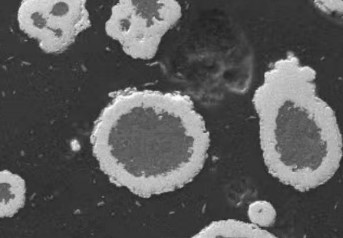
For FeCoNiCr, the most common expectation is an FCC-dominant solid solution with good ductility and relatively stable deformation behavior across a wide temperature range. That makes the alloy family attractive to researchers and advanced manufacturers seeking alternatives to conventional [high-entropy alloy feedstocks] that may offer different balances of strength, corrosion resistance, or cryogenic toughness.
Why FeCoNiCr exists as an additive manufacturing powder
FeCoNiCr is not primarily a legacy wrought grade adapted for powder; it is a materials-design platform that became especially relevant once powder-based manufacturing made experimental alloys easier to process. AM allows engineers to screen novel chemistries, adjust heat-treatment paths, and build small batches of complex parts without the tooling cost associated with casting or forging development. For a relatively new alloy family, that flexibility is a major advantage.
The powder route also helps exploit one of the core attractions of high-entropy alloys: tunability. Small composition shifts, thermal treatments, or secondary additions can move the alloy toward higher strength, better corrosion resistance, or improved thermal stability. That is why FeCoNiCr often appears in prototype programs, R&D projects, and specialized low-volume applications rather than in commodity mass production.
Core characteristics of FeCoNiCr AM powder
The defining behavior of FeCoNiCr is not extreme hardness or ultra-high temperature capability. Instead, it is valued for a combined property set: good ductility, moderate-to-high strength, promising corrosion resistance, and stable solid-solution microstructures that respond well to AM experimentation. In many cases the main attraction is single-phase FCC stability or near-single-phase behavior, which simplifies interpretation of process-property relationships.
In additive manufacturing, FeCoNiCr is often selected less for a single record-setting property than for how reliably it balances several useful ones at the same time.
How FeCoNiCr differs from conventional alloys
Compared with 316L stainless steel, FeCoNiCr may offer higher strength potential while maintaining good ductility. Compared with some nickel superalloys, it can be easier to position as a broad mechanical and corrosion material rather than a narrow hot-section alloy. Compared with cobalt-chromium systems, it often aims for better all-around deformation behavior rather than maximum wear resistance or biocompatibility.
That broader context matters because FeCoNiCr is still an emerging engineering choice. Buyers are usually not asking whether it can replace every stainless or nickel alloy. They are asking where it offers a meaningful benefit in AM-driven design, especially in applications that reward compositionally complex metallurgy.
Chemical Composition
The baseline FeCoNiCr alloy is typically described in near-equiatomic or near-equal atomic fractions of iron, cobalt, nickel, and chromium. In powder supply, that composition may be expressed either in atomic percent for scientific work or in weight percent for procurement. Because cobalt and nickel are heavier than iron and chromium, the weight percentages are not exactly equal even when the atomic ratios are. Residual oxygen, nitrogen, sulfur, and carbon are also important because they can affect corrosion behavior, ductility, and print consistency.
Typical composition of FeCoNiCr High Entropy Alloys
| Element | Typical wt% | Metallurgical Role | AM / PM Relevance |
|---|---|---|---|
| Fe | 23.0–27.0 | Contributes to matrix stability, strength, and cost balance | Supports FCC solid solution and influences thermal expansion |
| Co | 23.0–27.0 | Raises strength, thermal stability, and stacking-fault behavior | Important for deformation response and elevated-temperature stability |
| Ni | 23.0–27.0 | Stabilizes FCC structure and supports ductility and corrosion behavior | Helps maintain good toughness and processing tolerance |
| Cr | 23.0–27.0 | Improves corrosion and oxidation resistance | Key for passive-film formation and environmental durability |
| C | ≤0.05 | Residual impurity kept low unless intentionally modified | Excess carbon can promote carbides and alter ductility |
| O | Typically low, often ≤0.10 | Surface oxide / contamination indicator | Critical for laser absorptivity, defect control, and corrosion performance |
| N | Typically low, often ≤0.05 | Residual gas element | Can strengthen slightly but may reduce toughness if excessive |
| S + P | Controlled trace levels | Residual impurities | High levels can impair ductility and powder cleanliness |
Because the alloy family is still evolving, some suppliers offer slight composition shifts around the equiatomic target to tune performance. A small change in chromium can influence corrosion behavior, while changes in cobalt or nickel can alter stacking-fault energy and deformation mode. That means chemistry tolerances should be interpreted with the intended application in mind rather than as a one-size-fits-all commodity grade.
The role of each principal element
Iron is the economical structural contributor and helps define the alloy’s density and mechanical baseline. Cobalt influences phase stability and can raise work-hardening behavior, although it also increases raw material cost. Nickel strongly supports the FCC matrix and contributes to toughness, while chromium is the main source of passivation and oxidation resistance.
Together, these elements create a compositionally complex system in which no single element dominates the matrix in the classic metallurgical sense. That complexity contributes to sluggish diffusion and solid-solution strengthening, two concepts frequently cited when explaining why high-entropy alloys behave differently from conventional steels or superalloys.
Why weight percent and atomic percent both matter
Researchers often speak about FeCoNiCr in atomic fractions because phase formation is easier to interpret that way. Buyers, however, usually receive certificates in weight percent because that is standard in powder commerce. Technical teams should therefore confirm whether a datasheet is describing the alloy scientifically or commercially, especially when comparing it with academic publications.
Impurity control in FeCoNiCr spherical powder
Like many advanced AM materials, FeCoNiCr benefits from low oxygen, tight PSD, and smooth particle morphology. Oxide contamination can degrade ductility and interfere with corrosion performance, while uncontrolled carbon can shift the alloy away from its intended single-phase behavior. For that reason, powder cleanliness is not a minor procurement issue; it is part of the alloy design logic itself.
Readers evaluating the alloy family against more established systems often compare it with [nickel alloy powder grades] and [cobalt-based alloy powders] to see whether a compositionally complex alloy really adds value in a given design window.
Physical and Mechanical Properties
FeCoNiCr is notable because it combines respectable strength with unusually good ductility for a multicomponent advanced alloy. Its room-temperature properties often look more balanced than spectacular, but the alloy becomes more interesting when temperature, strain hardening, and corrosion behavior are considered together. In additive manufacturing, final values depend on porosity, grain size, residual stress, and heat treatment, so published numbers should be treated as indicative ranges rather than universal guarantees.
Typical properties of FeCoNiCr High Entropy Alloys
| Property | Typical Value | Unit | Test Standard / Condition |
|---|---|---|---|
| Density | 8.10–8.40 | g/cm³ | Typical nominal alloy density |
| Solidus Temperature | 1320–1370 | °C | Typical composition-dependent range |
| Liquidus Temperature | 1370–1430 | °C | Typical composition-dependent range |
| Tensile Strength | 650–900 | MPa | Typical consolidated AM or wrought-like condition |
| Yield Strength (0.2%) | 250–500 | MPa | Typical annealed to moderately work-hardened condition |
| Elongation | 25–55 | % | Typical room-temperature ductile condition |
| Hardness | 180–280 | HV | Typical as-built to heat-treated range |
| Thermal Conductivity | 11–16 | W/m·K | Typical near room temperature |
| Elastic Modulus | 180–210 | GPa | Typical nominal range |
| Electrical Resistivity | 0.9–1.3 | µΩ·m | Typical compositionally complex alloy range |
One reason these alloys draw interest is that the strength-ductility combination remains competitive even when the microstructure is relatively simple. A stable FCC matrix can accommodate deformation without the abrupt brittleness seen in some complex intermetallic systems. That makes FeCoNiCr useful for designers who want advanced-alloy behavior without a severe ductility penalty.
Mechanical behavior of FeCoNiCr AM parts
As-built FeCoNiCr components often show fine cellular or dendritic features from rapid solidification, and these can raise strength relative to coarse-grained wrought analogs. Heat treatment may reduce residual stress and homogenize segregation, sometimes lowering strength slightly while improving toughness or dimensional stability. The ideal path depends on whether the part is being optimized for tensile behavior, fatigue, corrosion, or thermal exposure.
Cryogenic and low-temperature performance
A notable reason the broader FeCoNiCr-based family became popular in research is its good low-temperature toughness. FCC high-entropy alloys often retain ductility and strain-hardening capacity at cryogenic temperatures better than many conventional structural alloys. For that reason, FeCoNiCr is frequently discussed in the same technical space as cryogenic stainless steels and certain nickel alloys.
This does not mean every FeCoNiCr build is automatically cryogenic-ready. Qualification still requires density control, crack-free builds, and application-specific testing. But the alloy’s microstructural logic makes excellent cryogenic toughness one of its most compelling differentiators.
Corrosion and thermal stability
Chromium helps the alloy form a passive surface film, while nickel contributes to general corrosion resistance and structural stability. In many environments, FeCoNiCr can perform better than plain steels and competitively with some stainless grades, though results vary with chloride level, surface finish, and porosity. Thermal stability is generally good for intermediate temperatures, but it is not a direct replacement for nickel superalloys in the hottest turbine-class service.
Property interpretation for procurement
A common mistake is to quote one academic tensile value as though it defines the entire alloy family. FeCoNiCr results vary materially with composition precision, powder route, AM process, and post-treatment. Buyers should therefore focus on processing condition and microstructure, not only on nominal alloy name.
Specifications and Available Grades
FeCoNiCr powder is typically sold as a research-grade or engineering-grade material with specification emphasis on chemistry, particle size distribution, morphology, and oxygen content. Because it is not yet a mass-market alloy like 316L or Ti-6Al-4V, suppliers often define grades by intended process window rather than by a universally recognized industrial standard. For AM users, that is not a disadvantage as long as the data package is complete and the powder is reproducible.
Typical FeCoNiCr High Entropy Alloys powder grades
| Supply Grade / Condition | PSD Range | Apparent Density | Tap Density | Hall Flow | Oxygen / Sphericity / Cross-Reference |
|---|---|---|---|---|---|
| FeCoNiCr-PBF15-45 | 15–45 µm | 4.1–4.8 g/cm³ | 4.8–5.6 g/cm³ | 15–24 s/50 g | O typically ≤0.10 wt%; high sphericity; LPBF-focused fraction |
| FeCoNiCr-PBF15-53 | 15–53 µm | 4.2–4.9 g/cm³ | 4.9–5.7 g/cm³ | 15–23 s/50 g | O typically ≤0.10 wt%; common AM build cut |
| FeCoNiCr-DED45-105 | 45–105 µm | 4.3–5.0 g/cm³ | 5.0–5.8 g/cm³ | 13–22 s/50 g | O typically ≤0.08 wt%; suited to DED and cladding |
| FeCoNiCr-PM53-150 | 53–150 µm | 4.4–5.1 g/cm³ | 5.1–5.9 g/cm³ | 12–21 s/50 g | O typically ≤0.08 wt%; PM, spray, and coarse-feed applications |
| Test / Standards Context | — | ASTM B212 typical | ASTM B527 typical | ASTM B213 typical | Chemistry supplier-qualified; PSD and AM language aligned with research and ISO/ASTM usage |
The apparent density and tap density values are powder-packing measurements, not final part density. A powder with excellent packing can still require process optimization to reach near-full density in the built part. Likewise, a high-sphericity powder may not print well if oxygen level, recoating behavior, or laser absorption are poorly controlled.
FeCoNiCr High Entropy Alloys PSD by process
For laser powder bed fusion, the most common windows are 15–45 µm and 15–53 µm because they support thin-layer spreading and finer feature resolution. Directed energy deposition uses coarser cuts such as 45–105 µm for stable feeder performance. Powder metallurgy and spray applications can tolerate or even prefer 53–150 µm fractions depending on compaction and deposition requirements.
Standards and documentation
FeCoNiCr does not currently map neatly onto a universally adopted AMS or ASTM product standard dedicated to this exact high-entropy chemistry. Instead, suppliers and buyers rely on generic powder test methods and AM terminology to define what is being delivered. The ISO/ASTM 52900 terminology page is often useful for aligning process language, while the ASTM B213 Hall flow standard helps frame powder flow measurement and the NIST additive manufacturing research program provides useful context on measurement and qualification thinking.
What purchasers should request
Beyond the certificate of analysis, purchasers should ask for PSD curve, morphology images, oxygen and nitrogen limits, Hall flow, apparent density, tap density, and recommended process route. If corrosion, cryogenic service, or fatigue is important, indicative post-build data in the relevant condition are more valuable than a generic brochure property list.
Manufacturing Process
Powder production route strongly influences the usefulness of FeCoNiCr in AM. Because the alloy family is often used in research and advanced engineering rather than high-volume commodity production, buyers tend to care about morphology, cleanliness, and composition precision as much as price per kilogram. Gas atomization is common, but PREP, VIGA, and EIGA are all relevant when tighter control is needed.
Process comparison for FeCoNiCr spherical powder
| Process | Sphericity | Oxygen Pickup | PSD Control | Throughput | Relative Cost |
|---|---|---|---|---|---|
| Gas Atomization (GA) | High | Low to moderate | Good | High | Medium |
| PREP | Very high | Very low | Good | Medium | High |
| VIGA | High to very high | Low | Very good | Medium | Medium-high |
| EIGA | Very high | Very low | Very good | Medium | High |
| Water Atomization | Low to moderate | Higher | Broad | Very high | Low |
Gas-atomized FeCoNiCr High Entropy Alloys powder
GA is usually the most scalable method for FeCoNiCr powder. It offers a reasonable compromise between cost, throughput, and spherical morphology, which is why many AM users start there. With proper inert melting and atomization practice, gas-atomized powder can achieve good flowability and sufficiently low oxygen for routine LPBF or DED development.
The drawback is that GA may leave more satellites or slightly rougher surfaces than premium routes. For many applications that is acceptable, but for ultra-clean research or tight-flow specifications, buyers may prefer a more controlled process.
PREP, VIGA, and EIGA trade-offs
PREP can generate highly spherical powder with minimal contamination because droplets form from a rotating electrode rather than from a poured melt stream. VIGA combines vacuum induction melting with inert gas atomization, offering strong chemistry control and good cleanliness. EIGA, which uses induction melting of a feed rod prior to atomization, is also valued for low contamination and high-quality spherical powder.
For a compositionally complex alloy like FeCoNiCr, these routes can reduce segregation and help maintain low-oxygen spherical powder suitable for demanding process qualification. The trade-off is higher cost and, in some cases, lower throughput than conventional GA.
Why water atomization is less common
Water atomization is economical, but it typically produces more angular particles with higher oxidation levels. That makes it a weaker fit for premium powder bed fusion applications, where spreadability and clean fusion are essential. It can still serve certain PM or lower-cost experimental uses, but it is rarely the first choice for high-end AM work.
Powder route and final alloy performance
Manufacturing route affects not only powder handling but also the final microstructure after printing. Cleaner powder can reduce oxide-related defects, while better sphericity improves layer consistency and feeding behavior. In emerging alloys such as FeCoNiCr, that process stability is especially important because developers are often trying to separate true alloy effects from avoidable powder-quality noise.
Applications by Industry
FeCoNiCr remains more specialized than mainstream AM alloys, but its applications are broadening as high-entropy alloy research matures. It is most relevant in sectors where a balanced mix of ductility, corrosion resistance, and temperature tolerance matters, and where the value of novel alloy design outweighs the cost of qualification. That profile fits advanced aerospace, cryogenic engineering, energy systems, tooling R&D, and selected chemical processing hardware.
Aerospace and cryogenic engineering
Aerospace interest in FeCoNiCr is driven less by turbine-blade temperature extremes and more by structural stability, fracture resistance, and cryogenic potential. The alloy family is being explored for tanks, brackets, ducts, and research components that may benefit from good low-temperature toughness and AM-enabled weight reduction. It is particularly appealing where conventional aluminum or stainless alloys leave an unresolved compromise between strength and toughness.
Energy, hydrogen, and low-temperature process equipment
Hydrogen systems, LNG hardware, and other low-temperature or thermally variable environments are natural research targets for FeCoNiCr. The alloy’s ductility and corrosion behavior make it a plausible candidate for parts that face thermal cycling or cold service. In such sectors, AM also helps reduce lead times for specialized geometries and prototype hardware.
Tooling, mold inserts, and industrial R&D parts
FeCoNiCr is not a default production mold material, but it is useful for experimental inserts, function-driven prototypes, and test fixtures where engineers want to study wear, thermal response, or multiphysics behavior. Because the alloy can combine mechanical resilience with decent corrosion resistance, it may outperform basic stainless or carbon steels in selective tooling roles.
Oil, gas, and chemical process hardware
In environments where corrosion is more important than extreme hardness, FeCoNiCr can be considered for pump-related components, flow-control prototypes, and process-contact hardware. The decision usually depends on whether a custom geometry or high-entropy alloy behavior justifies the cost relative to 316L, duplex stainless, or nickel alloys.
Research institutions and advanced materials programs
Perhaps the most active user base today is still the R&D community. Universities, labs, and OEM materials groups use FeCoNiCr to investigate deformation mechanisms, corrosion behavior, powder-process relationships, and alloy modifications. This fits naturally beside broader portfolios that include [titanium alloy powders] for lightweight structures and conventional engineering alloys for benchmark comparison.
Comparison with Alternative Materials
FeCoNiCr competes less with one specific legacy alloy than with a set of alternatives that each solve part of the same problem. The most relevant comparison materials are 316L stainless steel, Inconel 625, CoCrMo, and the CrMnFeCoNi Cantor alloy. The key question is not which alloy is “best” in isolation, but which one offers the most useful balance for the application at hand.
FeCoNiCr High Entropy Alloys versus alternative materials
| Material | Density (g/cm³) | Strength / Ductility Balance | Relative Cost | Printability | Corrosion Resistance |
|---|---|---|---|---|---|
| FeCoNiCr High Entropy Alloys | 8.1–8.4 | High ductility with moderate-to-high strength | High | Good with qualified powder | Good to very good |
| 316L stainless steel | 7.9–8.0 | Moderate strength, very good ductility | Low to medium | Excellent | Very good |
| Inconel 625 | 8.4–8.5 | Good strength, strong elevated-temperature stability | High | Good | Excellent |
| CoCrMo alloy | 8.3–8.5 | High strength and wear resistance, lower ductility than FeCoNiCr | High | Good | Very good |
| CrMnFeCoNi Cantor alloy | 7.8–8.1 | Excellent toughness, especially at low temperature | High | Good | Good |
Against 316L, FeCoNiCr generally offers a more advanced strength-ductility profile but at higher alloy cost and with less industrial standardization. Against Inconel 625, it is less of a hot-corrosion superalloy and more of a balanced structural corrosion material. Against CoCrMo, it often trades peak wear resistance for improved general ductility and easier tuning of deformation behavior.
The comparison with CrMnFeCoNi is especially important. The Cantor alloy is the better-known benchmark, particularly for cryogenic toughness, but manganese can complicate oxidation and vaporization behavior in some AM conditions. FeCoNiCr may therefore appeal when engineers want a simpler quaternary system with a strong strength-ductility balance and fewer composition-management concerns.
Our Company
Shanghai Truer Technology Co., Ltd., the operator of am-printing.com, was established in 2009 and created its additive manufacturing business in 2019. Based on its published company information, the business integrates 3D printing powder-making equipment and powder supply, including Selective Electron Beam Melting equipment, Plasma Rotating Electrode Process powder-making equipment, and Gas Atomization, while listing powder types such as TiNi, TiTa, TiAl, TiNbZr, CoCrMo, and nickel-, cobalt-, titanium-, copper-, aluminum-, and stainless-steel-based spherical powders. The same published profile states that its downstream processes include SLM, SEBM, DED, laser cladding, powder metallurgy, MIM, HIP, cold and hot spraying, welding, and coating for industries including 3C electronics, hand tools, remote control cars, medical, aerospace, and nuclear power; the company overview appears on the corporate profile page.
FAQ
Q1. Are FeCoNiCr High Entropy Alloys suitable for metal 3D printing?
Yes, they are generally well suited to metal additive manufacturing when supplied as high-quality spherical powder with controlled oxygen and PSD. Their relatively stable solid-solution behavior makes them attractive for laser powder bed fusion and directed energy deposition, although process optimization is still necessary for density, cracking control, and surface quality.
Q2. How do FeCoNiCr High Entropy Alloys differ from the Cantor alloy?
The classic Cantor alloy includes manganese and is often written as CrMnFeCoNi, while FeCoNiCr removes manganese from the principal-element set. That change can alter density, oxidation behavior, and phase stability, so the two materials should not be treated as interchangeable.
Q3. What particle sizes are typical for FeCoNiCr High Entropy Alloys powder?
Common AM cuts include 15–45 µm and 15–53 µm for powder bed fusion. Coarser fractions such as 45–105 µm and 53–150 µm are more common for DED, cladding, thermal spray, or conventional powder metallurgy work.
Q4. Do FeCoNiCr High Entropy Alloys have good corrosion resistance?
They usually show good corrosion resistance because chromium and nickel support passivation and environmental stability. Actual performance still depends on build density, surface finish, chloride exposure, and whether the alloy remained close to its intended single-phase structure after processing.
Q5. Which industries are most likely to use FeCoNiCr High Entropy Alloys first?
Aerospace research, cryogenic engineering, energy systems, chemical process development, and advanced industrial R&D are the most likely early adopters. These sectors are more willing to qualify novel materials when the payoff is better property balance or design freedom in demanding environments.
Q6. What should buyers verify before ordering FeCoNiCr High Entropy Alloys powder?
Buyers should verify chemistry, oxygen and nitrogen content, PSD curve, morphology, Hall flow, apparent density, tap density, and the recommended AM process route. If the intended application is corrosion-critical or cryogenic, they should also request condition-specific property data after the relevant build and heat-treatment cycle.