Kurzantwort
FeP iron phosphate powder is an iron-phosphorus powder used primarily as a phosphorus-bearing additive in powder metallurgy and, in more limited cases, as a specialty feedstock for metal additive manufacturing development. It is chosen when engineers want to improve sintering response, strengthen iron-based materials through phosphorus alloying, and support dimensional control in selected ferrous components. In practice, FeP is most relevant for structural PM parts, brazing-related formulations, and experimental iron-based AM systems where controlled phosphorus additions can modify microstructure, hardness, and diffusion behavior.
What Is FeP iron phosphate powder
FeP iron phosphate powder is best understood as a phosphorus-containing ferrous powder that sits at the intersection of alloying additive, sintering aid, and specialty iron-based feedstock. In industrial usage, the term is sometimes applied broadly to iron-phosphorus powders used in powder metallurgy, while in stricter chemical language engineers may distinguish between iron phosphide-type phases, iron-phosphorus master alloys, and true iron phosphate compounds. For purchasing and application purposes, the key issue is not the label alone but the function: FeP powder introduces phosphorus into an iron matrix in a controlled powder form.
That functional role makes FeP different from mainstream structural powders such as water-atomized pure iron, prealloyed low-alloy steel, or stainless AM powders. Rather than serving only as a bulk matrix material, it is often selected for what its phosphorus content does during heating, sintering, or remelting. Those effects can include enhanced diffusion, improved strength at relatively low addition levels, and changes to shrinkage behavior in press-and-sinter systems.
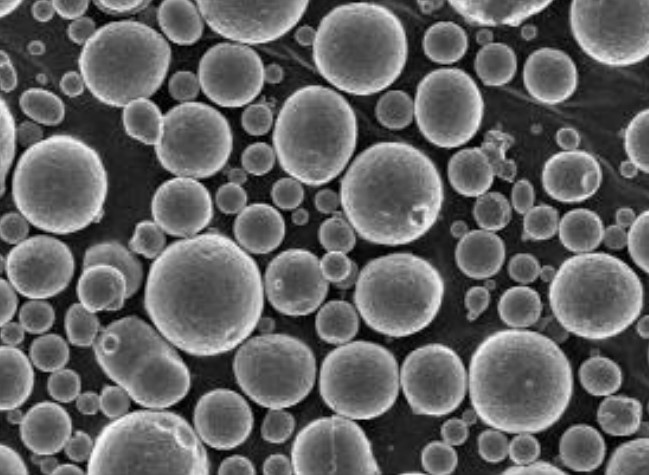
FeP iron phosphate powder in the ferrous powder family
Within the broader family of ferrous powders, FeP belongs to the phosphorus-alloyed branch. It is more specialized than conventional iron powder and generally less universal than stainless or low-alloy steel powders. In many production settings, it is blended with iron or steel powders to create a tailored chemistry rather than used alone as the only metallic constituent.
This distinction matters because the performance of FeP-containing material depends heavily on dosage. Small phosphorus additions can improve strength and sintering activity, but excessive phosphorus can increase brittleness and narrow the useful processing window. That is why formulators usually treat FeP as a controlled alloying ingredient rather than a simple commodity metal powder.
Why FeP powder exists
Phosphorus is one of the most effective strengtheners for iron in powder metallurgy when used correctly. It can promote liquid-phase or transient activated sintering effects in some formulations, improve dimensional consistency, and increase hardness and tensile strength after sintering. For manufacturers seeking an economical route to higher-performance ferrous parts, FeP offers a practical way to introduce phosphorus uniformly without handling elemental phosphorus.
In additive manufacturing, its role is more selective. Iron-phosphorus powders are not nearly as common as stainless steel, tool steel, titanium, or nickel alloys in powder-bed fusion or DED. However, interest exists in using phosphorus-bearing ferrous powders for specialized magnetic parts, wear components, binder jet feedstocks, and sinter-based additive routes where alloying flexibility is valuable.
FeP powder versus ordinary iron powder
Pure iron powder mainly provides the matrix and compressibility. FeP contributes chemistry that changes the behavior of that matrix during thermal processing. That is why phosphorus alloying efficiency is the real reason FeP remains relevant in both conventional PM and selected AM workflows.
In ferrous powder metallurgy, phosphorus is seldom added for chemistry alone; it is added because it changes how iron densifies, strengthens, and stabilizes during sintering.
Nomenclature and market terminology
Because industrial catalogs may use slightly different names, buyers should always verify the certificate of analysis and target phosphorus range. Some suppliers list FeP under iron-phosphorus alloy powder, some under ferrophosphorus additives, and some under iron phosphate powder for search visibility. A technically sound procurement process should confirm whether the supplied material is intended for PM alloying, brazing, sinter-additive use, or direct additive manufacturing feedstock.
Chemische Zusammensetzung
The chemistry of FeP powder varies more than that of a tightly specified aerospace alloy because suppliers may offer multiple phosphorus levels depending on end use. Most commercial material is described by its iron base, phosphorus content, and residual impurity limits. Depending on production route, small amounts of silicon, manganese, carbon, oxygen, sulfur, and trace metals may also appear.
Typical composition of FeP iron phosphate powder
| Element / Constituent | Typical wt% | Main Metallurgical Role | Effect on Processing and Performance |
|---|---|---|---|
| Fe | Bilanz | Matrix element | Provides the ferrous base, compressibility, and structural framework |
| P | 10.0–27.0 | Alloying / strengthening element | Improves sintering activity, increases strength and hardness, influences shrinkage behavior |
| C | ≤0,10 | Residual control | Excess carbon can shift microstructure and interact with sintering response |
| Si | ≤0.50 | Residual / deoxidation-related | Can affect oxidation tendency and embrittlement if too high |
| Mn | ≤0.50 | Residual modifier | Minor influence on hardenability and oxide chemistry |
| O | 0.10–0.80 | Surface oxide indicator | Higher oxygen can reduce compressibility and interfere with sintering efficiency |
| S | ≤0.03 | Impurity control | Elevated sulfur can impair ductility and sinter quality |
| Trace metals | Low residuals | Melt-source dependent | May alter consistency, especially in recycled or lower-purity feedstock |
The most important variable is phosphorus content. At low to moderate addition levels in a blend, phosphorus enters solid solution in ferrite and can also influence phase evolution during thermal processing. This produces useful strengthening, but the same mechanism can reduce ductility if the final composition is pushed too far.
Role of phosphorus in FeP iron phosphate powder
Phosphorus is a potent ferrite strengthener and can improve the performance of sintered iron parts without requiring expensive alloy systems. It also tends to increase hardness and may improve wear resistance in suitable formulations. In PM parts that need a balance of cost and strength, phosphorus-bearing additives have long been used because the performance gain per alloying percentage is relatively high.
Phosphorus also affects diffusion and dimensional change. In practice, that means FeP can help a formulator tune shrinkage or swelling during sintering, which is especially valuable in near-net-shape production. For complex parts, dimensional control during sintering can be as important as the final strength level.
Residual oxygen and impurity control
Unlike wrought alloys melted and refined to narrow chemistry windows, powder products expose much more surface area to the environment. Oxygen content therefore matters because oxide films can slow interparticle bonding and reduce the efficiency of phosphorus transfer into the matrix. Low sulfur and controlled silicon are also beneficial because excess impurities can raise brittleness risk or undermine lot-to-lot reproducibility.
Why chemistry must match process route
FeP for press-and-sinter blends, FeP for MIM, and FeP for AM development may not share the same ideal chemistry. A coarser alloying additive can work well in one route but perform poorly in fine-powder recoating or binder-jet spreading. Buyers comparing FeP with broader iron-based powder grades should therefore look beyond nominal chemistry and review how phosphorus level, oxygen, and PSD interact with the intended process.
Physikalische und mechanische Eigenschaften
FeP is unusual because powder properties and consolidated-part properties must be separated carefully. The powder itself is characterized by density, flowability, morphology, and apparent density, while the final component is judged by strength, hardness, elongation, magnetic behavior, and dimensional stability after sintering or post-processing. Any property table should therefore be read as typical and application-dependent, especially because FeP is often blended rather than used as a stand-alone structural material.
Typical physical and mechanical properties
| Eigentum | Typischer Wert | Einheit | Prüfnorm / Prüfbedingungen |
|---|---|---|---|
| Echte Dichte | 6.8–7.4 | g/cm³ | Typical Fe-P alloy range, chemistry dependent |
| Scheinbare Dichte | 2.6–4.2 | g/cm³ | Typical powder value, morphology dependent |
| Melting / Softening Range | 1020–1480 | °C | Broad composition-dependent thermal range |
| Hall-Strömung | 18–35 | s/50 g | Typical free-flowing grade |
| Sintered Tensile Strength | 350–700 | MPa | Typical Fe or steel blend after sintering, formulation dependent |
| Streckgrenze | 220–500 | MPa | Typical consolidated part, formulation dependent |
| Dehnung | 1–8 | % | Typical sintered condition, highly composition dependent |
| Härte | 80–220 | HB | Typical sintered component range |
| Wärmeleitfähigkeit | 20–45 | W/m-K | Approximate consolidated ferrous range |
| Elektrischer spezifischer Widerstand | Higher than pure iron | µΩ·cm | Phosphorus-alloyed ferrous material |
The first point to note is that true density varies with phosphorus level. Fe-rich grades sit closer to iron, while higher-phosphorus material is lower in density and behaves differently during melting and diffusion. Apparent density, by contrast, is mostly a powder morphology issue and depends on whether the material is atomized, crushed, milled, or blended.
Strength and hardness of FeP-containing parts
When FeP is added correctly to an iron or steel powder blend, tensile strength and hardness usually increase. The trade-off is that ductility tends to fall as phosphorus content rises. That balance is acceptable in many structural PM applications where moderate elongation is less critical than strength, wear behavior, or dimensional consistency.
FeP powder behavior in sinter-based additive routes
For binder jetting or other sinter-based AM processes, FeP can be valuable because alloying occurs during debinding and sintering rather than during laser remelting. That creates opportunities to tune final composition without relying on a fully prealloyed feedstock. The downside is that shrinkage control becomes central, and phosphorus additions that help densification in one geometry may create distortion in another.
Thermal and magnetic considerations
Phosphorus generally increases electrical resistivity relative to pure iron, which can matter in electromagnetic components. In selected soft magnetic and precision parts, controlled phosphorus additions can be useful, but the final response depends on purity, porosity, and processing history. For designers comparing FeP with copper-based conductive powders, the message is simple: FeP is not chosen for top conductivity, but for ferrous strength, alloying efficiency, and thermal-processing behavior.
Technische Daten und verfügbare Güteklassen
There is no single globally dominant FeP AM specification analogous to the well-established grade systems used for titanium or nickel superalloys. Commercial supply is usually organized around phosphorus content, powder morphology, particle size range, and intended process route such as PM pressing, MIM, thermal spray, or experimental additive manufacturing. That means the purchasing document often matters more than the shorthand product name.
Typical FeP powder supply grades and standards context
| Supply Grade / Condition | PSD-Bereich | Scheinbare Dichte | Zapfstellendichte | Hall-Strömung | Oxygen / Sphericity / Cross-Reference |
|---|---|---|---|---|---|
| FeP-PM45-150 | 45-150 µm | 2.8–3.8 g/cm³ | 3.5–4.8 g/cm³ | 20–32 s/50 g | O typical 0.20–0.60 wt%; irregular to semi-spherical; PM alloying grade |
| FeP-MIM15-45 | 15-45 µm | 2.7–3.6 g/cm³ | 3.4–4.6 g/cm³ | 18–28 s/50 g | O typical 0.15–0.45 wt%; finer morphology; MIM or fine blend use |
| FeP-BJ15-53 | 15-53 µm | 2.9–3.9 g/cm³ | 3.6–4.9 g/cm³ | 17–27 s/50 g | O typical 0.12–0.40 wt%; flow-optimized for binder jet trials |
| FeP-DED45-105 | 45-105 µm | 3.0–4.0 g/cm³ | 3.8–5.0 g/cm³ | 16–25 s/50 g | Lower-oxide spherical grade when atomized; niche use |
| Standards / Test Context | - | ASTM B212 | ASTM B527 | ASTM B213 | Chemistry often controlled to internal, GB, DIN, or customer PM specifications |
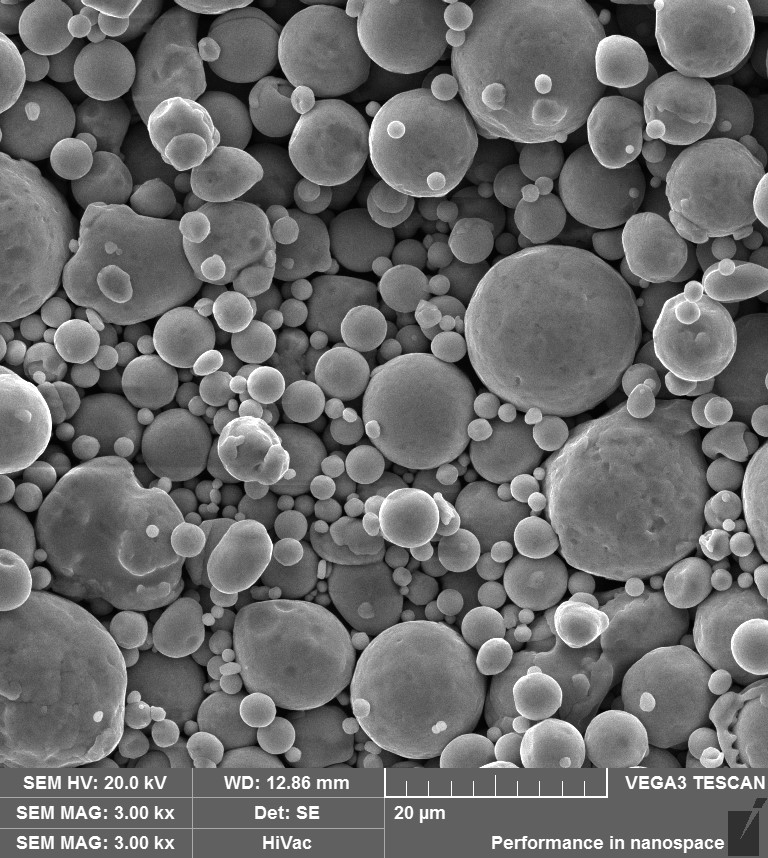
Particle size is chosen primarily by process. Coarser FeP is common in conventional powder blends because its job is alloying during sintering rather than smooth layer spreading. Finer and more spherical grades are more relevant to MIM or sinter-based AM systems, where powder flow and homogeneous distribution become more sensitive.
FeP iron phosphate powder size classes
For press-and-sinter use, 45–150 µm is a practical industrial range because it blends well with ferrous base powders and remains economical. For MIM or finer additive routes, 15–45 µm or 15–53 µm is more suitable. In laser-driven processes, coarser spherical cuts such as 45–105 µm may be explored, but FeP remains less common there than prealloyed steels or stainless powders.
Tolerance standards and powder test methods
FeP purchasing packages often borrow test methods from the wider metal-powder standards landscape rather than relying on a dedicated FeP-only standard. Powder flow may be evaluated with the ASTM B213 – Hall-Flow-Verfahren, apparent density with the ASTM B212 – Verfahren zur Bestimmung der scheinbaren Dichte, and additive terminology with Begriffe gemäß ISO/ASTM 52900. For many buyers, internal process qualification standards are stricter than generic powder-method standards because end-part performance is so sensitive to blending and sintering history.
What buyers usually request
A serious technical purchase request will ask for phosphorus range, PSD, apparent density, flow, oxygen, and morphology images, along with the intended application route. In some cases, users also request sintering data or recommended addition rates into iron-base blends. That is especially important because a powder that performs well as a minor alloying additive may not behave well as the dominant constituent in an AM feedstock.
Herstellungsprozess
FeP powder can be produced by several routes, and those routes strongly affect flowability, oxygen level, PSD, and mixing behavior. Unlike premium nickel or titanium AM powders, FeP is not always produced by the cleanest or most spherical route because many end uses do not require powder-bed-fusion-grade morphology. Process choice is therefore tied directly to whether the target is economical PM alloying, fine MIM blending, or niche additive manufacturing research.
Powder-making route comparison
| Prozess | Sphärizität | Sauerstoffaufnahme | PSD-Steuerung | Durchsatz | Relative Kosten |
|---|---|---|---|---|---|
| Gaszerstäubung (GA) | Hoch | Gering bis mäßig | Gut | Hoch | Mittel |
| PREP | Sehr hoch | Sehr niedrig | Gut | Mittel | Hoch |
| VIGA / EIGA | Hoch bis sehr hoch | Niedrig | Sehr gut | Mittel | Hoch |
| Wasserzerstäubung | Gering bis mäßig | Mäßig bis hoch | Breite | Hoch | Niedrig |
| Mechanical Crushing / Milling | Niedrig | Variabel | Mäßig | Mittel | Niedrig bis mittel |
Gas-atomized FeP iron phosphate powder
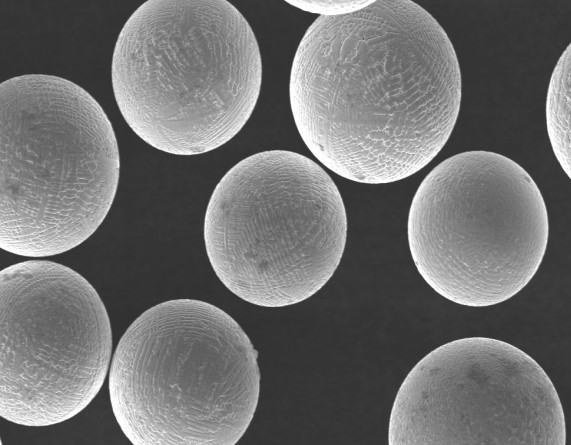
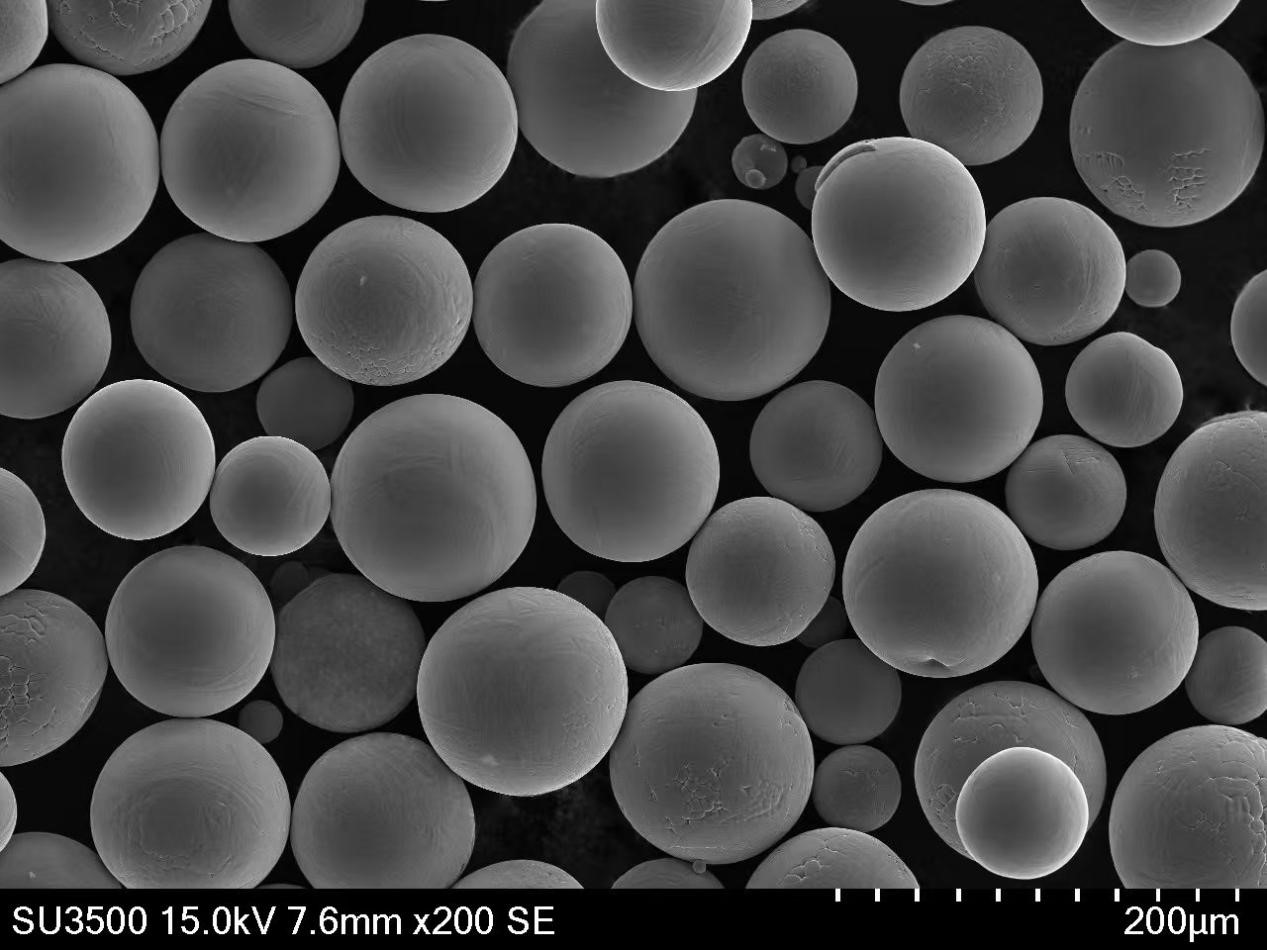
Gas atomization is the most realistic route when FeP is intended for higher-quality spherical powder applications. It produces better flowability and more regular particles than crushing or water atomization, which is valuable for MIM, binder jetting, and any process that relies on uniform layer deposition. It also helps lower oxygen pickup compared with more oxidizing production routes, though results still depend on melt handling and post-processing.
PREP and VIGA/EIGA for specialty FeP powder
PREP, VIGA, and EIGA are better known in high-performance titanium and nickel powder production than in mainstream phosphorus-alloyed ferrous materials. Still, they can be relevant where extremely clean and spherical FeP-bearing powder is needed for advanced development work. Their main advantage is improved morphology and lower contamination, but the cost is often too high for routine PM additive use.
Water-atomized and crushed grades
Water atomization and crushing remain important for cost-sensitive applications. These routes can generate irregular particles that mix well into press-and-sinter blends and do not require the premium morphology of LPBF feedstocks. The trade-off is reduced flowability, broader PSD, and generally higher oxygen, all of which can limit performance in finer or more automated powder spreading operations.
Post-processing, blending, and reuse
After primary powder production, FeP is usually sieved, classified, and sometimes blended with iron-base powders before shipment. In AM-adjacent uses, powder reuse must be controlled because phosphorus distribution, fines content, and surface oxidation can shift with repeated cycling. That is why powder cleanliness and PSD stability are often more important than a simple chemistry certificate when FeP is used in precision thermal processing.
Anwendungen nach Branche
FeP powder is more of an enabling material than a universal structural powder. Its strongest commercial relevance lies in industries that rely on ferrous powder metallurgy, controlled sintering, or specialized diffusion behavior. Additive manufacturing widens the design space, but the best-fit applications still tend to be those where phosphorus alloying delivers a measurable processing or performance benefit.
Automotive and transportation components
Automotive powder metallurgy has long valued phosphorus-bearing additives because they raise strength economically in sintered ferrous parts. Synchronizer components, small gears, structural brackets, bushings, and linkage elements may use FeP-modified blends when the design target is improved strength without moving to significantly more expensive alloy systems. In low-volume prototyping, binder-jet or sinter-based AM can reproduce these formulations more flexibly than dedicated compaction tooling.
Electrical, magnetic, and 3C hardware
Phosphorus additions can be relevant in magnetic and electrical hardware where controlled resistivity and ferrous performance are needed. Connectors, magnetic cores, actuator parts, and miniature mechanical components may benefit from FeP-containing blends, especially where dimensional fidelity after sintering matters. This aligns with broader industrial application sectors in which powder metallurgy and additive routes overlap.
Brazing, joining, and wear-related uses
Some iron-phosphorus powders are used in brazing-related or joining-related formulations because phosphorus can influence melting and wetting behavior. In wear parts, FeP may be selected as a hardening or strengthening additive within a more complex ferrous matrix. These are not one-size-fits-all uses, but they demonstrate why FeP remains relevant despite the dominance of more familiar iron and stainless powders.
Additive manufacturing and hybrid processing
In pure laser powder bed fusion, FeP is still a niche material. In contrast, it is more relevant to binder jetting, sinter-based AM, and hybrid routes that combine printing with later thermal densification. Those processes allow phosphorus to act during solid-state diffusion and sintering rather than forcing the whole alloying strategy into a rapid-remelt window.
Tooling and general industrial parts
Low-cost industrial tooling, fixtures, porous structures, and wear-tolerant small components can also use FeP-modified systems. When designers are comparing options, the choice may come down to whether a ferrous PM approach can deliver the required performance more economically than stainless, aluminum, or specialty alloy routes. In that context, FeP should be viewed as a formulation tool rather than as a direct substitute for every structural AM powder.
Vergleich mit alternativen Materialien
FeP is rarely selected in a vacuum. Engineers typically compare it with pure iron powder, stainless steel powder, low-alloy steel powder, or phosphorized premixes depending on the process route. The right benchmark depends on whether the goal is low cost, improved sintering, higher corrosion resistance, better printability, or a simpler one-powder solution.
FeP iron phosphate powder versus alternative powders
| Material | Dichte (g/cm³) | Main Advantage | Relative Kosten | Printability / Process Fit | Corrosion / Service Profile |
|---|---|---|---|---|---|
| FeP iron phosphate powder | 6.8–7.4 typical | Strong phosphorus alloying effect, improved sintering behavior | Niedrig bis mittel | Best as PM additive, MIM additive, or sinter-based AM feedstock | Limited corrosion resistance unless alloyed into a broader system |
| Pure iron powder | 7.8–7.9 | High compressibility, low cost, simple baseline chemistry | Niedrig | Excellent for PM and binder jet base blends | Low corrosion resistance without alloying |
| Prealloyed low-alloy steel powder | 7.7–7.9 | Better structural strength with established PM routes | Mittel | Good in PM, MIM, and some AM routes | Better strength, still moderate corrosion resistance |
| 316L stainless powder | 7.9–8.0 | Strong corrosion resistance and mature AM printability | Mittel-hoch | Excellent for LPBF, MIM, and binder jetting | Very good corrosion resistance |
| Bronze / Cu-Sn powder | 8.7–8.9 | Good bearing behavior and conductivity | Mittel | Good for PM and binder-jet applications | Better atmospheric corrosion resistance than FeP blends |
Compared with pure iron powder, FeP offers chemistry-driven strengthening and altered sintering response but usually at the cost of reduced ductility if phosphorus is overused. Compared with low-alloy steel powder, it is more of an additive strategy than a direct structural substitute. Against 316L stainless, FeP loses badly on corrosion resistance but can remain attractive where cost, ferrous properties, and sintering behavior matter more than stainless performance.
When FeP is the better choice
FeP is the better choice when the user specifically needs phosphorus in a compact, meterable powder form. It is also attractive when the manufacturing route depends on post-print or post-press sintering and the formulator wants to tune strength and dimensional behavior economically. If the job instead calls for high corrosion resistance, polished LPBF maturity, or premium mechanical isotropy, a stainless or prealloyed steel powder will usually be the better fit.
Unser Unternehmen
Shanghai Truer Technology Co., Ltd., operating am-printing.com, was established in 2009 and created its additive manufacturing business in 2019. The company states that it integrates 3D printing powder-making equipment and services with metal powder supply, including Selective Electron Beam Melting equipment, Plasma Rotating Electrode Process powder-making equipment, and Gas Atomization capability, and it lists a portfolio covering TiNi, TiTa, TiAl, TiNbZr, CoCrMo, plus nickel-based, cobalt-based, titanium-based, copper-based, aluminum-based, and stainless steel spherical powders. Its published profile also notes support for SLM, SEBM, DED, laser cladding, powder metallurgy, MIM, HIP, cold and hot spraying, welding, and coating across industries including 3C electronics, hand tools, remote control cars, medical, aerospace, and nuclear power; further background is presented in the company’s corporate information page.
FAQ
Q1. Is FeP iron phosphate powder mainly used for additive manufacturing?
Not usually. FeP is more commonly used as a phosphorus-bearing additive in powder metallurgy and sinter-based production, while direct use in laser-based additive manufacturing is comparatively limited and application-specific.
Q2. What does phosphorus do in FeP powder blends?
Phosphorus strengthens ferritic iron, affects diffusion during heating, and can improve sintering response when added in controlled amounts. It can also raise hardness, but too much phosphorus may reduce ductility and increase brittleness.
Q3. Can FeP iron phosphate powder be used in binder jetting?
Yes, it can be relevant in binder jetting and other sinter-based AM routes because alloying takes place during the furnace cycle rather than only in a melt pool. That said, the feedstock must be qualified carefully for spreading, debinding, shrinkage, and final density.
Q4. Is FeP powder corrosion resistant?
On its own, FeP is not a corrosion-resistant material in the way 316L stainless or nickel alloys are. Its value lies more in alloying behavior, strength contribution, and sintering control within ferrous systems.
Q5. What particle size is typical for FeP powder?
Typical industrial ranges include 45–150 µm for conventional PM alloying and 15–45 µm or 15–53 µm for finer MIM or binder-jet-oriented material. The correct PSD depends on whether the powder is being blended, compacted, spread in layers, or fed through another deposition route.
Q6. What should buyers check before ordering FeP iron phosphate powder?
They should confirm phosphorus content, particle size distribution, apparent density, flow, oxygen level, morphology, and the intended process route, since the best grade for PM blending may not be the best one for AM or MIM. Where qualification support or application review is needed, buyers can also use the supplier’s technischer Kontaktkanal to align powder grade with the target manufacturing method.