Kurzantwort
Hastelloy B nickel-molybdenum superalloy powder is a nickel-molybdenum corrosion-resistant alloy powder selected primarily for additive manufacturing and powder-based production of parts exposed to strongly reducing chemical environments. It is the right choice when reducing-acid corrosion resistance matters more than oxidation resistance, low density, or peak high-temperature strength. In practice, engineers use it for chemical-process, acid-handling, and specialty industrial hardware where hydrochloric acid, wet hydrogen chloride, sulfuric acid, acetic acid, or phosphoric acid service can rapidly damage stainless steels and many other nickel alloys.
What Is Hastelloy B nickel-molybdenum superalloy powder
Hastelloy B nickel-molybdenum superalloy powder is the powder-feed form of the Hastelloy B family, a group of nickel-molybdenum corrosion-resistant alloys developed for severe reducing media rather than for oxidizing hot-section duty. Haynes identifies HASTELLOY as a registered alloy trademark and lists Hastelloy B, Hastelloy B-2, and Hastelloy B-3 as related grades within that family, while Haynes company history describes B-2 as the second-generation development of the original B alloy.
In current industrial usage, powder discussions around “Hastelloy B” usually map most closely to B-2-type chemistry and performance, because B-2 became the better-known commercial reference grade for strong resistance to reducing acids. B-3, introduced later, was specifically promoted by Haynes as an additional nickel-molybdenum family member with improved thermal stability and fabricability over B-2, which is why some buyers now use the family name first and then confirm the exact chemistry on the certificate of analysis.
Unlike nickel-chromium superalloys such as Inconel 718 or Hastelloy C-276, the Hastelloy B family contains very little chromium. That low-chromium design is deliberate: it strengthens resistance in reducing chemical conditions, but it also means the alloy is not the first choice for strongly oxidizing environments. This trade-off is the key to understanding where the powder fits in additive manufacturing and powder metallurgy.
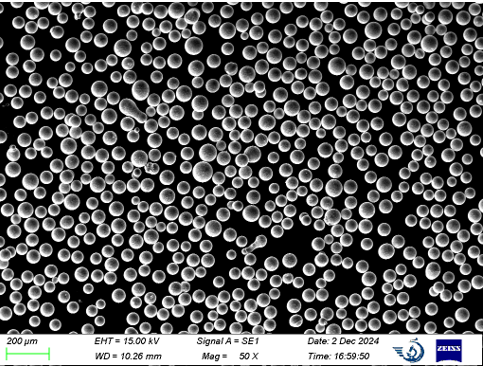
Hastelloy B family and additive manufacturing powder context
In additive manufacturing, Hastelloy B powder is best understood as a specialty corrosion-engineering material rather than a general-purpose high-temperature AM alloy. It can be processed as a spherical feedstock for laser powder bed fusion, directed energy deposition, powder metallurgy compaction, hot isostatic pressing, and corrosion-resistant coating routes, but its main economic value comes from enabling net-shape or near-net-shape parts in environments that are chemically aggressive rather than merely hot. ISO/ASTM defines additive manufacturing as the successive addition of material to build three-dimensional geometries, which is the process context in which this powder is evaluated.
Why the alloy exists
The family exists because many industrial plants operate in acid concentrations and temperature combinations that attack stainless steels, duplex grades, and numerous nickel-chromium alloys. Hastelloy B-type chemistry shifts the alloy design toward molybdenum-rich, low-chromium corrosion performance, allowing longer service in reducing media such as hydrochloric acid and wet hydrogen chloride. That makes the powder relevant for low-volume components, spares, and geometrically complex parts that cannot be sourced efficiently as wrought stock.
Why spherical powder matters for Hastelloy B
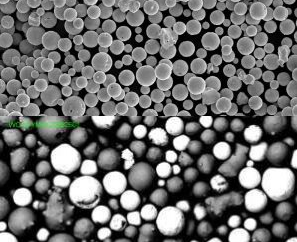
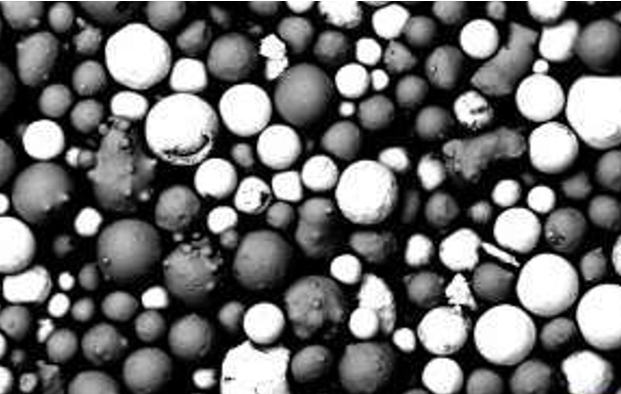
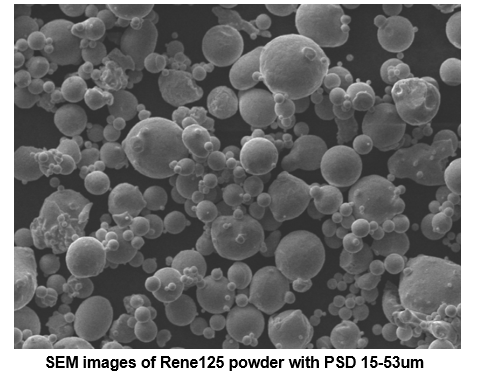
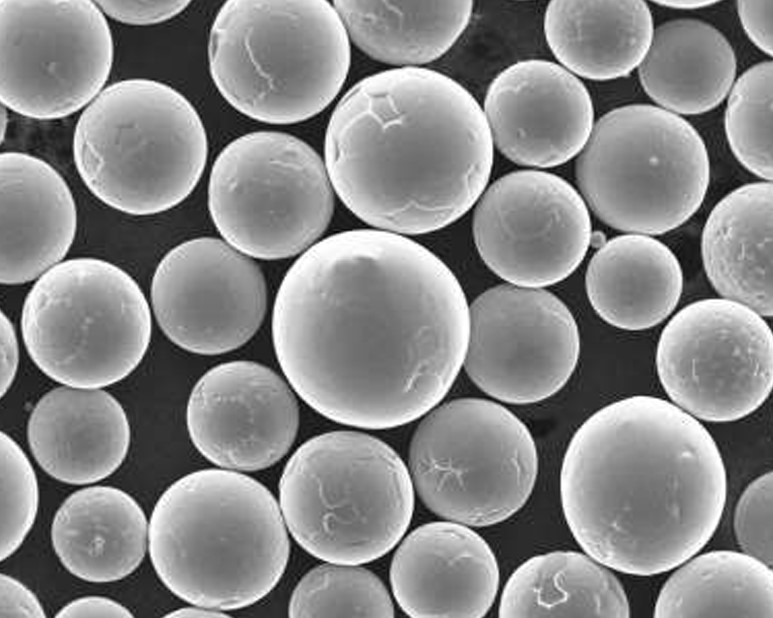
For AM routes, sphärisches AM-Pulver improves flowability, packing behavior, and layer uniformity. NIST’s powder metrology work emphasizes that repeatable AM parts require powders with known and repeatable characteristics, which is why buyers specify particle size distribution, flow, apparent density, tap density, morphology, and oxygen content alongside alloy chemistry. For a corrosion-critical alloy like Hastelloy B, powder cleanliness matters because inclusions, oxide films, and irregular particles can degrade both print consistency and final corrosion performance.
“This document establishes and defines terms used in additive manufacturing.”
Chemische Zusammensetzung
For commercial powder procurement, the most practical chemistry reference is usually B-2-type composition under UNS N10665 or equivalent NiMo28 designation. The table below summarizes the nominal composition window most commonly associated with Hastelloy B-family powder in modern supply chains, together with the metallurgical role of each major element.
| Element | Typical Range (wt%) | Common Target (wt%) | Rolle in der Metallurgie |
|---|---|---|---|
| Nickel (Ni) | balance | balance | Matrix element; corrosion stability in reducing media; ductile FCC base |
| Molybdän (Mo) | 26.0–30.0 | 28.0 | Primary corrosion-resistance driver in reducing acids; major strengthening element |
| Eisen (Fe) | 2,0 max | 1.0 typical | Residual matrix-balancing element; cost and process moderation |
| Chrom (Cr) | 1,0 max | 0.5 typical | Controlled low to preserve reducing-acid performance; too much can shift behavior unfavorably |
| Kobalt (Co) | 1,0 max | 0.3 typical | Minor residual/addition; limited effect at low level |
| Mangan (Mn) | 1,0 max | 0.5 typical | Residual deoxidation/process-control element |
| Silizium (Si) | 0,10 max | 0.05 typical | Residual impurity control; excessive silicon can hurt fabricability |
| Kohlenstoff (C) | 0.01–0.02 max | very low | Carbide control; low carbon reduces sensitization-related concerns |
| Phosphor (P) | 0.025–0.04 max | very low | Impurity control; excessive levels can reduce ductility |
| Schwefel (S) | 0.015–0.03 max | very low | Impurity control; low sulfur supports weldability and toughness |
| Kupfer (Cu) | 0,50 max | Spur | Residual element; limited tolerance in some datasheets |
The chemistry immediately shows how different this alloy is from chromium-rich corrosion alloys. Molybdenum is the dominant alloying addition after nickel, and that high Mo content is the principal reason the material performs so well in reducing environments. By contrast, chromium is intentionally kept low, which is the opposite of what designers usually expect from oxidation-oriented nickel alloys.
The strengthening mechanism is mainly Verfestigung durch Feststofflösung rather than precipitation hardening. Hastelloy B does not rely on niobium-, titanium-, or aluminum-driven gamma-prime or gamma-double-prime precipitation like many aerospace superalloys. That gives it a different heat-treatment profile and helps explain why its selling point is corrosion behavior rather than age-hardened tensile strength.
Very low carbon and silicon contents are not incidental. In nickel-molybdenum alloys, tight control of these elements supports thermal stability, weldability, and corrosion behavior, especially when parts see fabrication or thermal cycling before chemical service. That is also why buyers of printed Hastelloy B components usually ask for powder chemistry certification rather than relying only on nominal alloy naming.
Physikalische und mechanische Eigenschaften
Because Hastelloy B is primarily a corrosion alloy, its mechanical properties are usually discussed in annealed or solution-treated condition rather than as a precipitation-hardened superalloy. For powder users, the most useful numbers are the typical room-temperature values used for screening, process planning, and comparison against other corrosion-resistant AM materials. The values below consolidate data commonly published for B-2 wrought forms, which are the baseline most powder producers and engineers use when approximating expected part behavior before process-specific qualification.
| Eigentum | Typischer Wert | Einheit | Prüfnorm / Prüfbedingungen |
|---|---|---|---|
| Dichte | 9.2–9.22 | g/cm³ | Typischer Legierungswert bei Raumtemperatur |
| Schmelzbereich | 1330–1380 | °C | Typical datasheet range |
| Zugfestigkeit | 760 min, ~900 typical | MPa | Annealed / solution-treated reference data |
| Yield strength (0.2%) | 350 min, ~400 typical | MPa | Annealed / solution-treated reference data |
| Dehnung | 40 min, 50–60 typical | % | Room-temperature tensile data |
| Härte | HRB 94–100 max | HRB | Typical annealed condition |
| Elastizitätsmodul | 217 | GPa | Room-temperature typical |
| Wärmeleitfähigkeit | 11.1–11.4 | W/m-K | Room-temperature typical |
| Koeffizient der thermischen Ausdehnung | about 10.8–11.7 | µm/m·K | Typical moderate-temperature range |
The headline property is not unusually high tensile strength; it is the combination of adequate structural strength with exceptional corrosion resistance in reducing media. For that reason, Hastelloy B often competes not with the strongest superalloys, but with the most chemically durable alloys available for acid service. The strength level is sufficient for many pumps, valves, fittings, nozzles, vessels, and manifolds, while the chemical durability is what justifies the material choice.
Mechanical profile of Hastelloy B powder parts
Printed parts made from Hastelloy B powder can achieve useful density and serviceable strength, but final properties depend heavily on process route, build orientation, heat treatment, and post-processing such as HIP. NIST notes that consistent AM output depends on material characterization and process qualification, which is especially relevant for niche corrosion alloys where published AM property datasets are thinner than for 316L or Inconel 718. Engineers should therefore treat wrought-property tables as screening references, not as automatic acceptance values for printed hardware.
Corrosion-first, not oxidation-first
A critical interpretation point is that Hastelloy B performs best in reducing environments, not in strong oxidizing service. The low chromium content that makes the alloy powerful against hydrochloric acid also limits the protective chromium-oxide behavior engineers expect in oxidizing conditions. This is why the alloy can outperform many peers in one chemical regime and underperform them in another.
Thermal stability caveat
Haynes specifically positioned B-3 as having better thermal stability than B-2, which implies an important practical caution for buyers using the broader “Hastelloy B” label. If the application includes significant fabrication heat exposure or prolonged temperature excursions, the exact B-family variant matters. A powder buyer should therefore verify not just “Hastelloy B” on a catalog line, but the actual chemistry and thermal-stability expectations behind it.
Technische Daten und verfügbare Güteklassen
There is no single universal AM powder specification dedicated only to Hastelloy B nickel-molybdenum powder in the way some aerospace alloys are tied to widely cited AM material standards. Instead, procurement usually combines alloy chemistry standards, internal powder quality requirements, and AM process standards. In practice, the powder order defines the chemistry family, PSD, morphology, oxygen limit, flowability, and intended route such as LPBF, EBM, DED, PM, or spray application. ASTM maintains a dedicated ASTM-Normenkatalog für die additive Fertigung, while AM vocabulary is harmonized under Begriffe gemäß ISO/ASTM 52900.
| Supply Grade / Reference | Typischer PSD-Bereich | Scheinbare Dichte | Zapfstellendichte | Hall-Strömung | Sauerstoffgehalt | Sphärizität | Cross-Reference / Notes |
|---|---|---|---|---|---|---|---|
| HB-LPBF Fine | 15-45 µm | 4,4–5,0 g/cm³ | 5,0–5,7 g/cm³ | 14–20 s/50 g | ≤0.03 wt% typical | hoch | Fine cut for laser powder bed fusion |
| HB-LPBF Standard | 15-53 µm | 4,5–5,1 g/cm³ | 5,1–5,8 g/cm³ | 13–19 s/50 g | ≤0.03 wt% typical | hoch | Common general AM grade |
| HB-EBM | 45-105 µm | 4,6–5,2 g/cm³ | 5.2–5.9 g/cm³ | 12–18 s/50 g | ≤0.035 wt% typical | hoch | Coarser cut for electron beam processing |
| HB-DED / Cladding | 53-150 µm | 4.7–5.3 g/cm³ | 5.3–6.0 g/cm³ | 12–18 s/50 g | ≤0.04 wt% typical | hoch | Blown-powder deposition and repair |
| UNS N10665 / EN 2.4617 / NiMo28 | chemistry grade | n/a | n/a | n/a | per PO | n/a | Main B-2-type chemistry reference |
| ASTM B333 / B335 / B619 / B622 / B626 / B366 | product-form spec | n/a | n/a | n/a | n/a | n/a | Common wrought/product-form references for B-2 family |
| ISO/ASTM 52900 process language | terminology | n/a | n/a | n/a | n/a | n/a | Used for AM process definitions rather than alloy chemistry |
The PSD ranges above are typical industrial powder cuts rather than universal mandatory limits. Different machine OEMs and part geometries shift the optimum distribution slightly, particularly in niche corrosion alloys where recoating behavior, laser absorption, and build-rate priorities differ. NIST’s powder metrology laboratory underlines why these powder descriptors matter: repeatable spreadability and powder characterization are foundational to consistent AM part quality.
Hastelloy B nickel-molybdenum superalloy powder grades in practice
Commercially, buyers often see Hastelloy B-family powder sold as a process-specific product rather than only as a chemistry name. A supplier may list a fine LPBF cut, a standard LPBF cut, a coarser EBM cut, and a DED or laser-cladding cut, all with the same base chemistry but different flow and packing behavior. That is normal and usually more useful than a one-size-fits-all powder designation.
Tolerance standards and cross-references
For the corrosion-alloy family itself, UNS N10665 and EN 2.4617 / NiMo28 are the most familiar identifiers attached to B-2-type material in widely circulated datasheets. For finished product forms, ASTM B333, B335, B619, B622, B626, and B366 appear repeatedly in industry datasheets because they cover plate, bar, pipe, tube, and fittings rather than AM powder specifically. That distinction matters: the powder standardization layer and the final component qualification layer are related, but they are not the same thing.
Herstellungsprozess
The production route has a direct effect on corrosion-alloy powder performance because morphology, oxygen pickup, and chemistry consistency all influence part quality. For Hastelloy B powder, gas atomization is usually the baseline industrial process because it offers practical throughput and good control of spherical particle production. Vacuum induction gas atomization, electrode induction gas atomization, and plasma rotating electrode routes are then evaluated when the buyer needs tighter cleanliness or premium morphology.
| Prozess | Feedstock Form | Typical Sphericity | Oxygen Pickup Risk | PSD-Steuerung | Durchsatz | Relative Kosten | Practical Trade-Off |
|---|---|---|---|---|---|---|---|
| GA | Melt stream + inert gas | hoch | low to medium | very good | hoch | gemäßigt | Best general balance of cost and output |
| VIGA | Vacuum induction melt + gas atomization | sehr hoch | niedrig | very good | mittel bis hoch | mäßig bis hoch | Better cleanliness and chemistry control |
| EIGA | Bar/electrode + induction melting + gas atomization | sehr hoch | very low | excellent | mittel | hoch | Low contamination, premium feedstock |
| PREP | Rotating electrode | extremely high | very low | good | niedrig | sehr hoch | Excellent morphology, lower throughput |
| Plasma-Zerstäubung | Wire/feedstock in plasma | extremely high | niedrig | good to very good | low to medium | hoch | Premium spherical powder for specialty use |
Gas-atomized Hastelloy B nickel-molybdenum superalloy powder
Gas atomization is typically the most economical way to make production-scale Hastelloy B powder with the spherical morphology demanded by AM. The melt is broken into droplets by inert gas, rapidly solidified, and then classified into the desired size fractions. For many industrial users, this route provides adequate sphericity, manageable oxygen, and enough throughput to support recurring production or spare-part inventories.
PREP, VIGA, and EIGA trade-offs
PREP, VIGA, and EIGA are premium options when cleanliness and particle regularity outweigh cost. Shanghai Truer’s published profile states that the company operates in SEBM, PREP powder-making equipment, and gas atomization, which is relevant because those are exactly the process families most often discussed for high-quality spherical metal powders. In corrosion-critical alloys, reduced contamination can matter as much as improved flow because nonmetallic inclusions may compromise both print quality and localized corrosion behavior.
Why process route changes powder performance
Powder route affects more than appearance. Particle roundness influences layer spread, fine-content balance influences packing and laser interaction, and oxygen pickup can influence surface chemistry during melting. NIST’s measurement-science work on AM powders is useful here because it frames powder characterization as a prerequisite to predictable parts, not merely as a purchasing checklist.
Process fit across alloy families
Hastelloy B powder is less common than mainstream nickel AM grades, so users often compare sourcing strategy across broader alloy catalogs before committing to qualification. That is why engineers reviewing this alloy often look at a broader Katalog für Pulver auf Nickelbasis and then narrow the selection to the chemistry that matches the corrosion regime rather than starting with machine parameters alone.
Anwendungen nach Branche
Hastelloy B powder is most valuable in industries where reducing-acid attack drives material selection. Unlike oxidation-oriented superalloys, its main advantage appears in chemical service equipment, acid handling systems, and plant components that fail rapidly when made from stainless steel or chromium-rich alternatives. Additive manufacturing becomes attractive when those parts are geometrically complex, low-volume, urgently needed, or difficult to machine from wrought bar and plate.
Chemical processing and acid production
This is the most natural application field for Hastelloy B-family powder. Industry datasheets repeatedly associate B-2 with hydrochloric acid, wet HCl gas, sulfuric acid, acetic acid, phosphoric acid, acetic-acid production, methyl methacrylate production, and related corrosive process streams. AM is especially attractive for nozzles, manifolds, flow-control hardware, static mixers, and custom internals where complex geometry can improve process efficiency while preserving chemical durability.
Oil, gas, and specialty fluid handling
In oil and gas, Hastelloy B is not as universal as C-276, but it remains relevant where reducing acids, chlorides, and corrosive process chemicals dominate localized service conditions. Powder routes are useful for small-batch valve trims, pump parts, seal components, metering hardware, and corrosion-test coupons. The alloy is usually selected for chemistry-specific exposure rather than for general wellhead or offshore use.
Pharmaceutical and fine chemical equipment
Fine-chemical and pharmaceutical plants often need corrosion-resistant equipment with cleanable geometries, compact channels, or low-volume replacement parts. Hastelloy B powder can support printed impellers, dosing elements, fittings, and lab-scale or pilot-scale hardware when the chemical regime is reducing and highly aggressive. Because these sectors frequently change process setups, AM can shorten lead times for customized corrosion-resistant metal parts.
Energy, environmental, and industrial process equipment
The alloy also appears in specialty reactors, scrubber components, acid condensate handling hardware, and corrosion-intensive service in broader industrial plants. It is not the first alloy for high-oxidation combustion zones, but it can be a strong choice for chemically reducing sub-systems, especially when part replacement cost is high or downtime is unacceptable. This selection logic is consistent with the industrial sectors described on Truer’s manufacturing applications page, which includes SLM, EBM, HIP, and MIM-related end-use pathways.
Where it is not usually the first choice
Hastelloy B is generally not the first powder chosen for biomedical implants, lightweight aerospace structures, or oxidation-dominated hot-section engine parts. For those use cases, cobalt, titanium, or chromium-bearing nickel alloys usually make more sense because the design drivers differ. In other words, Hastelloy B is a specialist: outstanding in the right corrosion niche, but not a universal premium alloy
Vergleich mit alternativen Materialien
Material selection becomes clearer when Hastelloy B is compared with alloys that solve adjacent problems. The most common alternatives are Hastelloy C-276 for mixed corrosive environments, Inconel 625 for broader oxidation and corrosion balance, and Ti-6Al-4V when low density matters more than reducing-acid durability. In some extremely high-temperature or ultra-refractory design studies, engineers may also look outside nickel alloys into other powder families.
| Material | Dichte (g/cm³) | Strength Level | Relative Kosten | Druckbarkeit | Corrosion Resistance Focus | Best-Fit Application |
|---|---|---|---|---|---|---|
| Hastelloy B nickel-molybdenum superalloy powder | 9.2 | mittel | hoch | good, niche | reducing acids, wet HCl, hydrochloric-acid service | Chemical-process AM parts in reducing environments |
| Hastelloy C-276-Pulver | ~8.9 | mittel bis hoch | hoch | very good | broad mixed corrosion, oxidizing + reducing media | General severe-corrosion equipment |
| Inconel 625-Pulver | ~8.44 | mittel bis hoch | hoch | excellent | oxidation + corrosion balance | Marine, energy, aerospace-adjacent AM components |
| Ti-6Al-4V-Pulver | ~4.43 | hohe spezifische Festigkeit | hoch | excellent | moderate corrosion, lightweight focus | Aerospace and medical weight-critical parts |
| Pulver aus hochschmelzenden Metallen | varies, often high | high at extreme heat | sehr hoch | specialized | extreme temperature rather than acid corrosion | Ultra-high-temperature specialty parts |
Compared with C-276, Hastelloy B usually wins when the environment is strongly reducing and specifically hostile to many chromium-bearing systems. C-276 is more versatile across mixed oxidizing and reducing conditions, which is why it is often the safer all-round choice when the chemical envelope is broad or uncertain. The selection question is therefore not which alloy is more prestigious, but which corrosion mechanism dominates the actual service exposure.
Against Inconel 625, Hastelloy B trades away oxidation-oriented chromium benefits in exchange for stronger reducing-acid performance. Against Ti-6Al-4V, it is dramatically heavier but far more appropriate for severe acid service. For engineers comparing broader powder ecosystems, a Sortiment an Titanlegierungspulvern is relevant when lightweighting is central, while a refractory metal powder lineup becomes relevant when temperature, not corrosion chemistry, is the dominant constraint.
Unser Unternehmen
Shanghai Truer Technology Co., Ltd., operating am-printing.com, was established in 2009 and created its additive manufacturing business in 2019. The company’s published information states that it integrates 3D printing powder-making equipment and services with spherical metal powders, supports SEBM equipment, PREP powder-making equipment, and gas atomization, and supplies alloy families that include TiNi, TiTa, TiAl, TiNbZr, CoCrMo, nickel-based, cobalt-based, titanium-based, copper-based, aluminum-based, and stainless-steel powders for end processes such as SLM, SEBM, DED, laser cladding, PM, MIM, HIP, spraying, welding, and coating. Its corporate background page also describes a joint innovation center for metal 3D printing and end-use coverage spanning 3C electronics, hand tools, remote-control vehicles, medical, aerospace, and nuclear power.
FAQ
Q1. Is Hastelloy B nickel-molybdenum superalloy powder mainly used for high-temperature strength?
No. Its main value is corrosion resistance in reducing environments rather than exceptional hot-section strength. Engineers usually choose it for chemical durability first and only secondarily for mechanical load carrying.
Q2. What makes Hastelloy B powder different from Hastelloy C-276 powder?
Hastelloy B is a low-chromium, high-molybdenum alloy optimized for reducing acids, while C-276 is a broader nickel-chromium-molybdenum alloy used across mixed corrosive environments. If the service includes strong oxidizers as well as reducers, C-276 is often the more versatile choice.
Q3. Which particle sizes are common for Hastelloy B AM powder?
For laser powder bed fusion, 15–45 µm and 15–53 µm are typical commercial cuts, while EBM commonly uses 45–105 µm and DED uses coarser ranges such as 53–150 µm. The exact PSD is selected by process route, layer thickness, and powder delivery method rather than by chemistry alone.
Q4. Does Hastelloy B nickel-molybdenum superalloy powder need special standards review before purchasing?
Yes. Buyers should separate alloy chemistry references such as UNS N10665 or EN 2.4617 from AM process terminology and powder quality requirements. In practice, purchase orders often combine corrosion-alloy chemistry rules, internal powder metrics, and additive manufacturing language defined in ISO/ASTM documentation.
Q5. Is Hastelloy B powder widely used in aerospace additive manufacturing?
Not compared with alloys such as Inconel 718, 625, or Ti-6Al-4V. Aerospace use is possible in corrosion-specific subsystems, but the alloy is much more strongly associated with chemical-process and acid-service applications than with mainstream structural or turbine AM programs.
Q6. What should buyers verify on a Hastelloy B powder certificate?
The most important checks are the exact B-family chemistry, molybdenum level, residual element limits, particle size distribution, oxygen level, flow data, and morphology. Because the name “Hastelloy B” may be used generically in conversation, the certificate should make clear whether the material aligns with B, B-2, or another family variant before qualification begins.