Kurzantwort
CMSX-4 PREP spherical powder is a powder form of the CMSX-4 nickel-based superalloy produced by Plasma Rotating Electrode Process for high cleanliness and near-perfect particle shape. It is chosen for additive manufacturing when engineers need a very high-temperature nickel superalloy feedstock with excellent flowability, low oxygen pickup, and strong resistance to creep and oxidation. The key caveat is that powder chemistry can match CMSX-4, but standard AM routes do not automatically reproduce the fully single-crystal microstructure associated with cast turbine blades.
What Is CMSX-4 PREP spherical powder
CMSX-4 PREP spherical powder is a high-performance nickel-based superalloy powder derived from the chemistry of CMSX-4, one of the best-known second-generation single-crystal turbine blade alloys used in gas turbines and aero engines. In wrought or cast product discussions, CMSX-4 is usually associated with exceptional creep resistance, high gamma-prime content, and reliable oxidation performance at elevated temperatures. In powder form, especially when made by PREP, the alloy enters a different manufacturing context: additive manufacturing, hot isostatic pressing, repair, and specialty powder metallurgy.
That distinction matters. The powder inherits the alloy chemistry, but a printed or consolidated part does not inherently inherit the directional or single-crystal structure of conventionally cast CMSX-4 blades. In other words, powder users are buying a chemistry platform with very strong high-temperature potential, not a guaranteed replication of investment-cast single-crystal performance.
CMSX-4 PREP spherical powder as a nickel superalloy feedstock
CMSX-4 belongs to the advanced nickel superalloy family characterized by a nickel matrix strengthened by a high volume fraction of gamma-prime precipitates. Alloying elements such as cobalt, chromium, tungsten, tantalum, aluminum, titanium, molybdenum, and rhenium are carefully balanced to produce a microstructure capable of maintaining strength under severe thermal load. That balance explains why the material appears in the same strategic class as other premium nickel superalloy powder grades, even though CMSX-4 has a more specialized turbine pedigree.
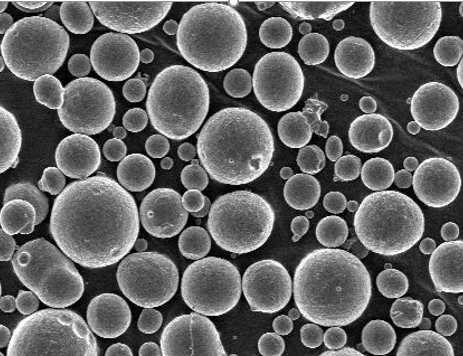
Why PREP matters for spherical powder quality
PREP is especially relevant for superalloys that are sensitive to contamination, oxygen pickup, and particle morphology. The process uses a rotating consumable electrode and plasma melting to eject droplets that solidify into highly spherical particles. Compared with many lower-cost powder routes, PREP tends to produce cleaner surfaces, fewer satellites, and a narrower defect profile, all of which support stable recoating, predictable packing, and lower inclusion risk in critical AM applications.
Why engineers specify CMSX-4 chemistry in powder form
The reason to use CMSX-4 chemistry is simple: the alloy was designed for very high thermal exposure. Even though additive manufacturing changes the microstructural pathway, the chemistry still offers a strong foundation for parts requiring elevated-temperature strength, oxidation resistance, and creep capability. Typical use cases include repair feedstock, test coupons, high-temperature prototypes, thin-wall hot-section development parts, and research programs exploring advanced AM processing windows.
In high-temperature AM, powder cleanliness and chemistry control are often as important as machine parameters.
Limits of CMSX-4 AM powder in real engineering use
CMSX-4 powder is not a universal nickel alloy for general industrial printing. It is more difficult and more expensive than mainstream weldable AM alloys such as Hastelloy X or Inconel 625, and it is more crack-sensitive than many lower gamma-prime systems. Designers therefore select it when service temperature and creep resistance justify the extra material complexity.
Chemische Zusammensetzung
CMSX-4 chemistry is a major part of its identity because each element contributes to phase stability, strengthening, oxidation behavior, or hot corrosion resistance. In published alloy descriptions, nickel is the balance element, while chromium, cobalt, tungsten, aluminum, tantalum, titanium, molybdenum, and rhenium are tightly controlled. Carbon is often absent or very low in single-crystal-style chemistries because grain-boundary strengthening is less relevant than in equiaxed cast superalloys.
Typical composition of CMSX-4 PREP spherical powder
| Element | Typical wt% | Rolle in der Metallurgie | Relevance in Powder AM |
|---|---|---|---|
| Ni | Bilanz | Matrix phase, high-temperature corrosion resistance, base for gamma/gamma-prime system | Provides the superalloy matrix that supports precipitation strengthening |
| Cr | 6.0–7.0 | Oxidation and hot corrosion resistance | Helps surface stability during high-temperature exposure |
| Co | 8.0–10.0 | Solid-solution strengthening, gamma/gamma-prime balance control | Supports high-temperature strength and phase stability |
| W | 5.5–6.5 | Strong solid-solution strengthening, creep resistance | Increases high-temperature capability but adds density |
| Mo | 0.5–0.8 | Solid-solution strengthening | Assists creep resistance and matrix strength |
| Al | 5.5–6.0 | Primary gamma-prime former, oxidation support via alumina tendency | Essential for precipitation hardening and hot-section use |
| Ti | 0.8–1.2 | Gamma-prime strengthening | Enhances precipitation response in combination with Al and Ta |
| Ta | 6.0–7.0 | Strong gamma-prime former, high-temperature strength | Critical for creep resistance and stability |
| Re | 2.5–3.5 | Creep resistance, diffusion slowing | Key premium element for long-term elevated-temperature performance |
| Hf | 0.05–0.2 | Minor strengthening and castability-related benefit in some specifications | Usually tightly controlled because excess can complicate processing |
The exact certified chemistry can vary slightly by producer and melting practice, but the defining feature is the high gamma-prime potential combined with refractory strengthening. That chemistry is why CMSX-4 sits far above commodity nickel alloys in hot-section relevance and raw material cost.
Role of rhenium in CMSX-4 PREP spherical powder
Rhenium is one of the most important and expensive elements in the alloy. It slows diffusion and substantially improves creep resistance, which is a key reason CMSX-4 became important in turbine applications. In powder supply, rhenium also raises the economic stakes, since scrap control and powder recovery strategy become more significant than they are for simpler superalloys.
Why aluminum, tantalum, and titanium matter
Aluminum, tantalum, and titanium create the high fraction of gamma-prime that gives CMSX-4 its hallmark strength at temperature. The same strengthening system that makes the alloy attractive also contributes to processing difficulty. High gamma-prime superalloys can be less weldable and more crack-prone during rapid solidification than lower-strength nickel alloys.
Trace elements and contamination control
For PREP powder, low oxygen, low nitrogen, and low exogenous inclusion levels are critical. Oxide films or contamination can become crack initiators or degrade fatigue life, especially in thin-wall or high-cycle environments. That is why premium powder users scrutinize not only chemistry but also morphology, cleanliness, and atomization route.
Physikalische und mechanische Eigenschaften
The properties most often associated with CMSX-4 are high-temperature tensile strength, creep rupture resistance, and oxidation durability rather than room-temperature ductility. In powder-based applications, however, users also evaluate powder flow, buildability, residual stress behavior, and response to heat treatment or HIP. Published values can differ significantly depending on whether data are taken from cast single-crystal material, directionally solidified structures, or polycrystalline AM builds, so careful interpretation is essential.
Typical properties of CMSX-4-based consolidated material
| Eigentum | Typischer Wert | Einheit | Prüfnorm / Prüfbedingungen |
|---|---|---|---|
| Dichte | 8.70–8.90 | g/cm³ | Typical nominal alloy density |
| Solidustemperatur | 1320–1340 | °C | Typischer, von der Zusammensetzung abhängiger Bereich |
| Liquidustemperatur | 1380–1410 | °C | Typischer, von der Zusammensetzung abhängiger Bereich |
| Zugfestigkeit | 900–1150 | MPa | Typical room-temperature consolidated condition |
| Streckgrenze (0.2%) | 750–980 | MPa | Typical room-temperature consolidated condition |
| Dehnung | 3–10 | % | Typical; highly process- and heat-treatment-dependent |
| Härte | 360–460 | HV | Typical aged condition |
| Wärmeleitfähigkeit | 9–13 | W/m-K | Typischerweise nahe der Raumtemperatur |
| Elastischer Modul | 200–220 | GPa | Typical nominal range |
| Oxidation Service Range | Up to about 1000–1100 | °C | Application-dependent, not a universal limit |
These values are best read as engineering reference ranges. A conventionally cast single-crystal blade, a HIPed powder billet, and a laser powder bed fusion sample will not produce identical numbers even when chemistry is nominally the same. Grain structure, residual segregation, porosity, and heat-treatment schedule all affect the final result.
High-temperature behavior of CMSX-4 AM powder parts
The alloy is attractive because it remains strong at temperatures where many stainless steels and lower-grade nickel alloys lose useful load-bearing capacity. Its refractory additions and gamma-prime architecture are specifically tailored for creep resistance and microstructural stability. That makes it valuable for hot-section development, thermal rigs, and advanced component research.
Mechanical trade-offs in printed CMSX-4
The same chemistry that enables strength can reduce processing tolerance. CMSX-4 is generally more crack-sensitive than more weldable nickel alloys, especially under high thermal gradients and rapid solidification conditions. Parameter development, preheating, scan strategy, and post-build HIP are therefore much more consequential than they are for easier alloys.
Oxidation, corrosion, and thermal exposure
CMSX-4 performs well in oxidizing high-temperature environments because chromium and aluminum support protective scale formation. It is not selected mainly for aqueous corrosion service; this is a hot-gas alloy first. For designers moving between thermal-barrier structures, superalloys, and refractory metal powder systems, the main selection divide is whether the application is oxidation-limited, creep-limited, or melting-point-limited.
Why property interpretation requires caution
One of the most common mistakes in sourcing this material is quoting cast single-crystal blade data as though it applies directly to any printed part. It does not. Single-crystal chemistry is not the same as single-crystal performance unless the processing route deliberately creates the corresponding crystal architecture.
Technische Daten und verfügbare Güteklassen
Suppliers normally offer CMSX-4 powder by process window rather than by one universal industry grade. The important variables are particle size distribution, apparent density, tap density, flow behavior, oxygen content, and particle sphericity. For PREP powder, the market expectation is premium morphology, high roundness, minimal satellites, and low contamination suitable for demanding thermal applications.
Typical CMSX-4 PREP spherical powder grades
| Supply Grade / Condition | PSD-Bereich | Scheinbare Dichte | Zapfstellendichte | Hall-Strömung | Oxygen / Sphericity / Cross-Reference |
|---|---|---|---|---|---|
| CMSX4-PREP-15-45 | 15-45 µm | 4,8–5,5 g/cm³ | 5.3–6.1 g/cm³ | 13–20 s/50 g | O typically ≤0.03 wt%; very high sphericity; fine LPBF fraction |
| CMSX4-PREP-15-53 | 15-53 µm | 4,9–5,6 g/cm³ | 5,4–6,2 g/cm³ | 13–19 s/50 g | O typically ≤0.03 wt%; common PBF supply cut |
| CMSX4-PREP-45-105 | 45-105 µm | 5,0–5,8 g/cm³ | 5.6–6.4 g/cm³ | 12–18 s/50 g | O typically ≤0.025 wt%; suitable for DED and cladding |
| CMSX4-PREP-53-150 | 53-150 µm | 5,1–5,9 g/cm³ | 5.7–6.5 g/cm³ | 11–17 s/50 g | O typically ≤0.025 wt%; coarse fraction for repair and spray routes |
| Test / Standards Context | - | ASTM B212 typical | ASTM B527 typical | ASTM B213 typical | PSD by sieve or laser diffraction; chemistry supplier-specific to CMSX-4 family |
Because CMSX-4 is a proprietary-origin alloy family rather than a commodity stainless grade, procurement often relies on supplier certificates, internal composition windows, and agreed powder characterization methods rather than a single universal AM standard. Users should therefore align purchasing language carefully with the intended process, build platform, and heat-treatment path.
CMSX-4 PREP spherical powder by particle size distribution
For laser powder bed fusion, 15–45 µm and 15–53 µm are the most common target cuts. Directed energy deposition and laser cladding typically use coarser fractions such as 45–105 µm or 53–150 µm. Repair operations may use even narrower bespoke fractions to match feeder behavior and melt-pool stability.
Standards, tolerances, and powder characterization
Generic test methods matter even when the alloy itself has no universally adopted AM product standard. Powder users often rely on the ASTM B213 – Hall-Flow-Verfahren for flowability context, the ASTM B214 sieve analysis framework for size classification, and the NIST additive manufacturing program overview for broader AM measurement concepts. Process documentation also benefits from the vocabulary defined in the ISO/ASTM 52900 terminology page, especially when moving from R&D to qualification.
What buyers should ask for
A technical buyer should request full chemistry, oxygen and nitrogen levels, PSD curve, morphology images, apparent density, tap density, Hall flow, and intended process route. For critical applications, it is also sensible to ask whether the powder was produced from virgin electrode stock, whether recycled powder blending is allowed, and whether the supplier has application data for LPBF, DED, SEBM, or cladding.
Herstellungsprozess
CMSX-4 powder can be manufactured by several advanced routes, but PREP is especially attractive because it combines excellent sphericity with low contamination. That combination is valuable for premium superalloys in which oxide inclusions, irregular satellites, or chemistry drift can create downstream defects. The process route also influences how readily the powder spreads, how densely it packs, and how predictably it melts during AM.
Process comparison for CMSX-4 spherical powder
| Prozess | Sphärizität | Sauerstoffaufnahme | PSD-Steuerung | Durchsatz | Relative Kosten |
|---|---|---|---|---|---|
| PREP | Ausgezeichnet | Sehr niedrig | Gut | Mittel | Hoch |
| Gaszerstäubung (GA) | Hoch | Gering bis mäßig | Gut | Hoch | Mittel |
| Vakuum-Induktions-Gaszerstäubung (VIGA) | Sehr hoch | Niedrig | Sehr gut | Mittel | Mittel-hoch |
| Elektrodeninduktions-Gaszerstäubung (EIGA) | Sehr hoch | Sehr niedrig | Sehr gut | Mittel | Hoch |
| Plasma Atomization / Similar Premium Routes | Ausgezeichnet | Sehr niedrig | Gut bis sehr gut | Lower to medium | Hoch |
How PREP produces CMSX-4 spherical powder
In PREP, a rotating electrode made from the target alloy is melted at the tip by plasma energy. Centrifugal force ejects molten droplets outward, and those droplets solidify in flight into highly spherical particles. The absence of a conventional crucible contact path can reduce contamination risk, which is one reason PREP is associated with premium aerospace powder quality.
Why PREP suits high-value nickel superalloys
CMSX-4 contains expensive and performance-critical elements such as tantalum, tungsten, and rhenium. For such chemistries, the cost of poor morphology or oxygen contamination can exceed the savings of a cheaper atomization route. PREP is therefore often chosen when the application rewards powder cleanliness and morphology enough to justify its higher processing cost.
GA, VIGA, and EIGA trade-offs
Gas atomization offers better throughput and often a lower price per kilogram, making it suitable for many commercial AM powders. VIGA and EIGA can improve melt cleanliness and atmosphere control, which is useful for high-end superalloys. However, PREP still holds a strong position when users prioritize satellite-free particles, low oxygen pickup, and premium flow consistency over maximum production volume.
Powder route versus final build outcome
Powder quality helps, but it does not eliminate the alloy’s processing difficulty. PREP morphology improves print stability, yet CMSX-4 still needs careful thermal management because high gamma-prime superalloys can crack during rapid solidification. That means the powder route is one lever in a larger process chain that includes machine platform, preheat strategy, scan design, HIP, and heat treatment.
In supplier ecosystems that span multiple AM feedstocks, CMSX-4 is often discussed alongside cobalt-based alloy powders and other high-temperature materials because engineers frequently compare them at the early screening stage.
Anwendungen nach Branche
CMSX-4 PREP spherical powder is not a broad commodity feedstock. Its application space is concentrated where very high operating temperature, creep resistance, and oxidation behavior matter enough to justify the alloy’s cost and process sensitivity. In practice, that means aerospace and energy dominate, with adjacent roles in repair, prototyping, and advanced materials research.
Aerospace hot-section development
Aerospace is the most intuitive application domain because CMSX-4 chemistry was designed for turbine blade environments. Powder-based forms are relevant for repair studies, near-net-shape development, prototype hot-section geometries, and materials research into next-generation manufacturing pathways. They are also useful for coupon programs that investigate crack behavior, heat-treatment response, and thermal cycling.
Industrial gas turbines and power generation
Stationary gas turbines share many of the same performance demands as aero engines: elevated temperature, long dwell times, oxidation risk, and creep exposure. CMSX-4 powder can support development parts, repair strategies, or specialized components in these systems. The attraction is the alloy’s temperature capability, not its economy.
MRO, repair, and cladding studies
Repair is a strong use case for high-value superalloy powders because hot-section parts are expensive and often difficult to replace quickly. Coarser CMSX-4 PREP spherical powder fractions can be explored for laser cladding, DED repair, or localized restoration where chemistry matching is important. Not every repair route will target full CMSX-4 equivalence, but the chemistry can be valuable when metallurgical compatibility matters.
Research institutions and qualification programs
Universities, national labs, and OEM R&D teams use the alloy to study high gamma-prime AM behavior, crack mitigation, thermal gradient control, and advanced post-processing. Because CMSX-4 is a demanding benchmark material, it often serves as a useful test case for premium powder production routes such as PREP. This is especially relevant in organizations that already work across metal additive manufacturing applications spanning SLM, SEBM, DED, HIP, and coating.
Where CMSX-4 is usually not the best choice
The alloy is generally not the first pick for medical devices, general tooling, consumer parts, or cost-sensitive industrial hardware. It is also not ideal when weldability and easy printability are more important than maximum thermal capability. In those cases, designers often move to simpler nickel alloys, cobalt alloys, or titanium systems.
Vergleich mit alternativen Materialien
Selecting CMSX-4 powder requires understanding what problem it solves better than neighboring materials. In the high-temperature AM landscape, the main alternatives are usually IN738LC, René 80, and more weldable nickel alloys such as Hastelloy X or Inconel 718. Each offers a different compromise between temperature capability, crack sensitivity, cost, and process robustness.
CMSX-4 PREP spherical powder versus alternative AM materials
| Material | Dichte (g/cm³) | High-Temp Strength | Relative Kosten | Druckbarkeit | Oxidation / Corrosion Focus |
|---|---|---|---|---|---|
| CMSX-4 PREP spherical powder | 8.7–8.9 | Ausgezeichnet | Sehr hoch | Herausfordernd | Excellent high-temperature oxidation and creep performance |
| IN738LC powder | 8.1–8.2 | Sehr gut | Hoch | Challenging to moderate | Very good for turbine-class exposure |
| René 80 powder | 8.2–8.4 | Sehr gut | Hoch | Moderate to challenging | Strong hot-corrosion and creep resistance |
| Hastelloy X-Pulver | 8.2–8.3 | Mäßig bis gut | Mittel-hoch | Gut | Excellent oxidation and fabricability at heat |
| Inconel 718-Pulver | 8.1–8.2 | Good up to lower temperature range than CMSX-4 | Mittel | Gut bis sehr gut | Strong general high-temperature and corrosion balance |
Against Inconel 718, CMSX-4 offers much stronger hot-section potential but is significantly harder to process. Against Hastelloy X, it generally provides higher creep capability but lower processing tolerance. Compared with IN738LC and René 80, CMSX-4 sits at the premium end of the temperature-performance spectrum, especially where rhenium-bearing chemistry is justified.
The most important distinction is end-use philosophy. 718 and Hastelloy X are often selected because they print relatively well and still perform adequately at elevated temperatures. CMSX-4 is chosen when the operating envelope is severe enough that creep resistance at temperature outweighs ease of manufacturing.
Unser Unternehmen
Shanghai Truer Technology Co., Ltd., which operates am-printing.com, was established in 2009 and created its additive manufacturing business in 2019. Based on its published company profile, the company works across additive manufacturing powder-making equipment and powder supply, including Selective Electron Beam Melting equipment, Plasma Rotating Electrode Process powder-making equipment, and Gas Atomization, while listing spherical metal powders such as TiNi, TiTa, TiAl, TiNbZr, CoCrMo, and broader nickel-, cobalt-, titanium-, copper-, aluminum-, and stainless-steel-based materials; its corporate background is outlined on the company information page. The same published description states that it serves processes including SLM, SEBM, DED, laser cladding, powder metallurgy, MIM, HIP, cold and hot spraying, welding, and coating for industries such as 3C electronics, hand tools, remote control cars, medical, aerospace, and nuclear power.
FAQ
Q1. Is CMSX-4 PREP spherical powder suitable for laser powder bed fusion?
Yes, it can be used for laser powder bed fusion, especially in research and advanced aerospace development work. However, it is more crack-sensitive than easier nickel alloys, so successful builds usually require careful parameter optimization, thermal management, and post-build densification or heat treatment.
Q2. Does CMSX-4 PREP spherical powder produce a single-crystal part after printing?
No, not in normal AM practice. The powder reproduces CMSX-4 chemistry, but standard LPBF, EBM, or DED routes generally produce polycrystalline or columnar microstructures unless a highly specialized solidification strategy is deliberately used.
Q3. Why is PREP preferred for CMSX-4 spherical powder?
PREP is valued because it can produce very spherical particles with low oxygen pickup and limited contamination. Those features improve powder flow, layer spreading, and cleanliness, which are especially important in premium high-temperature superalloys.
Q4. What particle sizes are common for CMSX-4 PREP spherical powder?
Fine fractions such as 15–45 µm and 15–53 µm are common for powder bed fusion. Coarser cuts such as 45–105 µm and 53–150 µm are more typical for directed energy deposition, cladding, and some repair-oriented processes.
Q5. How does CMSX-4 powder compare with Inconel 718 powder?
CMSX-4 generally offers better creep resistance and higher hot-section potential at extreme temperatures. Inconel 718 is usually easier to print, easier to qualify, and more widely used when the operating temperature does not demand a turbine-blade-class alloy.
Q6. What should buyers verify before ordering CMSX-4 PREP spherical powder?
They should verify chemistry, oxygen and nitrogen levels, particle size distribution, morphology, flowability, density data, and intended manufacturing route. For critical programs, buyers should also confirm whether the powder is virgin PREP material, what post-processing route is recommended, and whether the supplier has data relevant to LPBF, SEBM, DED, or repair applications.