Kurzantwort
FeCoNiCrAl High Entropy Alloys are multi-principal-element materials designed around near-equiatomic or compositionally tuned combinations of iron, cobalt, nickel, chromium, and aluminum. They are chosen for additive manufacturing when engineers need a rare mix of high-temperature stability, oxidation resistance, tunable strength, and microstructural flexibility that conventional single-base alloys may not deliver. In metal 3D printing, they are especially relevant for research parts, energy hardware, wear-resistant components, and advanced industrial applications where powder chemistry can be optimized for phase balance, crack resistance, and elevated-temperature performance.
What Is FeCoNiCrAl High Entropy Alloys
FeCoNiCrAl High Entropy Alloys belong to the broader high-entropy alloy, or HEA, family, where multiple principal elements are combined in relatively significant proportions rather than relying on one dominant base element. In classical alloy design, one element such as iron, nickel, or titanium forms the matrix and smaller additions fine-tune properties. In FeCoNiCrAl systems, by contrast, iron, cobalt, nickel, chromium, and aluminum all contribute directly to phase stability, strengthening, corrosion behavior, and thermal response.
That compositional philosophy is what makes these alloys attractive for additive manufacturing. Rather than inheriting the design limits of stainless steels, nickel superalloys, or cobalt alloys, FeCoNiCrAl compositions can be tuned across a wide range of FCC, BCC, and ordered B2 structures. As a result, the same alloy family can move from tougher, more ductile variants toward harder, more oxidation-resistant variants simply by changing the balance between aluminum and transition metals.
FeCoNiCrAl High Entropy Alloys as an AM materials family
In additive manufacturing, FeCoNiCrAl is better understood as a family than as a single grade. A powder with relatively low aluminum may favor a more ductile FCC-dominant structure, while higher-aluminum versions may develop stronger BCC or B2 phases with improved hardness and oxidation resistance. This tunability is one of the main reasons HEAs attract so much interest in laser powder bed fusion, directed energy deposition, and experimental electron-beam processes.
For designers used to conventional materials catalogs, that can feel unfamiliar. There is no one universally fixed FeCoNiCrAl composition equivalent to 316L or Inconel 718. Instead, the name typically signals a compositional system whose exact ratios are chosen to balance printability, thermal stability, corrosion behavior, and target service conditions.
Why this alloy system exists
The FeCoNiCrAl family emerged from the idea that complex concentrated alloys could unlock property combinations not easily achieved with traditional design rules. Instead of optimizing around one matrix, the alloy designer uses configurational complexity, sluggish diffusion effects, and competing phase equilibria to influence performance. In practice, this means FeCoNiCrAl alloys can deliver combinations of strength, hardness, oxidation resistance, and thermal resilience that are highly attractive for advanced industrial components.
This is particularly useful in additive manufacturing because AM already expands the design space geometrically. When geometric freedom is paired with compositionally flexible alloy design, developers can target parts that are difficult to make with conventional feedstocks. That is why FeCoNiCrAl powders are often discussed alongside advanced [high-entropy alloy materials] rather than treated as a simple extension of stainless steel powder.
What distinguishes FeCoNiCrAl from stainless and nickel alloys
Stainless steels achieve corrosion resistance mainly through chromium-rich passive films in an iron-dominant matrix. Nickel superalloys rely on a nickel matrix with complex precipitation and solid-solution strengthening. FeCoNiCrAl, by comparison, is neither iron-dominant nor nickel-dominant in the usual sense. Its performance emerges from the interplay of all five principal elements, especially the way aluminum shifts phase constitution and chromium supports oxidation resistance.
This means engineers do not choose FeCoNiCrAl simply because it is stronger than every traditional alloy. They choose it when phase-tunable performance matters more than adherence to a conventional alloy family. In some cases, that means higher hardness and oxidation resistance; in others, it means a better research platform for next-generation AM components.
High-entropy alloys are valuable in additive manufacturing not because they ignore metallurgy, but because they let metallurgists redesign it from a broader starting point.
Nomenclature and composition variability
Different papers and suppliers may write the same family as AlCoCrFeNi, FeCoNiCrAl, or FeNiCoCrAl depending on emphasis rather than a fundamental change in chemistry. Some formulations are equiatomic, while others intentionally depress or elevate aluminum to control BCC/B2 content. Buyers should therefore focus on the actual certificate, target phase structure, and process route, not just the sequence of element symbols in the product name.
Chemische Zusammensetzung
Because FeCoNiCrAl is a compositional family, chemistry should be described as a controlled range rather than one exact number. In many AM powders, the core elements are kept near equiatomic or near-equiatomic levels, then adjusted according to whether the target is higher ductility, higher hardness, or better oxidation behavior. Small residuals such as oxygen, carbon, silicon, and sulfur must also be controlled because they can alter both printability and phase evolution.
Typical composition of FeCoNiCrAl High Entropy Alloys
| Element | Typical wt% | Main Metallurgical Role | Effect on Processing and Performance |
|---|---|---|---|
| Fe | 18–24 | Structural matrix contributor | Supports solid-solution strengthening, helps balance cost, and contributes to phase stability |
| Co | 18–24 | Matrix and thermal-stability contributor | Improves elevated-temperature stability and influences magnetic and mechanical response |
| Ni | 18–24 | FCC stabilizer | Promotes ductility, supports corrosion behavior, and improves toughness in lower-Al variants |
| Cr | 18–24 | Oxidation and corrosion element | Helps form protective oxides and improves resistance to high-temperature degradation |
| Al | 8–18 | BCC/B2 promoter | Raises hardness, lowers density slightly, and drives ordered-phase formation and oxidation resistance |
| O | 0.03–0.20 | Surface oxide indicator | Excess oxygen can reduce ductility, increase inclusions, and narrow AM process windows |
| C | ≤0,10 | Residual control | Elevated carbon may form carbides and shift hardness and brittleness unexpectedly |
| Si / Mn / S / P | Low residuals | Impurity control | Excess levels can affect cracking behavior, cleanliness, and repeatability |
The most important variable is aluminum. In many FeCoNiCrAl systems, aluminum content controls whether the alloy trends toward a more ductile FCC-rich structure or a stronger, harder BCC/B2-rich structure. That gives the system its design flexibility, but it also means the same family name can conceal major differences in real-world behavior.
Role of each principal element
Iron contributes cost efficiency and structural balance but does not dominate the alloy the way it does in stainless steels. Cobalt helps stabilize properties at elevated temperature and can influence deformation mechanisms. Nickel supports toughness and FCC phase stability, especially in lower-aluminum compositions.
Chromium is critical for oxidation and corrosion resistance, particularly at intermediate and elevated temperatures. Aluminum is the most strategically important tuning element because it changes both phase constitution and oxide behavior. Higher aluminum often strengthens the alloy and improves oxidation resistance, but it may also raise brittleness or complicate cracking behavior in fast-cooling AM processes.
Why residual elements matter in HEA powder
Residual elements are especially important in high-entropy systems because phase balance is already sensitive to composition. A small oxygen increase can create more oxide inclusions than expected, while small carbon shifts may promote unwanted carbide formation at boundaries. For AM users, chemistry tolerance is therefore not just a paperwork issue; it directly affects melt-pool behavior and post-build properties.
Composition control in powder production
Powder suppliers must keep the main elements within tight windows while also controlling oxygen and particle morphology. Since FeCoNiCrAl is often used for R&D, customers may request narrower chemistry limits than they would for mature stainless powders. That makes composition reproducibility a key differentiator for HEA feedstock quality.
Physikalische und mechanische Eigenschaften
Property ranges for FeCoNiCrAl alloys are wider than for traditional commodity alloys because composition and processing strongly affect phase constitution. A lower-aluminum, FCC-leaning material may be more ductile, while a higher-aluminum BCC/B2 variant may be much harder and stronger but less forgiving. This makes it essential to treat any published property values as composition-dependent and process-dependent.
Typical physical and mechanical properties
| Eigentum | Typischer Wert | Einheit | Prüfnorm / Prüfbedingungen |
|---|---|---|---|
| Echte Dichte | 6.8–7.4 | g/cm³ | Composition dependent, Al-sensitive |
| Scheinbare Dichte | 3.8–4.8 | g/cm³ | Typical spherical powder range |
| Schmelzbereich | 1250–1450 | °C | Broad alloy-family thermal range |
| Hall-Strömung | 13–22 | s/50 g | Typical AM-grade spherical powder |
| Streckgrenze | 500–1100 | MPa | Typical as-built or heat-treated dense material |
| Zugfestigkeit | 800–1400 | MPa | Typical dense material, composition dependent |
| Dehnung | 3–25 | % | Strongly phase and process dependent |
| Härte | 250–550 | HV | Typical across FCC-to-BCC/B2 variants |
| Wärmeleitfähigkeit | 10–20 | W/m-K | Lower than pure metals, HEA-typical |
| Oxidation Service Range | up to about 800–1000 | °C | Composition and atmosphere dependent |
These values illustrate the attraction of the system. FeCoNiCrAl can reach strength and hardness levels far above many stainless steels while retaining better oxidation resistance than simple Fe-Co-Ni alloys lacking chromium and aluminum. At the same time, ductility can vary dramatically, which is why composition selection must align with both printability and service needs.
Mechanical performance of FeCoNiCrAl High Entropy Alloys
When aluminum is kept moderate, some FeCoNiCrAl variants retain useful tensile ductility along with strong yield strength. As aluminum rises and ordered phases develop, hardness increases and the alloy may become more wear-resistant and oxidation-resistant. For industrial parts, this makes the family especially attractive where both hot-surface durability and structural capability are required.
The trade-off is that the hardest variants are not always the easiest to print. Rapid thermal cycling in powder bed fusion can aggravate residual stress, and BCC/B2-rich chemistries may require more careful scan optimization or post-build heat treatment than softer, FCC-rich systems.
Thermal and environmental behavior
FeCoNiCrAl alloys are often studied for their oxidation resistance because chromium and aluminum can both support protective scale formation. That matters in energy and high-heat environments where plain steels degrade rapidly. Compared with many traditional ferrous powders, these alloys offer a more advanced balance of heat tolerance and structural response.
Powder-related property considerations
For powder users, apparent density and flow are not just handling metrics; they influence layer uniformity, local powder-bed packing, and melt stability. A spherical HEA powder with narrow PSD typically behaves more consistently than a broad, irregular blend. This is one reason users comparing HEAs with [nickel superalloy powders] often focus first on powder quality before they compare final tensile data.
Why post-processing matters
Hot isostatic pressing and heat treatment can significantly alter final porosity and phase balance. In research and pilot production, property optimization often depends as much on thermal treatment as on the starting chemistry. That is especially true for microstructure-sensitive AM performance, where rapid solidification creates fine but not always equilibrium phase distributions.
Technische Daten und verfügbare Güteklassen
FeCoNiCrAl powders are usually sold through supplier-specific grade designations rather than globally harmonized aerospace standards. The key purchasing variables are composition target, particle size distribution, morphology, oxygen content, and the intended AM process. Because the material family is still relatively specialized, buyers often rely on technical data sheets and process qualification reports instead of a single universal specification.
Typical grades and supply conditions
| Supply Grade / Condition | PSD-Bereich | Scheinbare Dichte | Zapfstellendichte | Hall-Strömung | Oxygen / Sphericity / Cross-Reference |
|---|---|---|---|---|---|
| HEA-FCNA15-45 | 15-45 µm | 4.0–4.6 g/cm³ | 4,8–5,5 g/cm³ | 14–20 s/50 g | O typically 0.03–0.12 wt%; high sphericity; LPBF-oriented |
| HEA-FCNA15-53 | 15-53 µm | 3.9–4.5 g/cm³ | 4,7–5,4 g/cm³ | 13–19 s/50 g | O typically 0.03–0.15 wt%; general AM development grade |
| HEA-FCNA45-105 | 45-105 µm | 4.1–4.8 g/cm³ | 4.9–5.7 g/cm³ | 12–18 s/50 g | O typically 0.03–0.15 wt%; DED feedstock cut |
| HEA-FCNA53-150 | 53-150 µm | 4.2–4.9 g/cm³ | 5,0–5,8 g/cm³ | 11–17 s/50 g | O typically 0.04–0.18 wt%; cladding or spray-oriented cut |
| Standards / Test Context | - | ASTM B212 | ASTM B527 | ASTM B213 | Powder terms aligned with [ISO/ASTM 52900 AM terminology] |
The most common powder-bed grades are 15–45 µm and 15–53 µm because they support thin-layer recoating. Directed energy deposition generally benefits from 45–105 µm because powder feed stability becomes more important than very fine packing. Coarser grades may also be supplied for cladding, thermal spray, or experimental blended-feed systems.
FeCoNiCrAl High Entropy Alloys for LPBF and DED
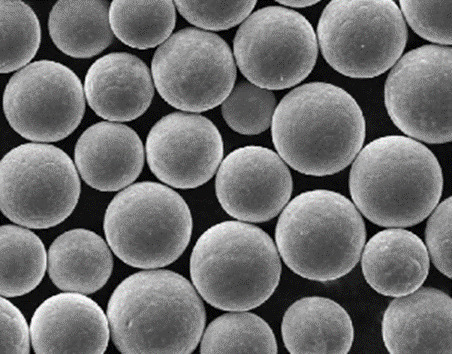
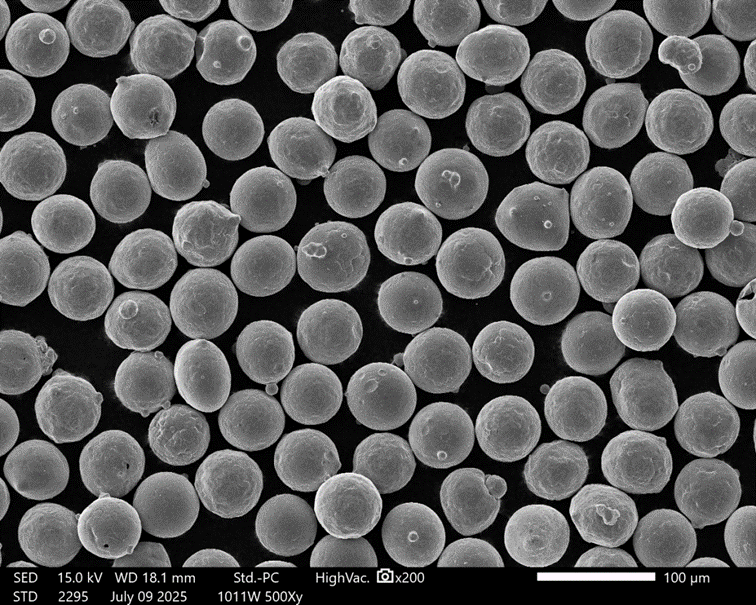
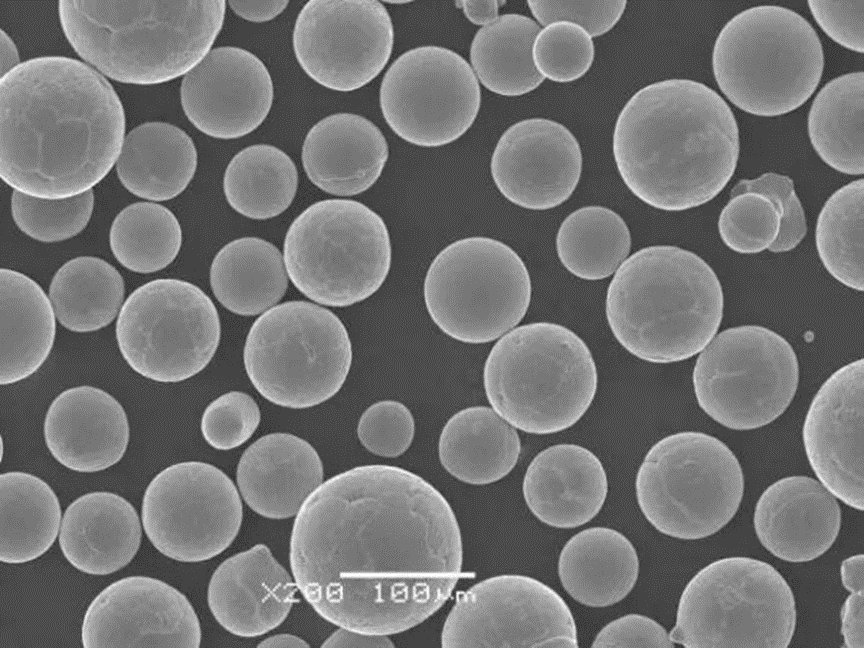
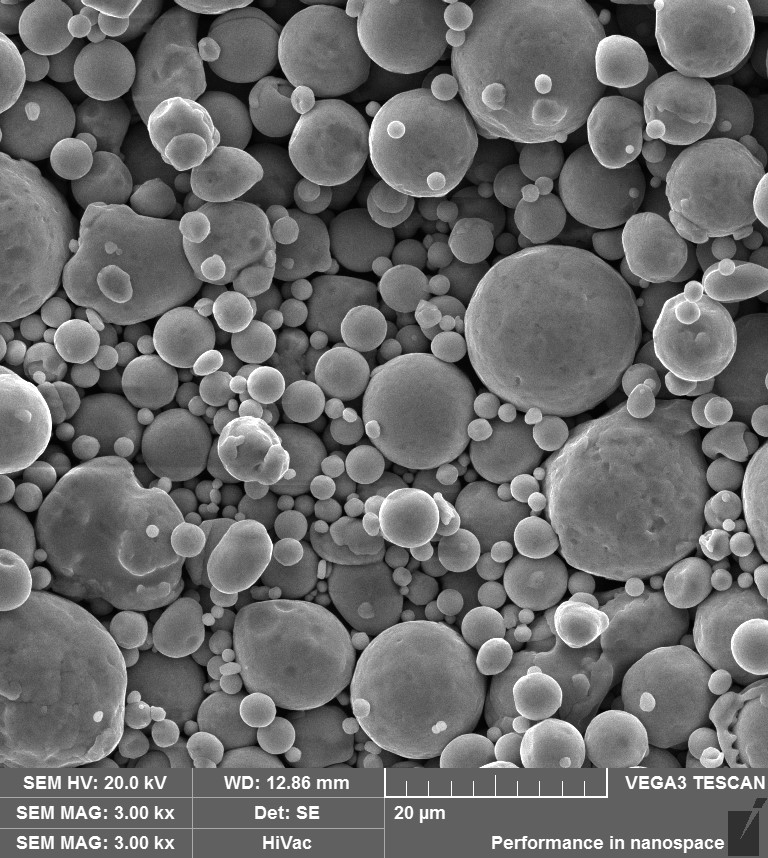
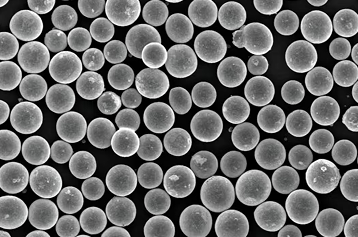
For LPBF, the priority is high sphericity, narrow PSD, low satellites, and low oxygen. Those characteristics improve recoating stability and reduce the likelihood of local defects caused by uneven bed density. In DED, the powder stream dynamics matter more, so a slightly coarser and more robust size fraction is usually preferred.
Test methods and standards framework
Although no single ASTM or ISO alloy standard defines FeCoNiCrAl chemistry for AM, general powder test methods remain relevant. Hall flow is commonly framed through the [ASTM B213 flow standard], while apparent density often references the [ASTM B212 apparent density standard]. For terminology and process classification, AM users routinely rely on the ISO/ASTM مشتركة definitions used across the sector.
What buyers should request
A serious technical inquiry should ask for full chemistry, PSD, oxygen, apparent density, tap density, Hall flow, and morphology documentation. Many buyers also request phase data such as XRD interpretation, especially when the target application depends on FCC versus BCC/B2 balance. Because HEAs are less standardized than mature aerospace alloys, the specification package often becomes the real contract.
Herstellungsprozess
The manufacturing route of FeCoNiCrAl powder strongly affects its usability in additive manufacturing. Because the alloy contains multiple principal elements with different melting behaviors and oxidation tendencies, the powder-making process must maintain chemistry homogeneity while producing spherical particles with minimal contamination. That makes atomization-based routes the preferred choice for premium AM feedstock.
Comparison of powder-making routes
| Prozess | Sphärizität | Sauerstoffaufnahme | PSD-Steuerung | Durchsatz | Relative Kosten |
|---|---|---|---|---|---|
| Gaszerstäubung (GA) | Hoch | Gering bis mäßig | Gut | Hoch | Mittel |
| PREP | Sehr hoch | Sehr niedrig | Gut | Mittel | Hoch |
| VIGA | Hoch bis sehr hoch | Niedrig | Sehr gut | Mittel | Hoch |
| EIGA | Sehr hoch | Sehr niedrig | Sehr gut | Mittel | Hoch |
| Plasma Atomization / Related Plasma Routes | Sehr hoch | Niedrig | Gut bis sehr gut | Niedrig bis mittel | Hoch |
Gas-atomized FeCoNiCrAl High Entropy Alloys
Gas atomization is the most practical route for commercial HEA powder production. A prealloyed melt is atomized with inert gas into droplets that solidify rapidly into mostly spherical particles. This route offers the best balance of cost, throughput, and chemistry uniformity for LPBF and DED feedstocks.
For FeCoNiCrAl, the quality of the initial melt is critical. Since the final performance depends on multi-element balance, incomplete homogenization or segregation before atomization can undermine the very rationale for using an HEA in the first place.
PREP and premium HEA spherical powder
PREP is less common for FeCoNiCrAl than for titanium, but it remains a credible route where exceptionally spherical and clean powder is required. The process generally produces smooth particles with low contamination, which can be beneficial for demanding powder-bed applications and research programs. Its main limitation is cost, especially when the end use is still in exploratory development rather than qualified serial production.
VIGA and EIGA for chemistry-sensitive HEA feedstock
Vacuum induction gas atomization and electrode induction gas atomization are well suited to materials where cleanliness and composition control are priorities. In FeCoNiCrAl systems, these routes can help reduce oxidation and maintain compositional consistency across batches. That is particularly valuable because even modest chemistry drift may shift the alloy toward a different phase balance.
Post-atomization classification and reuse
After atomization, the powder is sieved into application-specific size cuts and may be inspected for satellites, fines, and oxygen content. In AM use, powder reuse must be managed carefully because aluminum-bearing HEAs can be sensitive to surface oxidation and PSD drift. Over multiple reuse cycles, build behavior may change enough to affect density or cracking tendency, so powder lifecycle control is an essential part of process qualification.
Anwendungen nach Branche
FeCoNiCrAl High Entropy Alloys are not yet mainstream production materials across all sectors, but they are increasingly relevant where high-temperature exposure, oxidation resistance, wear, and compositional innovation matter. Their application profile is strongest in sectors willing to trade some standardization for advanced performance potential. That makes them particularly interesting in pilot production, functional prototyping, and specialized industrial hardware.
Aerospace and high-temperature energy systems
Aerospace and power-generation researchers are interested in FeCoNiCrAl for hot-section-adjacent hardware, oxidation-resistant structures, and lightweight high-temperature components that need more design freedom than wrought development alloys can easily provide. While these alloys are not replacements for every nickel superalloy, they are valuable in experimental combustor-related hardware, heat-exposed fixtures, and non-rotating components where oxidation and thermal stability are priorities.
Oil and gas, wear, and corrosive service parts
In oil and gas, the most promising uses are wear-prone components, valve-related hardware, cladding layers, and complex parts that benefit from high hardness and environmental resilience. Chromium and aluminum help the system resist oxidation and surface degradation, while the multi-element matrix can support good strength retention. In cladding or repair applications, the alloy may also serve as a cobalt- and nickel-adjacent alternative to more traditional hardfacing families.
Tooling and industrial manufacturing
Tooling inserts, thermal fixtures, dies, and industrial wear components are natural candidates because FeCoNiCrAl can be tuned toward higher hardness than many stainless steels. Additive manufacturing makes this more useful by enabling conformal features, graded structures, and lower-volume production without full tooling investment. For manufacturers comparing options, HEAs often sit between [cobalt alloy powder systems] and advanced ferrous materials in terms of application logic.
Automotive, transport, and advanced prototyping
In automotive and transport, adoption is more likely in advanced prototyping, motorsport-adjacent thermal parts, and functional demonstrations than in high-volume commodity parts. The material cost and qualification burden remain too high for routine substitution into every structural bracket. However, in high-value applications involving heat, wear, or geometric complexity, FeCoNiCrAl becomes easier to justify.
Research platforms and next-generation alloy design
University laboratories, national research groups, and industrial R&D centers use FeCoNiCrAl as a benchmark HEA system because it is both scientifically rich and industrially relevant. It is often chosen to study solidification, phase selection, oxidation behavior, and the effect of AM thermal cycling. This is one reason the family is closely associated with broader [advanced application sectors] where process development and materials discovery overlap.
Vergleich mit alternativen Materialien
FeCoNiCrAl is usually evaluated against stainless steels, nickel superalloys, CoCr-type alloys, and other HEA systems. The best comparison depends on whether the design prioritizes oxidation resistance, room-temperature ductility, hardness, thermal stability, or print maturity. In most real projects, the choice comes down to whether the unique tunability of FeCoNiCrAl outweighs the greater standardization of conventional alloys.
FeCoNiCrAl High Entropy Alloys versus alternative AM materials
| Material | Dichte (g/cm³) | Main Advantage | Relative Kosten | Printability / Process Fit | Corrosion / Service Profile |
|---|---|---|---|---|---|
| FeCoNiCrAl High Entropy Alloys | 6.8–7.4 | Tunable phase structure, strong oxidation resistance, high strength-to-design flexibility | Hoch | Good for AM R&D, LPBF, DED, and cladding with qualification | Strong oxidation resistance and good high-temperature surface stability |
| 316L-Edelstahlpulver | 7.9–8.0 | Excellent printability, mature process data, good corrosion resistance | Niedrig bis mittel | Outstanding LPBF maturity and broad industrial familiarity | Very good general corrosion resistance, lower hot hardness |
| Inconel 718-Pulver | 8.1–8.2 | Excellent high-temperature strength and industrial qualification | Hoch | Highly mature in aerospace and energy AM | Excellent elevated-temperature performance and oxidation resistance |
| CoCrMo-Pulver | 8.3–8.5 | Strong wear resistance and established medical / industrial use | Hoch | Good AM maturity, especially for LPBF | Strong corrosion and wear resistance |
| AlCoCrFeNi-type HEA variants | 6.7–7.3 | Similar HEA tunability with different phase balance and hardness options | Hoch | Comparable AM research relevance | Similar oxidation-focused service logic, composition-specific |
Compared with 316L, FeCoNiCrAl is more expensive and less standardized, but it can deliver much higher hardness and better high-temperature oxidation resistance. Compared with Inconel 718, it may offer a different balance of density, microstructural tunability, and oxidation behavior, though it typically lacks the same level of industrial qualification. Against CoCrMo, it competes more as a research-forward and temperature-oriented system than as a direct biomedical or dental replacement.
When FeCoNiCrAl is the better choice
FeCoNiCrAl is the better choice when the application values alloy tunability, oxidation resistance, and advanced AM-enabled material design more than catalog familiarity. It is especially attractive for pilot programs, heat-exposed industrial hardware, and research components that need something between stainless simplicity and nickel-superalloy orthodoxy. If the project instead requires a fully mature supply chain and well-established design allowables, conventional alloys will often remain the lower-risk path.
Unser Unternehmen
Shanghai Truer Technology Co., Ltd., operating am-printing.com, was established in 2009 and created its additive manufacturing business in 2019. According to its published company information, it integrates 3D printing powder-making equipment and services with metal powder supply, including Selective Electron Beam Melting equipment, Plasma Rotating Electrode Process powder-making equipment, and Gas Atomization capability. Its stated powder portfolio includes TiNi, TiTa, TiAl, TiNbZr, CoCrMo, and spherical metal powders across nickel-based, cobalt-based, titanium-based, copper-based, aluminum-based, and stainless steel systems, and it also describes a joint innovation center for metal 3D printing with laboratories and domain experts; the company further notes support for SLM, SEBM, DED, laser cladding, powder metallurgy, MIM, HIP, cold and hot spraying, welding, and coating in sectors including 3C electronics, hand tools, remote control cars, medical, aerospace, and nuclear power, as outlined on its [company overview page].
FAQ
Q1. Are FeCoNiCrAl High Entropy Alloys suitable for commercial metal 3D printing?
Yes, but mainly in specialized or developmental applications rather than broad commodity production. They are most suitable where elevated-temperature behavior, oxidation resistance, and microstructural tunability justify a more complex qualification effort.
Q2. What makes FeCoNiCrAl High Entropy Alloys different from stainless steel powder?
Stainless steel powder is built around an iron-dominant matrix with well-established composition ranges, while FeCoNiCrAl uses multiple principal elements to create a more tunable phase structure. That gives FeCoNiCrAl greater flexibility in balancing hardness, strength, and oxidation resistance, but usually with higher cost and less standardization.
Q3. Is FeCoNiCrAl powder easy to print in LPBF?
It can print well, but it is not automatically easy. Success depends on aluminum level, oxygen control, powder quality, and the chosen scan strategy, because phase-sensitive HEAs can respond more sharply to thermal cycling than mature alloys like 316L.
Q4. Which industries are most interested in FeCoNiCrAl High Entropy Alloys?
Aerospace, energy, oil and gas, tooling, and advanced industrial R&D are among the most interested sectors. These industries tend to value the alloy family’s potential for oxidation resistance, wear performance, and high-temperature structural stability.
Q5. What particle sizes are typical for FeCoNiCrAl High Entropy Alloy powder?
For powder bed fusion, 15–45 µm and 15–53 µm are typical starting ranges. For directed energy deposition, 45–105 µm is more common, while coarser fractions may be used for cladding or spray-related processes.
Q6. What should buyers verify before ordering FeCoNiCrAl High Entropy Alloys powder?
They should verify exact elemental ratios, oxygen content, PSD, apparent density, Hall flow, morphology, and intended process route. They should also check whether the supplier provides phase or heat-treatment guidance, since build success often depends on matching composition to the desired FCC, BCC, or B2-dominant microstructure.