簡単な回答
Gas atomized spherical pure copper powder is a high-conductivity metal feedstock produced as near-spherical particles for additive manufacturing, thermal spray, and powder metallurgy. It is chosen when the application prioritizes electrical conductivity, thermal conductivity, dense powder packing, and stable flow behavior more than maximum strength. In metal 3D printing and related powder-fed processes, it is especially valuable for heat exchangers, induction components, electrodes, RF hardware, and cooling structures where copper’s functional performance outweighs its higher reflectivity and more demanding processing window.
What Is gas atomized spherical pure copper powder
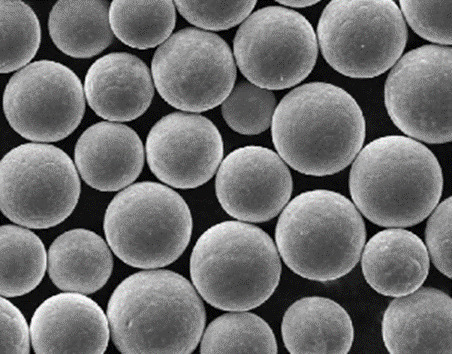
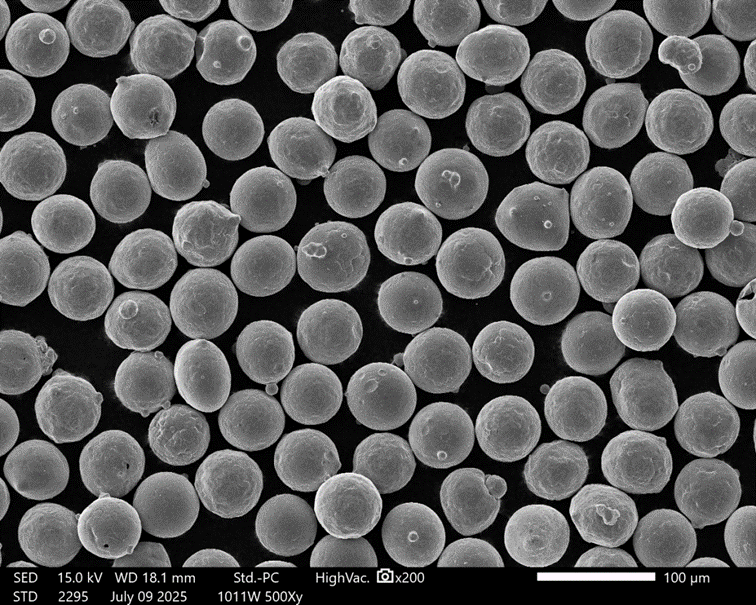
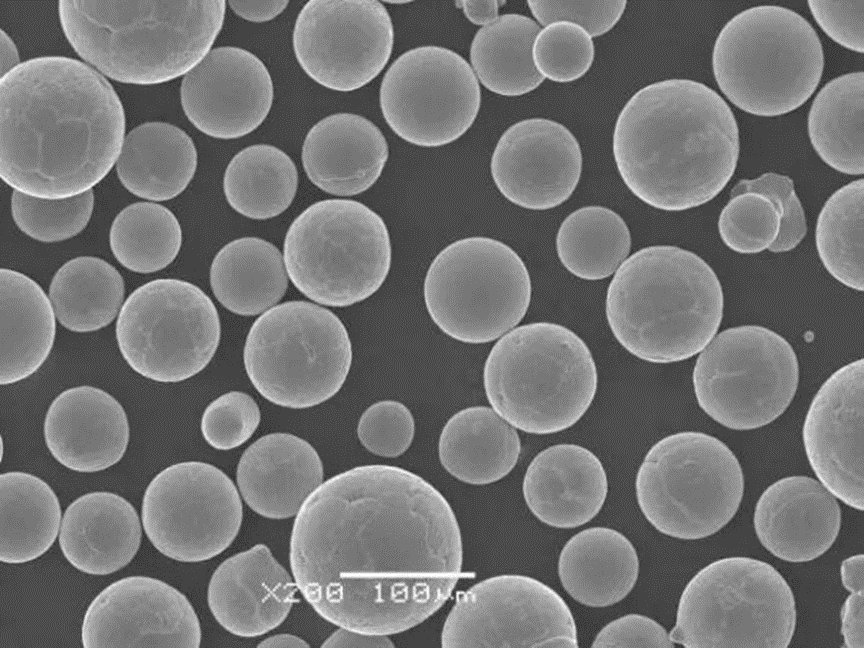
Gas atomized spherical pure copper powder is the powder form of high-purity copper produced by atomizing molten copper with high-velocity gas under controlled conditions so that droplets solidify into rounded particles. In additive manufacturing terms, it is a functional metal powder rather than a conventional structural alloy. Its value comes primarily from copper’s inherently high electrical and thermal conductivity, combined with the flow and packing behavior made possible by spherical particle morphology.
Pure copper powder sits in a different category from many mainstream AM metals. Stainless steels, nickel superalloys, and titanium alloys are often selected for structural performance under mechanical or thermal load. Copper, by contrast, is usually selected because the part must move heat or electricity efficiently. That changes how engineers define success: conductivity, density, oxide control, and surface finish can matter as much as tensile strength.
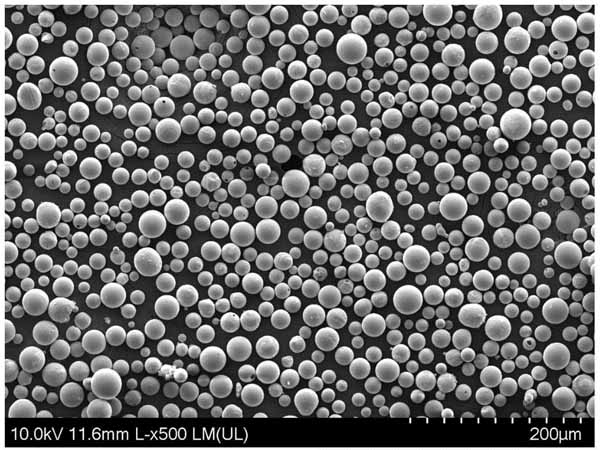
Gas atomized spherical powder as a feedstock class
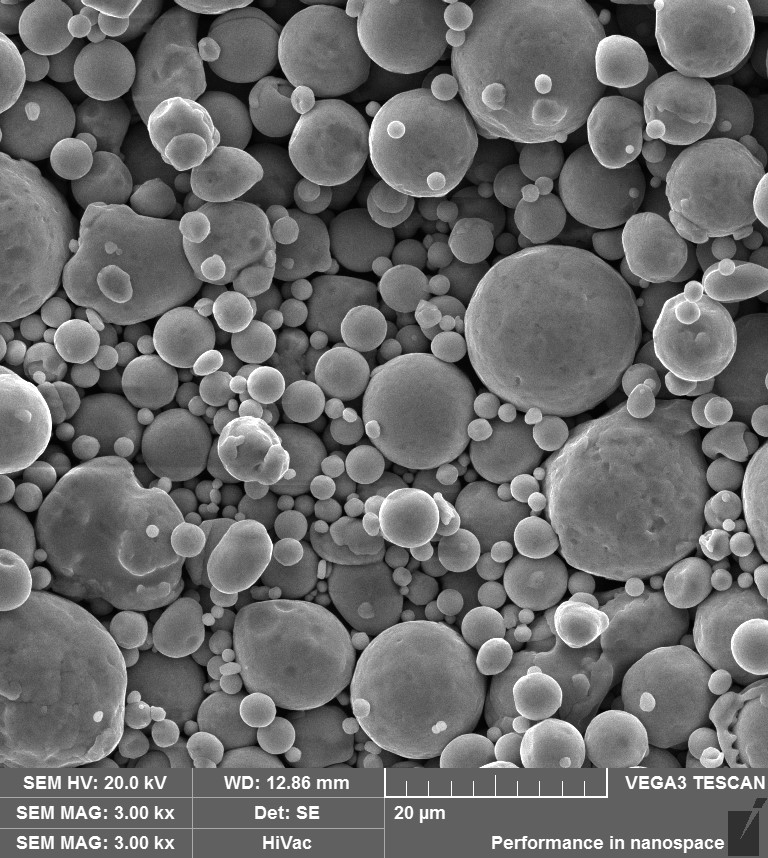
The words in the material name each describe a critical property. “Gas atomized” refers to the production route, which influences oxygen pickup, cleanliness, and particle size distribution. “Spherical” refers to morphology, which is important for powder flow, recoating consistency, and deposition efficiency. “Pure copper” indicates that the chemistry is dominated by Cu rather than a strengthened alloy system such as CuCrZr or bronze.
This distinction matters because pure copper behaves differently from alloyed copper powders in both processing and service. Its conductivity is higher, but its strength is lower. It also reflects laser energy strongly at many wavelengths, which can make powder bed fusion more challenging than for steels or nickel alloys.
Where pure copper powder fits in additive manufacturing
In powder bed fusion, pure copper has historically been considered a specialist material because it requires careful energy coupling and atmosphere control. In directed energy deposition, thermal spray, and cold spray, it is often more straightforward because the process physics differ. Across all of these methods, the powder must still meet tight expectations for size distribution, shape, cleanliness, and lot consistency.
Because feedstock choice depends on process route, buyers often compare a specific copper grade against a broader [copper powder product family] rather than choosing by chemistry alone. That comparison typically includes not only pure copper but also copper alloys that trade some conductivity for better printability or higher strength.
Why pure copper is not interchangeable with copper alloys
Pure copper powder should not be treated as a simple substitute for CuCrZr, bronze, or brass powders. Those materials were designed to solve different engineering problems. Pure copper maximizes conductivity and is therefore attractive for heat transfer plates, induction coils, current-carrying parts, and cooling channels. Copper alloys, on the other hand, may offer better hardness, wear resistance, or high-temperature mechanical performance.
For AM users, this means the selection question is not “Do I need copper?” but “Do I need conductivity first, or do I need a compromise between conductivity and strength?” That is the real decision boundary.
In copper AM, powder quality is inseparable from functional performance because poor feedstock control quickly shows up as lower density and lower conductivity.
化学組成
Pure copper powder is chemically simple compared with precipitation-hardening or superalloy systems, but that simplicity makes impurity control more important, not less. Small amounts of oxygen, phosphorus, iron, nickel, sulfur, or lead can meaningfully affect conductivity, embrittlement risk, joining behavior, and response during additive processing. For high-end applications, buyers therefore look beyond nominal “Cu balance” and review impurity ceilings carefully.
| エレメント | Typical Content (wt%) | 冶金上の役割 | Functional Effect in Powder and Built Parts |
|---|---|---|---|
| 銅(Cu) | ≥99.7-99.95 | 非金属マトリックス | Provides high electrical and thermal conductivity, ductility, and corrosion resistance |
| 酸素 (O) | 0.01-0.10 typical, grade-dependent | Surface oxide and residual impurity | Excess oxygen can reduce conductivity, influence laser coupling, and affect fusion behavior |
| 銀(Ag) | ≤0.05 | Trace residual element | Usually minor effect at low levels; may appear in refined copper feedstocks |
| 鉄(Fe) | ≤0.05 | 残留不純物 | Can lower conductivity and promote hard inclusions if elevated |
| 鉛 | ≤0.01 | Undesired residual | Harmful for high-purity electrical applications and usually tightly limited |
| 硫黄(S) | ≤0.01 | Undesired impurity | Can negatively affect hot workability and joining response |
| リン (P) | ≤0.03 | Residual deoxidation-related element | Too much phosphorus reduces conductivity, though it may influence deoxidized copper grades |
| ニッケル(Ni) | ≤0.05 | 残留不純物 | Raises strength slightly at high levels but lowers maximum conductivity |
| 亜鉛 | ≤0.05 | 残留不純物 | Typically controlled to preserve purity and stable processing |
Purity and conductivity in pure copper AM powder
The key commercial issue is not merely whether the powder is “copper.” It is how pure that copper is and whether the impurity package matches the intended use. For thermal and electrical components, conductivity is often the defining specification, so elements that interrupt electron flow must be minimized.
This is why pure copper feedstocks are frequently described through both composition and conductivity-oriented quality logic. In practice, a small impurity shift that looks insignificant in a generic metals table can matter materially when the part is designed to carry current or remove heat.
Oxygen as the most sensitive secondary variable
Oxygen deserves separate attention because it affects powder surface condition and final part behavior. Every copper powder particle forms some oxide at the surface, but the degree of oxidation depends on melting practice, atomization atmosphere, handling, and storage. Excess surface oxide can reduce effective conductivity and make densification more difficult.
In laser-based AM, oxide films also interact with absorptivity and melt pool behavior. For that reason, many users treat oxygen content as a core purchasing metric alongside particle size and sphericity rather than as a minor certificate detail.
Trace elements and specification discipline
Trace elements such as iron, sulfur, lead, and nickel are generally kept very low in high-purity copper powder. Their effect is often less about bulk mechanical strength and more about downstream reliability, conductivity retention, brazing response, and qualification in electrical applications. Many quality teams therefore prefer composition reporting that aligns with [NIST materials measurement resources] when setting internal acceptance logic for high-performance metallic feedstocks.
物理的および機械的特性
The physical profile of pure copper is the main reason it is used in additive manufacturing at all. Its thermal conductivity is among the highest of any engineering metal, and its electrical conductivity is likewise exceptional. Mechanical strength, however, is modest compared with aluminum alloys, steels, or nickel-based AM materials, so applications usually exploit copper’s functional properties rather than asking it to carry the highest structural loads.
| プロパティ | 代表値 | 単位 | Test Standard or Condition |
|---|---|---|---|
| Solid density | 8.93-8.96 | g/cm³ | Typical room-temperature copper value |
| 融点 | 1083-1085 | °C | Pure copper reference value |
| Ultimate tensile strength | 180-260 | MPa | Typical annealed to moderately worked consolidated condition |
| Yield strength (0.2% offset) | 60-180 | MPa | Strongly condition-dependent |
| 破断伸度 | 20-45 | % | Typical dense consolidated copper, condition-dependent |
| 硬度 | 45-85 | HB | Annealed to lightly work-hardened condition |
| 弾性率 | 110-128 | GPa | 室温における代表的な値 |
| 熱伝導率 | 330-390 | W/m-K | High-purity condition, strongly affected by density and oxygen |
| 電気伝導度 | 85-100 | % IACS | Grade- and process-dependent |
| 熱膨張係数 | 16-17 | µm/m·K | Approximate ambient engineering range |
Why conductivity defines material value
The standout property of gas atomized spherical pure copper powder is conductivity. Thermal conductivity enables rapid heat spreading and removal, while electrical conductivity supports current-carrying functions with comparatively low resistive losses. In AM, these are the properties that justify accepting a more demanding process window.
If a part does not need high thermal or electrical performance, pure copper may not be the most efficient material choice. Its density is relatively high, its laser reflectivity is challenging, and its strength-to-weight ratio is less compelling than that of aluminum or titanium.
Strength versus function in consolidated copper parts
Copper is not weak in an absolute sense, but it is not usually chosen for strength-led design. Dense printed copper parts can be adequately robust for housings, coils, heat sinks, and conductive hardware, yet they rarely compete directly with high-strength structural AM alloys. This is why specification sheets for pure copper often emphasize conductivity and purity at least as much as tensile data.
Mechanical values also vary significantly with build density and post-processing. A high-conductivity copper part that contains lack-of-fusion defects or retained porosity may show acceptable geometry but underperform in both mechanical and thermal service.
Thermal management and service implications
Copper’s thermal performance is especially relevant in components that must dissipate concentrated heat flux. Examples include induction tooling, heat spreaders, cooling inserts, and electronic thermal management structures. In these cases, the value of the powder depends on the ability to translate feedstock quality into dense parts with minimal oxide-related interruption of heat flow.
Interpreting property data for AM copper
Published property ranges for pure copper often look broad because they combine data from different build technologies and post-build states. A laser powder bed sample, an electron-beam-built component, and a cold-sprayed deposit may all be called “copper,” yet their conductivity and strength can differ substantially. For that reason, users should treat reference values as orientation points rather than as transferable guarantees.
仕様および取り扱いグレード
Specifications for gas atomized spherical pure copper powder combine chemistry, morphology, and handling metrics in a way that reflects the intended process route. Fine powder bed grades focus on recoating behavior and stable melting, while coarser grades emphasize feed consistency in nozzle-based systems. Across all grades, oxygen level and particle roundness are particularly important because they influence conductivity retention and part density.
| Grade or Reference Type | 代表的なPSD範囲 | 見かけ密度 | タップ密度 | ホールの流れ | 酸素含有量 | Sphericity or Morphology | Standards or Cross-Reference |
|---|---|---|---|---|---|---|---|
| Fine LPBF grade | 15-45 µm | 4.5~5.0 g/cm³ | 5.0-5.6 g/cm³ | 14-22 s/50 g | ≤0.08 wt% typical | High sphericity, low satellites | Internal AM feedstock grade for fine-layer builds |
| Standard LPBF grade | 15-53 µm | 4.6~5.2 g/cm³ | 5.2-5.8 g/cm³ | 13-21 s/50 g | ≤0.08 wt% typical | Spherical and screened for uniform spreading | Common laser bed size range |
| DED grade | 45-105 µm | 4.8-5.4 g/cm³ | 5.4-6.0 g/cm³ | 12-19 s/50 g | ≤0.10 wt% typical | Free-flowing spherical powder | Directed energy deposition feedstock |
| Cladding or spray grade | 53~150 µm | 4.9~5.6 g/cm³ | 5.5-6.2 g/cm³ | 11-18 s/50 g | ≤0.12 wt% typical | Coarser spherical fraction | Laser cladding, thermal spray, and related routes |
| Standards reference row | - | - | - | - | Controlled by lot | Verified by microscopy | Often documented against ASTM, ISO, GB, or DIN style requirements |
| Documentation row | - | - | - | - | Batch reported | Morphology documented | Certificates typically include chemistry, PSD, density, and flow data |
Particle size distribution for spherical copper AM powder
For powder bed fusion, 15-45 µm and 15-53 µm are common commercial windows because they support thin layer deposition and relatively uniform packing. DED and cladding applications more often use 45-105 µm or 53-150 µm ranges because coarser particles transport more reliably through powder delivery hardware.
Particle size selection also affects thermal behavior. Finer particles tend to have greater surface area, which can increase oxidation sensitivity, while coarser particles may reduce resolution or change absorptivity characteristics in tightly focused energy systems.
Morphology, density, and flow behavior
Spherical morphology improves flowability and enables dense, more uniform powder layers. In copper, this matters not only for handling convenience but also for conductivity performance, because consistent layer packing contributes to more uniform melting and lower residual porosity.
Apparent density and tap density are useful indicators of powder packing behavior, though they should not be confused with final part density. A powder with good bulk density can still underperform if oxide level, satellite content, or processing parameters are poorly controlled.
Standards and cross-reference logic
There is no single global AM specification that captures every performance aspect of pure copper feedstock across all processes. Users therefore combine chemistry limits, powder test methods, and internal process validation. General powder characterization and AM terminology are often interpreted through sources such as [ASTM additive manufacturing terminology] and customer-specific qualification plans rather than a single universal designation.
Supply grades in broader material selection
Procurement teams rarely review copper powder in isolation. They typically compare it against adjacent material families, especially when deciding whether conductivity or structural durability is the primary requirement. In that context, a [specialized refractory metal powder range] may also enter the discussion for extreme-temperature thermal applications, even though tungsten or molybdenum solve a different engineering problem than copper.
製造工程
Manufacturing route is central to the value of gas atomized spherical pure copper powder. Because copper is both dense and oxidation-sensitive at high temperature, the atomization environment must be carefully controlled to produce clean, round particles with acceptable oxygen levels. Differences in atomization route directly affect morphology, lot consistency, cost, and downstream process performance.
| Process Route | Basic Principle | 球形度 | Oxygen Pickup Risk | PSDコントロール | スループット | 相対的なコスト | Typical Relevance to Pure Copper |
|---|---|---|---|---|---|---|---|
| ガスアトマイズ(GA) | Inert gas disintegrates molten copper into droplets | 良い~非常に良い | Low with strong atmosphere control | 非常に良い | 高い | 中程度 | Main commercial route for spherical pure copper powder |
| VIGA | Vacuum induction melting followed by gas atomization | 非常に良い | Very low to low | 非常に良い | 中~高 | 中~高 | Useful for cleaner melt handling and tighter oxygen control |
| 準備 | Plasma melts a rotating electrode to eject droplets | 素晴らしい | 非常に低い | グッド | ミディアム | 高い | Attractive for premium morphology, less common for bulk copper supply |
| EIGA | Electrode induction melting with gas atomization | Very good to excellent | 非常に低い | 良い~非常に良い | ミディアム | 高い | Valuable when contamination control is prioritized |
| 水の霧化 | Water jets disrupt the molten metal stream | Poor to fair for AM | 高い | グッド | 高い | 低い | Generally unsuitable for premium spherical AM copper feedstock |
Why gas atomization dominates copper powder production
Gas atomization is the mainstream route because it balances commercial throughput with the ability to produce spherical powder suitable for AM and advanced thermal processes. Under inert gas, molten copper is broken into droplets that cool rapidly and are later sieved into usable size fractions. If the melt and atmosphere are well controlled, the process yields powder with good roundness and manageable oxygen content.
That combination is why gas atomization is usually the default for copper AM feedstock. It is scalable enough for industrial supply and flexible enough to serve multiple PSD classes from a single production campaign.
PREP, VIGA, and EIGA trade-offs
PREP is known for very high sphericity and low contamination risk because the powder originates from a rotating electrode rather than a free-falling melt stream. However, it is not always the most economical choice for pure copper, especially where high production volumes are required.
VIGA and EIGA add tighter control over melt cleanliness and atmosphere quality. For oxygen-sensitive copper applications, that can be beneficial, particularly where conductivity is critical and buyers want a premium cleanliness profile. The trade-off is usually cost, complexity, and potentially lower output compared with standard GA lines.
Post-atomization steps that matter
After atomization, powder must be screened, classified, sampled, tested, and packaged. Oversized particles, fines, satellites, and foreign inclusions all have to be controlled because they can affect spreading, nozzle feeding, and consolidated density. For copper, packaging and storage discipline are essential because the surface condition of the particles can change over time if exposed to moisture or air.
Equipment ecosystems and copper feedstock development
Powder producers with broader AM manufacturing capability often evaluate copper in the same ecosystem as titanium, cobalt, nickel, and steel powders. That matters because it links powder design to real process routes such as SLM, SEBM, DED, and cladding. Buyers who compare copper with structurally driven alternatives may also review [titanium alloy powder options] when deciding whether heat transfer or lightweight strength is the dominant design need.
業界別の用途
Gas atomized spherical pure copper powder is used where functional performance is more important than lightweighting or peak structural strength. Its strongest case appears in applications that depend on moving heat, conducting electricity, or forming geometrically complex copper paths that are difficult to machine conventionally. That makes it particularly attractive in energy, electronics, tooling, and advanced industrial systems.
Electronics, electrical hardware, and RF systems
Copper’s primary application space is electrical. Gas atomized spherical pure copper powder is well suited to busbar-adjacent geometries, induction hardware, conductive connectors, antenna components, and RF thermal structures where geometry complexity and conductivity both matter. Additive manufacturing enables internal channels, topology modifications, and integrated functions that are difficult to achieve with traditional subtractive methods.
In these parts, part density is a functional metric, not merely a structural one. Voids or poorly fused regions increase resistance, reduce thermal transfer, and create local hot spots.
Thermal management and heat exchanger design
Copper AM is particularly compelling in heat exchangers, heat sinks, vapor-management-adjacent structures, and tooling inserts with conformal cooling. The alloy’s conductivity allows engineers to move heat rapidly from hotspots into broader thermal mass or active cooling circuits.
This is one area where high thermal conductivity creates clear performance differentiation. The ability to combine copper’s intrinsic conductivity with AM-enabled internal geometries is often the reason pure copper powder is qualified despite the tighter process controls it requires.
Aerospace, energy, and industrial power systems
In aerospace and energy hardware, copper powder can support combustion-adjacent cooling elements, induction components, electrical interfaces, and thermal management hardware. Pure copper is not selected for high-temperature structural shells in the same way as nickel-based alloys, but it is highly relevant in systems where energy transfer and heat removal are critical.
Where service temperature rises beyond copper’s comfortable structural range, designers may compare it against higher-temperature [nickel alloy powder solutions]. That comparison usually reflects a shift in design priority from conductivity to hot-strength retention.
Tooling, molds, and manufacturing aids
Copper and copper-alloy inserts are used in tooling where fast heat extraction improves cycle time or thermal stability. Gas atomized pure copper powder can be useful in specialized mold inserts, heat-transfer blocks, and localized cooling features, especially when conventional drilling cannot create the required channel geometry.
Where pure copper is less ideal
Pure copper is not usually the first choice for wear-intensive components, heavily loaded structural brackets, or aggressive sliding-contact surfaces. In those cases, bronze, steel, cobalt-based, or nickel-based systems may provide a better balance of durability and manufacturability even if conductivity is lower.
代替材料との比較
Material selection for copper AM is rarely a simple yes-or-no decision. Engineers usually compare pure copper with copper alloys, aluminum, and high-performance structural metals to determine whether conductivity, mass, strength, or cost carries the most value in the application. That comparison reveals where pure copper is exceptional and where it is intentionally specialized rather than universal.
| 素材 | 密度 (g/cm³) | 一般的な筋力レベル | Relative Printability | Electrical/Thermal Conductivity | 耐食性 | 相対的なコスト | 最適なユースケース |
|---|---|---|---|---|---|---|---|
| Gas atomized spherical pure copper powder | 8.93-8.96 | 低~中程度 | Moderate to difficult | 素晴らしい | グッド | 中~高 | Conductive and heat-transfer parts with complex geometry |
| CuCrZr powder | 8.8-8.9 | 中~高 | 中程度 | 非常に良い | グッド | 高い | Cooling hardware needing better strength than pure copper |
| AlSi10Mg粉末 | 2.67 | 中~高 | 非常に良い | 中程度 | グッド | 中程度 | Lightweight general-purpose aluminum AM parts |
| 316Lステンレス鋼粉末 | 7.90-8.00 | 中程度 | 素晴らしい | 低い | 非常に良い | 中程度 | Corrosion-resistant industrial parts where conductivity is secondary |
| Ti-6Al-4V粉末 | 4.43 | 高い比強度 | 良い~非常に良い | 低い | 非常に良い | 高い | Lightweight high-performance structural applications |
Pure copper versus CuCrZr
This is the most relevant intra-family comparison. CuCrZr sacrifices some conductivity in exchange for improved strength and high-temperature mechanical stability. If the component must both transfer heat and carry meaningful structural load, CuCrZr may be the better compromise.
Pure copper versus aluminum AM materials
Aluminum powders offer far lower density and often easier lightweight design integration, but they cannot approach copper’s thermal and electrical performance. When conductivity is the primary requirement, aluminum is usually an alternative only if weight or cost strongly dominates the design brief.
Pure copper versus stainless steel and titanium
Stainless steel and titanium outperform pure copper in many structural metrics and, depending on the system, can be easier to qualify mechanically. But neither material serves as a true substitute where conductive performance defines the part’s purpose. Functional conductivity leadership is the reason pure copper remains a distinct material class rather than simply a niche variant of general AM metals.
当社
Shanghai Truer Technology Co., Ltd., which operates am-printing.com, was established in 2009 and created its additive manufacturing business in 2019. Based on the company profile provided, its activities include integrating 3D printing powder-making equipment and services with metal powders for engineering applications, with core technologies including Selective Electron Beam Melting equipment, Plasma Rotating Electrode Process powder-making equipment, and Gas Atomization where relevant. Its powder portfolio includes TiNi, TiTa, TiAl, TiNbZr, CoCrMo, and spherical nickel-, cobalt-, titanium-, copper-, aluminum-, and stainless-steel powders for SLM, SEBM, DED, laser cladding, powder metallurgy, MIM, HIP, cold or hot spraying, welding, and coating across sectors such as 3C electronics, hand tools, remote-control cars, medical, aerospace, and nuclear power; further company details appear on the [company profile page].
よくあるご質問
Q1. Is gas atomized spherical pure copper powder good for metal 3D printing?
Yes, but it is usually considered a specialized rather than entry-level AM material. It is highly valuable when thermal or electrical conductivity is the main design driver, but it typically requires tighter control over laser parameters, atmosphere quality, and powder condition than more forgiving materials such as stainless steel or AlSi10Mg.
Q2. Why is spherical morphology important in pure copper powder?
Spherical particles generally flow better, pack more consistently, and spread more uniformly than irregular particles. In copper AM, that improves layer quality and helps support denser builds, which is important because porosity directly reduces conductivity.
Q3. What particle sizes are typical for gas atomized spherical pure copper powder?
Laser powder bed fusion commonly uses fine grades such as 15-45 µm or 15-53 µm. Directed energy deposition, laser cladding, and thermal spray more often use coarser fractions such as 45-105 µm or 53-150 µm for more reliable feeding.
Q4. How does pure copper powder compare with CuCrZr powder?
Pure copper offers higher maximum conductivity, while CuCrZr provides a better balance of conductivity and mechanical strength. If the part’s main job is heat transfer or current carrying, pure copper is often preferred; if the part must also resist higher structural loads, CuCrZr may be the better fit.
Q5. What should buyers check when qualifying copper AM powder?
They should verify copper purity, oxygen content, particle size distribution, apparent density, tap density, flow behavior, sphericity, and satellite level. Batch traceability, storage practice, and machine-specific test builds are also important because conductivity outcomes depend on both powder quality and final build density.
Q6. Which industries use gas atomized spherical pure copper powder most often?
The most common users are electronics, electrical equipment, thermal management, tooling, energy, and aerospace subsystem developers. These sectors value the material for heat exchangers, cooling inserts, current-carrying hardware, induction components, RF parts, and other applications where complex geometry must be combined with high conductivity.