Kurzantwort
FeNiCrMn High Entropy Alloys are multi-principal-element alloys, typically built around near-equiatomic iron, nickel, chromium, and manganese, and supplied as spherical powder for laser and electron-beam additive manufacturing. They are chosen for AM parts when engineers need a useful balance of ductility, solid-solution strengthening, corrosion resistance, thermal stability, and research flexibility. In practice, they are especially attractive for parameter development, crack-resistant builds, and applications where conventional stainless steels or nickel alloys are either over-specified, too costly, or less tunable in composition.
What Is FeNiCrMn High Entropy Alloys
FeNiCrMn High Entropy Alloys belong to the broader family of high-entropy alloy powder systems in which several principal elements are intentionally combined at comparable concentrations rather than using one dominant base metal with minor additions. That design strategy can promote simple solid-solution phases, often face-centered cubic or mixed FCC/BCC structures, while still delivering unusual combinations of strength, ductility, oxidation behavior, and temperature response.
In the Fe-Ni-Cr-Mn family, iron provides an economical structural backbone, nickel supports phase stability and ductility, chromium improves oxidation and corrosion resistance, and manganese contributes solid-solution effects while also influencing stacking-fault energy and deformation behavior. Depending on the exact chemistry, these alloys may be described as four-component FeNiCrMn HEAs or as part of the wider FeMnNiCrCo-derived medium- to high-entropy alloy landscape.
For additive manufacturing, FeNiCrMn compositions are interesting because they generally respond well to rapid solidification. The short thermal cycles in selective laser melting, electron beam melting, and directed energy deposition can refine microstructure, suppress coarse segregation, and create a tunable property window after stress relief or homogenization. Compared with some highly crack-sensitive superalloys, FeNiCrMn systems are often more forgiving during process development.
A second reason these alloys matter is that they sit at the intersection of academic and industrial materials development. They are not yet as standardized as 316L, Inconel 718, or Ti-6Al-4V, but they are increasingly used for screening studies, functionally graded concepts, wear-corrosion environments, cryogenic applications, and exploratory high-performance structures. Within a portfolio that also includes nickel-based AM powders und iron-based spherical powders, FeNiCrMn HEAs occupy a technically useful middle ground between conventional alloy families and next-generation materials.
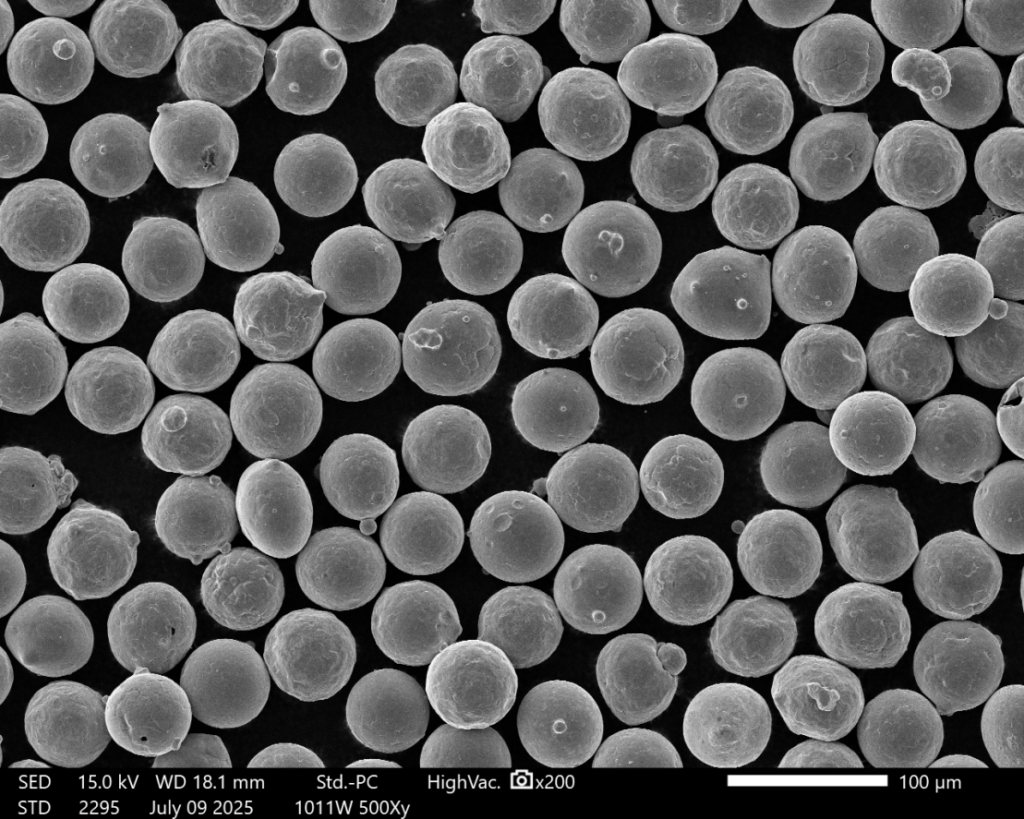
Core Characteristics of FeNiCrMn AM Powder
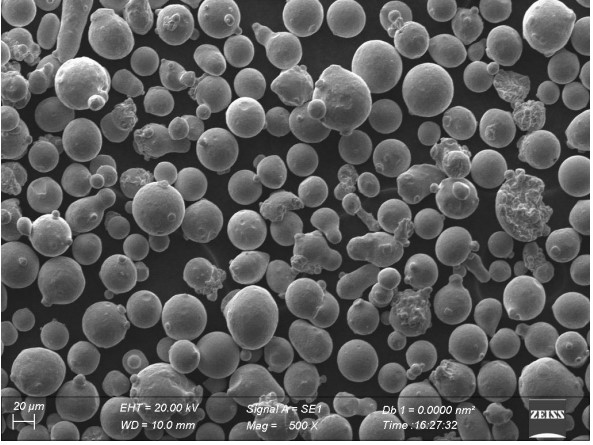
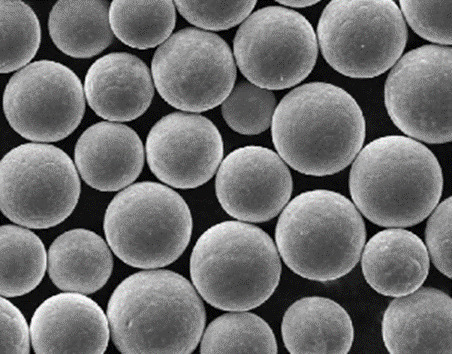
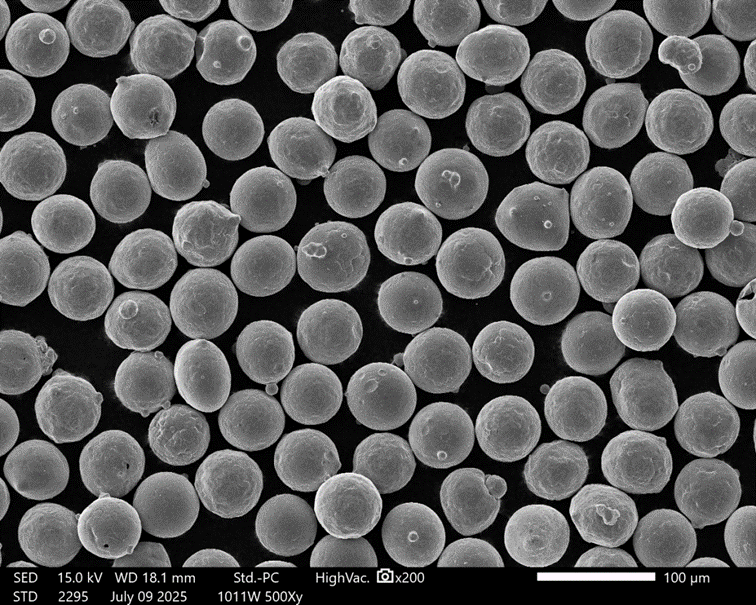
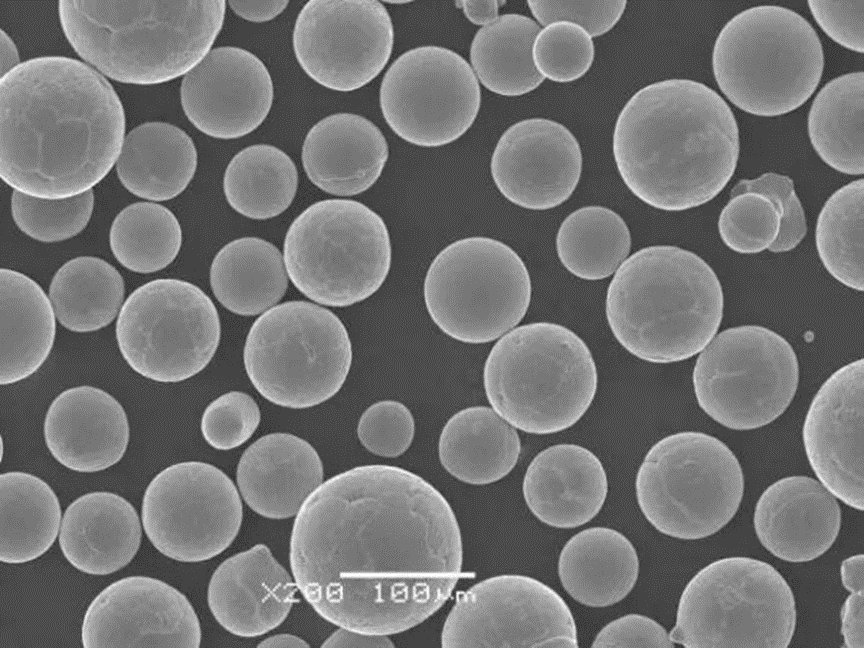
Most FeNiCrMn powders for powder-bed fusion are engineered to be highly spherical, satellite-minimized, and tightly controlled for oxygen, nitrogen, and moisture pickup. Those traits support consistent layer spreading, stable melt pools, and lower defect sensitivity.
From a metallurgical perspective, the family is known for compositional flexibility. Small additions of carbon, cobalt, silicon, aluminum, or refractory elements can markedly change phase constitution, hardness, wear behavior, and temperature capability. That is one reason FeNiCrMn High Entropy Alloys are often evaluated not as a single fixed grade, but as a platform chemistry.
In additive manufacturing, processability is often as important as peak strength; alloys that build consistently can deliver higher real-world part value than alloys with impressive but narrow laboratory windows.
Chemische Zusammensetzung
FeNiCrMn High Entropy Alloys are most commonly specified on a near-equiatomic basis, but actual commercial and experimental powders may intentionally shift one or more elements to tailor printability, stacking-fault energy, phase stability, or corrosion behavior. For that reason, suppliers usually publish a target range rather than one fixed nominal number.
Typical FeNiCrMn High Entropy Alloys Composition
| Element | Typical wt.% Range | Rolle in der Metallurgie | Practical Effect in AM Parts |
|---|---|---|---|
| Fe | 22-28 | Structural matrix former; cost-efficient base element | Supports balanced density, weldability, and general mechanical integrity |
| Ni | 22-28 | FCC stabilizer; improves toughness and corrosion behavior | Increases ductility, crack resistance, and thermal stability |
| Cr | 22-28 | Oxidation and corrosion resistance contributor | Enhances passivation and high-temperature surface stability |
| Mn | 18-26 | Solid-solution strengthener; affects stacking-fault energy | Influences work hardening, deformation mode, and low-temperature toughness |
| C | 0-0.20 | Optional carbide former in modified grades | Raises hardness and wear resistance but may reduce ductility if excessive |
| Si | 0-1.0 | Deoxidizer during melting and atomization | Helps cleanliness but must be limited to avoid brittleness in some chemistries |
The four principal elements are usually kept close enough in concentration to preserve the high-entropy design concept, but not so rigidly equal that processing becomes impractical. In powder production, slight shifts are common to compensate for evaporation tendencies, melt chemistry control, and downstream property targets.
Role of Each Principal Element
Iron is the economic anchor of the alloy family. It lowers raw-material cost relative to cobalt-rich or nickel-dominant systems and contributes familiar ferrous metallurgy behavior. In many FeNiCrMn HEAs, iron also helps preserve a useful balance between density and stiffness.
Nickel is central to the alloy’s toughness profile. It stabilizes FCC structures, improves ductility, and often helps these alloys tolerate the thermal gradients of laser-based additive manufacturing. That makes nickel especially important when the goal is dense parts with fewer hot-cracking issues.
Chromium is the key passivating element. By supporting chromium-rich oxide formation at the surface, it improves corrosion and oxidation resistance compared with simpler Fe-Ni-Mn systems. In many environments, chromium is what moves FeNiCrMn alloys from “interesting” to genuinely viable engineering candidates.
Manganese is more than a low-cost filler. It affects phase stability, stacking-fault energy, and deformation mechanisms such as dislocation glide, twinning, and work hardening. In cryogenic or impact-loaded concepts, manganese can strongly influence the balance between strength and elongation.
Minor additions are used more selectively. Carbon may be introduced when hardness and wear are prioritized, while silicon often plays a process-support role during melting and atomization. For advanced variants, researchers also add aluminum, titanium, molybdenum, niobium, or vanadium to shift the alloy toward higher hardness, lower density, or better elevated-temperature strength.
Physikalische und mechanische Eigenschaften
Because FeNiCrMn High Entropy Alloys remain a compositional family rather than one universal standard grade, published properties vary with chemistry, atomization route, AM process, porosity level, and heat treatment. The ranges below are representative of dense, near-equiatomic Fe-Ni-Cr-Mn AM materials and should be treated as typical rather than guaranteed minimums.
Typical Property Profile of FeNiCrMn High Entropy Alloys
| Eigentum | Typischer Wert | Einheit | Test Standard |
|---|---|---|---|
| Dichte | 7.6-8.1 | g/cm³ | Typical lab characterization |
| Solidus/Liquidus Range | 1280-1380 | °C | DSC / thermal analysis |
| Endgültige Zugfestigkeit | 650-950 | MPa | ASTM E8 / E8M |
| Streckgrenze (0.2%) | 280-620 | MPa | ASTM E8 / E8M |
| Dehnung beim Bruch | 20-45 | % | ASTM E8 / E8M |
| Härte | 180-320 | HV | ASTM E92 / microhardness practice |
| Wärmeleitfähigkeit | 10-18 | W/m-K | Typical literature methods |
| Elastischer Modul | 170-210 | GPa | Resonant or tensile method |
| Wärmeausdehnungskoeffizient | 13-17 ×10⁻⁶ | 1/K | Dilatometry |
| Corrosion Behavior | Mäßig bis gut | - | Environment-specific evaluation |
The headline mechanical feature of many FeNiCrMn HEAs is not record-breaking strength by itself, but the combination of tensile strength and elongation. A build that retains more than 25% elongation after stress relief can be very attractive for parts that must absorb strain without brittle failure.
Strength, Ductility, and Work Hardening
In the as-built condition, strength is often elevated by rapid solidification, fine cell structures, residual dislocation density, and local segregation patterns. Post-build stress relief may slightly reduce strength while improving dimensional stability and ductility. A full homogenization treatment can further even out chemistry but may also coarsen strengthening features.
Work hardening is one of the defining behaviors of this alloy family. Depending on composition and temperature, FeNiCrMn alloys may show strong strain hardening through conventional dislocation interactions or deformation twinning. That behavior helps explain why some variants deliver a very useful damage-tolerance profile despite only moderate yield strength.
Thermal and Corrosion Behavior
Thermal conductivity is lower than copper alloys and often comparable to or slightly below common stainless grades, so these powders are not first-choice materials for heat sinks. If thermal management is the leading design driver, a copper alloy powder for AM heat-transfer parts is usually more appropriate.
Corrosion resistance is generally better than plain iron-based alloys because of chromium and nickel, but it remains composition- and environment-dependent. FeNiCrMn materials may perform well in atmospheric exposure, mild aqueous service, and some oxidizing conditions, yet they do not automatically replace high-molybdenum stainless steels or dedicated corrosion superalloys in chloride-rich or strongly acidic media.
Technische Daten und verfügbare Güteklassen
For additive manufacturing, powder specification is as important as alloy chemistry. A FeNiCrMn powder with good nominal composition but poor flowability, high oxygen, or a broad tail of oversized particles can cause recoating defects, inconsistent absorption, and unstable melt-pool behavior.
Typical AM Powder Specification Window
| Item / Grade Class | Typical 15-53 µm | Typical 15-45 µm | Typical 45-105 µm | Typical 53-150 µm |
|---|---|---|---|---|
| Recommended process | SLM / LPBF | Fine LPBF research | EBM / coarse LPBF | DED / cladding |
| Scheinbare Dichte | 4.1-4.8 g/cm³ | 4.0-4.7 g/cm³ | 4,3–4,9 g/cm³ | 4.4-5.0 g/cm³ |
| Dichte des Gewindebohrers | 4.8-5.6 g/cm³ | 4.7-5.5 g/cm³ | 5.0-5.8 g/cm³ | 5.1-5.9 g/cm³ |
| Hall flow | 14-22 s/50 g | 15-24 s/50 g | 13-20 s/50 g | 12-19 s/50 g |
| Sauerstoffgehalt | ≤0.10-0.20 wt.% | ≤0.12-0.22 wt.% | ≤0.08-0.18 wt.% | ≤0.08-0.18 wt.% |
| Sphärizität | Hoch | Hoch | Sehr hoch | Hoch bis sehr hoch |
| Typical tolerance basis | ASTM B214/B213 methods | ASTM B214/B213 methods | ASTM B214/B213 methods | ASTM B214/B213 methods |
| Cross-reference status | Custom HEA grade; no universal AMS grade | Custom HEA grade; no universal AMS grade | Custom HEA grade; process-defined | Custom HEA grade; process-defined |
The most common powder-bed fraction is 15-53 µm, though machine optics, layer thickness, and recoater type may shift the optimum narrower or coarser. Electron-beam users often prefer somewhat coarser cuts, while directed-energy systems can use broader or larger fractions provided feeding consistency is maintained.
Standards and Grade Cross-Reference Reality
Unlike 316L or Ti-6Al-4V, FeNiCrMn High Entropy Alloys do not yet have a single universally recognized alloy specification across ASTM, AMS, ISO, GB, and DIN that defines one standard AM chemistry. In practice, they are usually supplied as custom or proprietary HEA grades whose powder quality is verified using established powder test methods rather than a single legacy alloy standard.
That means buyers should request a full technical data package covering chemistry limits, PSD method, oxygen and nitrogen limits, flowability test basis, apparent and tap density, morphology images, and recommended process windows. General terminology for the AM field is aligned with the ISO/ASTM 52900 – Fachbegriffe der additiven Fertigung, while powder characterization often draws on established ASTM powder methods instead of HEA-specific designations.
Available Grade Variants
Commercially, FeNiCrMn powders may be offered in baseline equiatomic compositions, manganese-adjusted grades for deformation tuning, chromium-elevated grades for better oxidation resistance, or carbon-modified grades for wear-focused applications. Some suppliers also provide experimental heats with cobalt-free or cobalt-lean chemistries to address cost and regulatory preferences.
For development projects, users often compare FeNiCrMn against advanced HEA powder options and more established titanium powder grades for lightweight AM parts to decide whether their design challenge is best solved by toughness, density reduction, or elevated-temperature capability.
Herstellungsprozess
The route used to make FeNiCrMn powder has a direct effect on cleanliness, sphericity, internal porosity, and particle-size consistency. For laser and electron-beam AM, the leading routes are gas atomization and plasma-based techniques, with VIGA and EIGA representing controlled-melting variants used to improve cleanliness and chemistry stability.
Powder-Making Route Comparison
| Prozess | Sphärizität | Sauerstoffaufnahme | PSD-Steuerung | Durchsatz | Relative Kosten |
|---|---|---|---|---|---|
| Gaszerstäubung (GA) | Hoch | Gering bis mäßig | Gut | Hoch | Mäßig |
| Vakuum-Induktions-Gaszerstäubung (VIGA) | Hoch | Niedrig | Sehr gut | Mittel bis hoch | Mäßig bis hoch |
| Elektrodeninduktions-Gaszerstäubung (EIGA) | Sehr hoch | Sehr niedrig | Sehr gut | Mittel | Hoch |
| Plasma-Rotations-Elektroden-Verfahren (PREP) | Sehr hoch | Sehr niedrig | Good to moderate | Medium to low | Hoch |
Gas Atomization for FeNiCrMn AM Powder
Gas atomization is often the most economical route for industrial volumes. A molten alloy stream is disintegrated by high-pressure inert gas into droplets that solidify into mostly spherical particles. For FeNiCrMn HEAs, GA is attractive because it scales well, supports broad PSD tailoring, and can deliver suitable powder for SLM, DED, PM, and coating applications.
The main trade-off is that atomization conditions must be tightly controlled to minimize satellites, irregular fines, and oxygen pickup. Manganese volatility also needs attention during melting and pouring, especially for chemistries near upper Mn limits.
VIGA and EIGA Variants
VIGA adds vacuum induction melting before gas atomization, which helps reduce dissolved gases and improve melt cleanliness. That is valuable for research-grade or performance-critical FeNiCrMn powders where chemistry precision matters.
EIGA avoids some contamination pathways associated with crucible contact by atomizing feedstock derived from bar or electrode input under controlled conditions. Although more expensive, it can be advantageous when purity and compositional repeatability are prioritized over lowest cost.
PREP for High-Sphericity Powder
PREP produces powder by spinning a consumable electrode at high speed while a plasma heat source melts the tip. Centrifugal force throws off droplets that solidify into highly spherical particles with very low contamination risk. For high-value alloys, PREP is widely respected for morphology quality and oxygen control; a process definition is summarized in the Plasma Rotating Electrode Process overview.
For FeNiCrMn systems, PREP is especially useful when powder cleanliness, dense flow behavior, and low inclusion risk outweigh raw powder cost. The compromise is a coarser or less flexible PSD distribution than some gas-atomized routes, plus lower throughput.
Process Trade-Offs in Practice
If the target is serial LPBF production at controlled cost, GA or VIGA is usually the first screening choice. If the target is premium powder for sensitive aerospace, medical, or R&D builds where morphology and low contamination dominate, PREP or EIGA may be justified.
Downstream handling also matters. Sieving, de-agglomeration, magnetic separation when relevant, moisture control, and inert packaging can change real printer performance almost as much as the atomization route itself.
Anwendungen nach Branche
FeNiCrMn High Entropy Alloys are not universal replacements for established AM metals, but they are increasingly relevant where a combination of damage tolerance, corrosion behavior, and composition tunability is more important than ultra-low density or maximum temperature capability.
Aerospace and Space Hardware
In aerospace research and secondary structural hardware, FeNiCrMn HEAs are evaluated for brackets, housings, ducting components, and thermostructural test parts. Their appeal lies in reasonably high toughness, acceptable oxidation behavior, and relatively good printability compared with some crack-prone superalloys. They are also useful as development materials for studying rapid solidification and graded-alloy transitions.
For very high heat-flux or rocket-chamber applications, however, copper or refractory systems often remain the better choice. Likewise, for the lowest possible mass, titanium and aluminum families continue to dominate.
Medical and Biomedical Research
Although cobalt-chromium and titanium remain the primary certified implant families, FeNiCrMn materials are studied for biomedical surface engineering, non-implant tooling, and research into deformation-compatible metallic systems. Their work-hardening behavior and corrosion response make them scientifically interesting, but clinical adoption depends on biocompatibility validation, trace-element control, and regulatory approval.
In production environments where wear and polishability are more important than low modulus, cobalt alloy powder systems for medical and tooling uses often remain the benchmark.
Oil, Gas, and Energy
Energy-sector components such as valve internals, sensor housings, wear sleeves, and corrosion-test coupons are good candidates for FeNiCrMn evaluation. These alloys can offer a useful compromise between stainless-like corrosion behavior and better strain tolerance than some harder, less forgiving materials.
They are also valuable for rapid prototyping in nuclear and thermal-power research, where engineers want to examine novel chemistries under cyclic loading, moderate heat, or corrosive exposure without committing immediately to expensive superalloy feedstock.
Automotive and Transportation
Automotive applications are more likely to focus on prototyping, lightweight-not-critical brackets, heat-resistant fixtures, and wear components rather than high-volume end-use parts. FeNiCrMn powder becomes more compelling when the design benefits from weldability, formability after printing, or resistance to crack initiation under vibration.
For mass-sensitive components, these alloys usually compete at a disadvantage against aluminum and titanium. Their opportunity is in durability and tunability rather than density reduction.
Tooling, Research, and Functionally Graded Materials
Tool inserts, experimental dies, graded transitions, and hybrid structures are strong use cases. Because FeNiCrMn High Entropy Alloys are compositionally flexible, they are frequently paired with other alloy families in research programs involving local reinforcement, wear-resistant skins, or thermal-expansion matching.
This is one area where the broader industrial AM application landscape is especially relevant: the material is often selected not as a commodity powder, but as a platform for engineering experiments and semi-custom performance targets.
Vergleich mit alternativen Materialien
Material selection for AM should always be application-led. FeNiCrMn HEAs sit between mature stainless steels, expensive nickel superalloys, and lightweight titanium alloys. That positioning explains both their strengths and their adoption barriers.
FeNiCrMn High Entropy Alloys vs Peer AM Materials
| Material | Dichte (g/cm³) | Typisches Leistungsniveau | Druckbarkeit | Korrosionsbeständigkeit | Relative Powder Cost |
|---|---|---|---|---|---|
| FeNiCrMn High Entropy Alloys | 7.6-8.1 | Medium to high with good ductility | Good, especially in development builds | Mäßig bis gut | Mittel bis hoch |
| 316L-Edelstahl | 7.9-8.0 | Mittel | Excellent and highly mature | Good in many environments | Niedrig bis mittel |
| Inconel 718 | 8.1-8.2 | High, especially after heat treatment | Good but process-sensitive | Very good at high temperature | Hoch |
| Ti-6Al-4V | 4.4-4.5 | Hohe spezifische Festigkeit | Excellent and highly mature | Sehr gut | Hoch |
| CoCrMo | 8.2-8.4 | High hardness and wear strength | Gut | Sehr gut | Hoch |
Compared with 316L, FeNiCrMn HEAs usually offer a more advanced metallurgy toolbox and, in some chemistries, stronger work hardening and low-temperature toughness. However, 316L still wins on code familiarity, cost, supply depth, and qualification maturity.
Against Inconel 718, FeNiCrMn alloys are generally less capable at the highest service temperatures and less backed by aerospace qualification history. Their advantage is that they may be easier to tune for ductility-focused or research-oriented applications, sometimes with lower raw-material cost depending on cobalt and refractory content.
Versus Ti-6Al-4V, FeNiCrMn is much denser, so it loses whenever lightweighting is the first priority. It may still be selected when designers value ferrous-like damage tolerance, lower sensitivity to oxygen embrittlement, or compatibility with specific wear and corrosion conditions.
Relative to CoCrMo, FeNiCrMn often sacrifices wear hardness in exchange for greater composition flexibility and, in many variants, better room-temperature ductility. For engineering teams that need an adaptive research alloy rather than a fixed, qualification-heavy medical or wear platform, that can be a decisive difference.
For formal materials identification and broader alloy background, many engineers cross-check naming conventions and metallurgy summaries through the NIST materials data resources und die ASTM International standards catalog.
Unser Unternehmen
Shanghai Truer Technology Co., Ltd., the operator of am-printing.com, was established in 2009 and launched its additive manufacturing business in 2019. The company works across metal powder production equipment and powder supply, with technical emphasis on Selective Electron Beam Melting equipment, Plasma Rotating Electrode Process equipment, and gas atomization-related capabilities. Its powder portfolio includes TiNi, TiTa, TiAl, TiNbZr, CoCrMo, and broader nickel-, cobalt-, titanium-, copper-, aluminum-, and stainless-steel-based spherical powders for processes such as SLM, SEBM, DED, laser cladding, powder metallurgy, MIM, HIP, spraying, welding, and coating. Company background and operating scope are outlined on the manufacturer profile page, and project-specific technical inquiries are handled through the Ansprechpartner im Bereich Technik.
FAQ
Q1. Are FeNiCrMn High Entropy Alloys good for laser powder bed fusion?
Yes, many FeNiCrMn compositions are well suited to LPBF because they can combine good powder flow, relatively stable melt behavior, and lower crack sensitivity than some high-strength superalloys. Final success still depends on PSD, oxygen control, scan strategy, and post-build heat treatment.
Q2. Do FeNiCrMn High Entropy Alloys have a standard ASTM or AMS grade number?
Usually not as a single universally adopted grade. Most FeNiCrMn HEA powders are supplied as custom or proprietary chemistries, while testing and quality control rely on established powder and mechanical test methods rather than one legacy alloy designation.
Q3. What particle size is typical for FeNiCrMn High Entropy Alloys powder?
For LPBF, the most common range is 15-53 µm, though some systems use 15-45 µm for finer layers or 45-105 µm for electron-beam processing. Directed-energy deposition and cladding typically use coarser fractions such as 53-150 µm or broader custom cuts.
Q4. How do FeNiCrMn High Entropy Alloys compare with stainless steel 316L?
FeNiCrMn HEAs are generally more compositionally tunable and may offer stronger work hardening or better cryogenic toughness depending on the chemistry. By contrast, 316L remains easier to qualify, easier to source globally, and more familiar to regulated industries.
Q5. Can FeNiCrMn High Entropy Alloys be heat treated after printing?
Yes. Stress relief, homogenization, and in some modified chemistries aging treatments are used to reduce residual stress, smooth segregation, and tune strength-ductility balance. The exact schedule should be validated for each composition because phase evolution in HEAs can be more chemistry-sensitive than in conventional alloys.
Q6. Which industries are most likely to use FeNiCrMn High Entropy Alloys first?
The earliest adopters are typically aerospace R&D, energy, advanced tooling, and university-industry development programs where performance exploration justifies a nonstandard alloy. Medical and automotive users may evaluate the material as well, but qualification, cost, and established alternatives often slow full production adoption.