Kurzantwort
Inconel 625 nickel alloy powder is a nickel-chromium-molybdenum-niobium superalloy powder used in metal additive manufacturing for parts that must resist corrosion, oxidation, fatigue, and moderate-to-high service temperatures. It is chosen for AM parts because it offers strong processability in laser powder bed fusion and directed energy deposition, a wide operating window in aggressive environments, and good as-built ductility compared with many higher-strength superalloys. For aerospace, energy, marine, and chemical-processing hardware, it is often the practical choice when corrosion performance matters as much as mechanical strength.
What Is Inconel 625 nickel alloy powder
Inconel 625 nickel alloy powder is the powder form of UNS N06625, a solid-solution-strengthened nickel-base superalloy originally developed for severe corrosive and high-temperature environments. In wrought and cast product forms, it is widely recognized for combining excellent resistance to pitting, crevice corrosion, chloride attack, and oxidation with useful strength from cryogenic conditions up to elevated temperatures. In powder form, those same attributes make it a well-established feedstock for additive manufacturing, thermal spray, hot isostatic pressing, and powder metallurgy routes.
Within the nickel superalloy family, Inconel 625 occupies a different position from precipitation-hardened alloys such as Inconel 718. Alloy 625 does not depend primarily on age-hardening phases to deliver service performance. Instead, its strength comes largely from molybdenum and niobium in solid solution, which gives the alloy a reputation for reliable weldability and lower crack sensitivity. That distinction is important in additive manufacturing, where repeated thermal cycling can punish alloys with narrow processing windows.
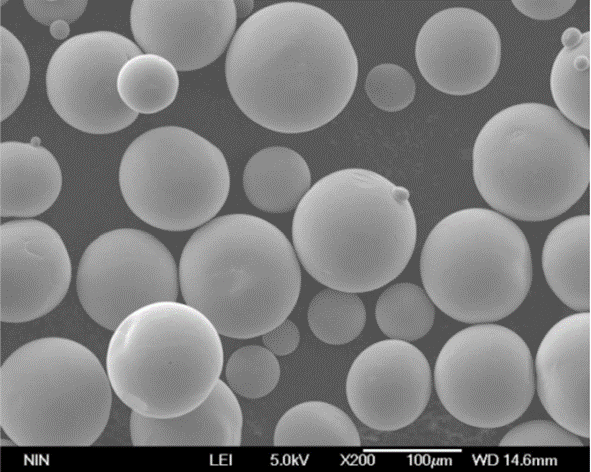
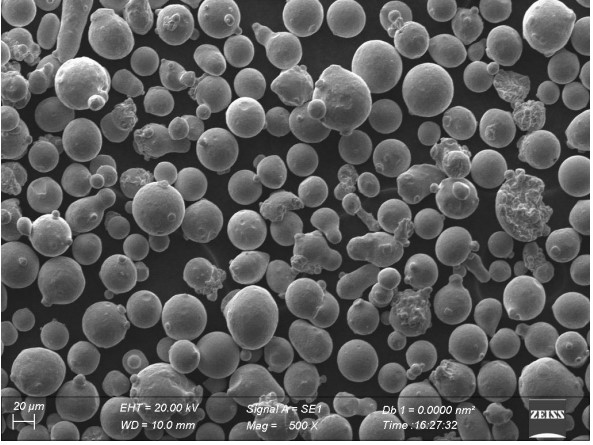
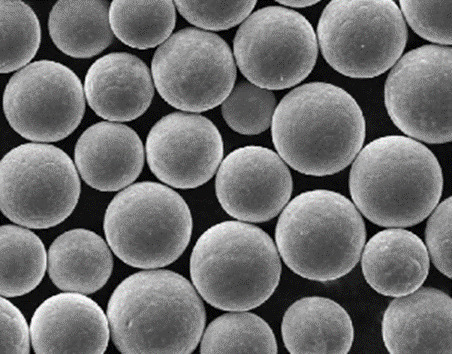
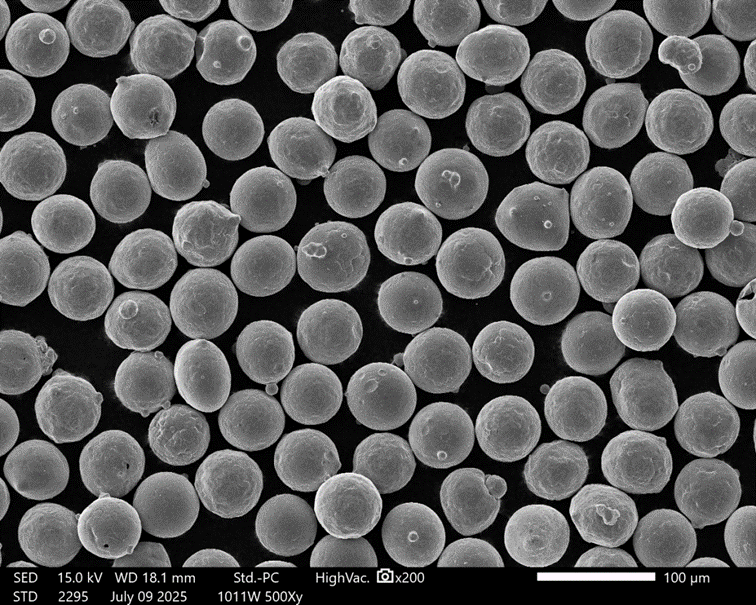
The powder itself is usually produced as a spherical, low-oxygen feedstock optimized for controlled flow and stable recoating. For laser powder bed fusion, electron-beam processes, and directed energy deposition, morphology matters almost as much as chemistry. A highly spherical powder with limited satellites and tight particle size distribution improves layer uniformity, reduces porosity risk, and helps support consistent energy absorption.
A second reason the alloy remains relevant is that it bridges the gap between corrosion-resistant industrial materials and true aerospace-grade superalloys. Engineers who review a broader nickel superalloy powder range often find that Alloy 625 is the conservative, durable option when the application sees salt, acids, exhaust gases, seawater, or thermal cycling but does not require the peak creep strength associated with more specialized turbine-disc materials.
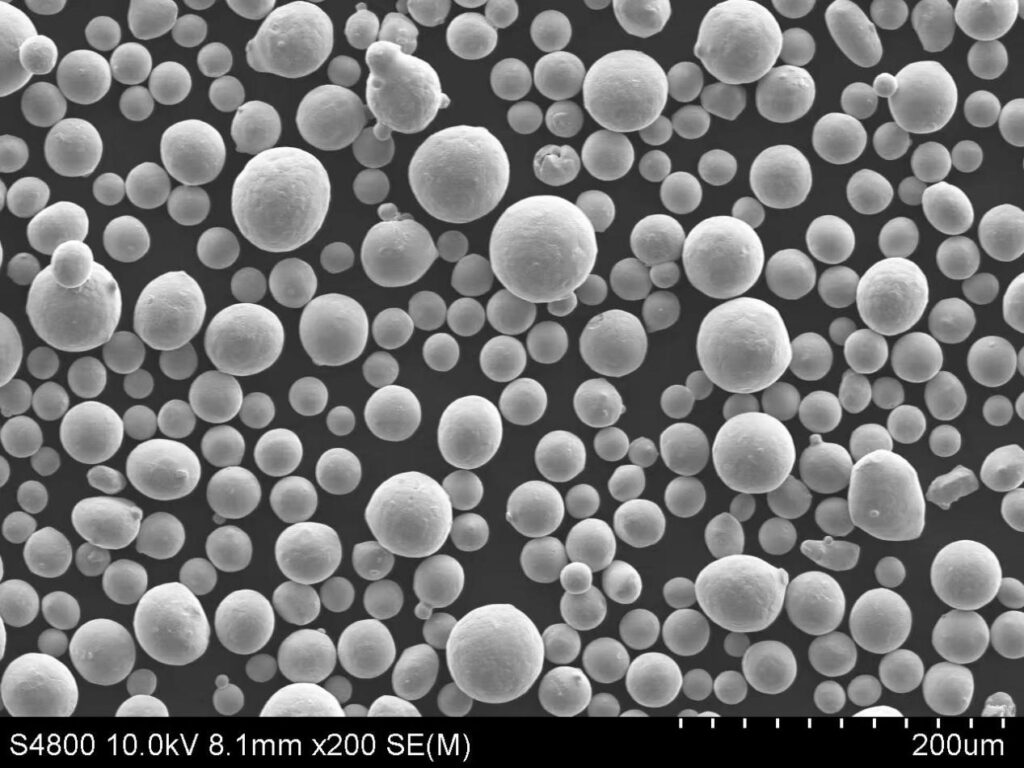
Inconel 625 AM Powder in the Superalloy Family
Alloy 625 is commonly grouped with nickel-base corrosion-resistant and heat-resistant alloys rather than only with ultra-high-temperature turbine alloys. That classification reflects how it is actually used: ducting, bellows, manifolds, marine hardware, chemical-process components, and hot-section support parts where environmental resistance is crucial.
For additive manufacturing, this family position is valuable. The alloy prints more predictably than some gamma-prime-strengthened superalloys, while still outperforming stainless steels in many chloride-bearing or oxidizing conditions. That combination explains why Inconel 625 nickel alloy powder appears both in serial industrial builds and in repair or near-net-shape workflows.
Core Characteristics of Inconel 625 Nickel Alloy Powder
The defining traits are Korrosionsbeständigkeit, oxidation resistance, solid-solution strengthening, weldability, and broad AM compatibility. It is not the lightest metal powder, nor the strongest at extreme turbine temperatures, but it is one of the most versatile nickel powders for harsh service.
Alloy 625 is often selected not because it is the strongest superalloy, but because it keeps performing when heat, chlorides, and fabrication complexity occur together.
Chemische Zusammensetzung
The chemistry of Inconel 625 nickel alloy powder is tightly controlled because relatively small variations in niobium, molybdenum, carbon, and residuals can affect cracking tendency, segregation, corrosion behavior, and final microstructure. In commercial AM powder, composition usually follows the recognized limits for Alloy 625 while also controlling oxygen and other interstitials to preserve flowability and printed-part quality.
Typical Inconel 625 Nickel Alloy Powder Composition
| Element | Typical wt.% Range | Rolle in der Metallurgie | Practical Effect in AM Parts |
|---|---|---|---|
| Ni | Balance, typically ≥58.0 | Matrix element; stabilizes austenitic nickel base | Provides corrosion resistance, toughness, and elevated-temperature stability |
| Cr | 20.0-23.0 | Oxidation and corrosion resistance former | Builds protective oxide films and improves resistance in oxidizing media |
| Mo | 8.0-10.0 | Strong solid-solution strengthener | Improves strength and pitting resistance, especially in chloride-bearing service |
| Nb + Ta | 3.15-4.15 | Solid-solution strengthening; carbide/intermetallic influence | Adds strength and affects segregation behavior during rapid solidification |
| Fe | 5,0 max | Controlled residual/base alloy constituent | Helps chemistry balance but is limited to preserve nickel-alloy performance |
| Co | 1,0 max | Minor residual or optional controlled constituent | Limited to maintain consistency and alloy identity |
| Al | 0,4 max | Minor residual; oxidation-related influence | Kept low because Alloy 625 is not designed as a primary precipitation-hardening alloy |
| Ti | 0,4 max | Minor residual; carbide/nitride influence | Controlled to avoid unwanted phase effects in AM and welding |
| C | 0,10 max | Hartmetall-Former | Excess can reduce ductility and affect weldability; controlled for service stability |
| Mn | 0,5 max | Deoxidation support in melting | Usually low to avoid unnecessary inclusions or chemistry drift |
| Si | 0,5 max | Deoxidation support | Limited because excess silicon can affect hot workability and weld behavior |
Nickel forms the corrosion-resistant matrix and carries the alloy across a wide temperature range without the phase instability that can limit lower-alloyed steels. Chromium then provides a robust oxidation response, especially under hot gas exposure, while molybdenum enhances resistance to localized corrosion such as pitting and crevice attack.
Why Molybdenum and Niobium Matter in Alloy 625
Molybdenum is one of the reasons Alloy 625 performs so well in marine and chemical environments. It raises resistance to reducing acids and localized chloride corrosion while also contributing significantly to solid-solution strength. In powder-bed AM, this strength contribution helps the alloy retain useful performance even before elaborate aging treatments.
Niobium is equally important, though sometimes misunderstood because of its role in other nickel alloys. In Alloy 625, niobium contributes primarily to solid-solution strengthening, but during repeated thermal exposure it can also influence the formation of secondary phases. That means heat treatment strategy matters: AM engineers want enough post-processing to relieve stress and homogenize segregation without needlessly promoting brittle intermetallic precipitation.
Restelemente und Pulverreinheit
Residual oxygen, sulfur, and trace contamination are especially important in powder form. Even when the headline alloying elements are within specification, poor cleanliness can reduce ductility, hurt fatigue performance, and destabilize flow. That is why premium AM powders are specified not just by alloy chemistry but also by morphology, oxygen level, and powder handling history.
Physikalische und mechanische Eigenschaften
Inconel 625 nickel alloy powder is valued because its printed parts can deliver a reliable balance of strength, ductility, and environmental resistance over a broad service window. Exact values depend on build orientation, porosity, machine parameters, stress relief, HIP treatment, and final heat treatment, so published data should be read as typical rather than universal.
Typical Property Profile of Inconel 625 AM Parts
| Eigentum | Typischer Wert | Einheit | Test Standard |
|---|---|---|---|
| Dichte | 8.44 | g/cm³ | Typical material data |
| Solidus | 1290-1350 | °C | Thermal analysis / DSC |
| Liquidus | 1350-1410 | °C | Thermal analysis / DSC |
| Endgültige Zugfestigkeit | 760-980 | MPa | ASTM E8 / E8M |
| Streckgrenze (0.2%) | 420-690 | MPa | ASTM E8 / E8M |
| Dehnung beim Bruch | 25-45 | % | ASTM E8 / E8M |
| Härte | 200-280 | HV | ASTM E92 or equivalent practice |
| Elastischer Modul | 200-207 | GPa | Tensile or resonant method |
| Wärmeleitfähigkeit | 9.8-12.5 | W/m-K | Typical literature methods |
| Wärmeausdehnungskoeffizient | 12.8-13.6 ×10⁻⁶ | 1/K | Dilatometry |
| Maximum Useful Oxidation Range | Up to about 980 | °C | Anwendungsabhängig |
The mechanical profile is notable because ductility remains relatively good compared with many alloys used in severe environments. In LPBF, properly processed and stress-relieved material often shows tensile strength well above many corrosion-resistant stainless steels while still retaining enough elongation for pressure-containing or vibration-prone components.
Strength and Ductility in Printed Alloy 625
As-built LPBF material often exhibits fine cellular dendritic structures with local niobium and molybdenum segregation. Those features can raise strength, but they may also introduce anisotropy or residual stress. Stress relief and hot isostatic pressing are commonly used when fracture toughness, fatigue life, and dimensional stability are priorities.
Unlike age-hardened nickel alloys, Alloy 625 is comparatively forgiving after thermal cycles. That does not mean heat treatment is optional; it means the alloy is less dependent on an extremely narrow precipitate state to remain useful. This is one reason engineers often prefer it for complex internal channels, repair builds, and large-section AM geometries.
Thermal Stability and Corrosion Performance
The alloy performs well in oxidizing service and many mixed-temperature corrosive environments. It is particularly respected for chloride-bearing systems, wet process chemicals, marine exposure, and exhaust hardware. When corrosion resistance is the main criterion, it can outperform many iron-based alloys and remain competitive with cobalt systems.
If the application is driven instead by thermal conductivity, engineers often shift to a copper alloy powder family because nickel superalloys dissipate heat relatively slowly. If the design is driven by minimum density, titanium or aluminum routes are usually preferable.
Technische Daten und verfügbare Güteklassen
AM buyers typically evaluate Alloy 625 powder on three levels: alloy specification, powder specification, and process-specific grade. The first ensures the chemistry aligns with recognized Alloy 625 limits. The second covers PSD, flow, densities, oxygen, and morphology. The third matches the powder to LPBF, EBM, DED, laser cladding, or HIP.
Typical Specification Window for Inconel 625 Nickel Alloy Powder
| Item / Grade Class | Typical 15-45 µm | Typical 15-53 µm | Typical 45-105 µm | Typical 53-150 µm |
|---|---|---|---|---|
| Recommended process | Fine LPBF | Standard LPBF / SLM | EBM / coarse LPBF / DED | DED / cladding / spray |
| Scheinbare Dichte | 4.4-5.0 g/cm³ | 4,5–5,1 g/cm³ | 4.7-5.3 g/cm³ | 4.8-5.4 g/cm³ |
| Dichte des Gewindebohrers | 5.0-5.7 g/cm³ | 5,1–5,8 g/cm³ | 5.3-6.0 g/cm³ | 5.4-6.1 g/cm³ |
| Hall flow | 14-22 s/50 g | 13-20 s/50 g | 12–18 s/50 g | 11-17 s/50 g |
| Sauerstoffgehalt | ≤0.08-0.15 wt.% | ≤0.08-0.15 wt.% | ≤0.05-0.12 wt.% | ≤0.05-0.12 wt.% |
| Stickstoffgehalt | Typically low, supplier controlled | Typically low, supplier controlled | Typically low, supplier controlled | Typically low, supplier controlled |
| Sphärizität | Hoch | Hoch bis sehr hoch | Hoch bis sehr hoch | Hoch |
| Cross-reference | ASTM B443/B446 alloy family basis; AMS 5666/5599 wrought references; ISO/GB custom AM powder control | Gleiche | Gleiche | Gleiche |
For most laser powder bed fusion platforms, 15-53 µm remains the default commercial range because it balances recoating behavior and productivity. Finer cuts can improve thin-wall resolution but may raise oxidation risk and lower flowability. Coarser cuts are preferred for higher layer thickness, electron-beam systems, or blown-powder deposition.
Standards, Cross-References, and Qualification Logic
In powder procurement, engineers frequently reference wrought or plate standards to identify the underlying alloy chemistry even though the powder itself is qualified with separate tests. Alloy 625 is commonly associated with specifications such as ASTM B443 plate, sheet, and strip for Alloy 625 and related wrought product standards, while additive manufacturing terminology itself follows the ISO/ASTM 52900 AM terminology standard.
That distinction matters because “meets Alloy 625 chemistry” is not the same thing as “is qualified for your AM machine.” A proper purchasing specification should define chemistry, PSD method, oxygen and nitrogen limits, apparent density, flow test basis, acceptable satellite level, and reuse policy.
Supply Grades and Powder Conditions
Commercially, the alloy is available as kugelförmiges Pulver for LPBF, EBM, DED, laser cladding, and thermal spraying. Some suppliers also provide customized cuts for hot isostatic pressing, MIM research, or repair deposition. In portfolio terms, it often sits alongside titanium alloy powder grades for lightweight applications and other corrosion-resistant nickel products for high-temperature service.
Herstellungsprozess
The way Inconel 625 powder is made strongly affects print consistency. Gas atomization remains the dominant industrial route, but VIGA, EIGA, and PREP are all relevant depending on cleanliness requirements, throughput, and target morphology. Each route has different implications for cost, oxygen control, and particle-size distribution.
Powder-Making Process Comparison
| Prozess | Sphärizität | Sauerstoffaufnahme | PSD-Steuerung | Durchsatz | Relative Kosten |
|---|---|---|---|---|---|
| Gaszerstäubung (GA) | Hoch | Gering bis mäßig | Gut | Hoch | Mäßig |
| Vakuum-Induktions-Gaszerstäubung (VIGA) | Hoch bis sehr hoch | Niedrig | Sehr gut | Mittel bis hoch | Mäßig bis hoch |
| Elektrodeninduktions-Gaszerstäubung (EIGA) | Sehr hoch | Sehr niedrig | Sehr gut | Mittel | Hoch |
| Plasma-Rotations-Elektroden-Verfahren (PREP) | Sehr hoch | Sehr niedrig | Good to moderate | Medium to low | Hoch |
Gas Atomization for Inconel 625 Additive Manufacturing Powder
Gas atomization begins with a molten stream that is broken into droplets by high-pressure inert gas. The droplets solidify rapidly into predominantly spherical particles, which are then screened into size fractions. For Alloy 625, GA offers the best balance of productivity, cost, and PSD flexibility, which explains why it dominates mainstream LPBF and DED supply.
The trade-off is that powder cleanliness depends heavily on melt practice, gas purity, nozzle design, and post-atomization classification. Fine fractions can also carry more satellites or surface oxides if process control is weak.
VIGA and EIGA for Cleaner Nickel Superalloy Powder
VIGA adds vacuum induction melting before atomization, reducing dissolved gases and improving chemistry consistency. This is useful for nickel superalloys because niobium-bearing compositions are sensitive to segregation and cleanliness issues.
EIGA takes cleanliness a step further by using bar or electrode feedstock in a contact-minimized melting route. For critical AM applications, that can improve repeatability, though at a higher price. Process definitions for spherical metal powder production are often discussed in technical references such as the ASM International materials engineering resources.
PREP and High-Sphericity Feedstock
PREP uses a rotating consumable electrode whose tip is melted by plasma, ejecting droplets centrifugally. The result is exceptionally spherical powder with very low contamination potential, an advantage when the end use values flow stability and cleanliness more than the lowest cost. A general background description of the route is available through the Plasma Rotating Electrode Process entry.
For Inconel 625, PREP is especially relevant where premium powder quality is required for advanced AM development, low-defect builds, or demanding downstream consolidation routes. However, it usually has lower throughput and less PSD flexibility than large-scale gas atomization.
Anwendungen nach Branche
Inconel 625 nickel alloy powder is used where components face a combination of heat, corrosive media, pressure, and difficult geometry. The AM value proposition is strongest when traditional machining or welding would be costly, slow, or geometrically limiting.
Aerospace and Aero-Engine Components
Aerospace users apply Alloy 625 to ducting, bellows, brackets, manifolds, exhaust structures, combustion-adjacent hardware, and repair applications. The alloy’s resistance to oxidation and thermal fatigue makes it suitable for moderate hot-zone service, while its weldability supports both new-build and restoration workflows.
It is not usually the first choice for the most highly stressed turbine rotating parts. Instead, it excels in static or semi-structural hardware where corrosion, manufacturability, and reliability are the key constraints.
Oil, Gas, and Chemical Processing
This is one of the alloy’s natural homes. Valves, housings, flow-control parts, pump components, offshore hardware, and chemical injection systems benefit from its resistance to chlorides, seawater, sour service-related environments, and corrosive processing media. AM becomes especially useful when internal channels, weight reduction, or rapid spare-parts production is needed.
Because of this performance profile, Alloy 625 often competes with cobalt and stainless systems. Where abrasion is dominant, cobalt-based alloy powders may offer an advantage; where combined corrosion and fabrication ease dominate, Alloy 625 often remains the more balanced option.
Marine and Energy Equipment
Seawater exposure, salt fog, and thermal cycling make marine hardware a logical application area. Additively manufactured impellers, nozzles, heat-exposed enclosures, and custom connectors can benefit from the alloy’s durability, especially when component geometries are too complex for economical conventional manufacturing.
In power generation, the alloy appears in burner parts, exhaust-side structures, transition hardware, and instrumentation housings. It is also useful in nuclear-adjacent and high-reliability support systems where corrosion margin is prized.
Tooling, Repair, and Functionally Complex Parts
Alloy 625 is widely used in repair deposition and in parts that combine thin walls, internal passageways, and service-side corrosion. Directed energy deposition allows restoration of expensive nickel hardware without replacing the full component. For AM design teams comparing material families, industrial application case areas show why corrosion-resistant superalloys remain important even when lightweight metals receive more attention.
Vergleich mit alternativen Materialien
Material selection should be based on environment, temperature, qualification history, and cost of failure rather than simple headline strength. Inconel 625 occupies a versatile middle position among AM metals: more corrosion-resistant than many steels, more weldable than some precipitation-hardened superalloys, and more temperature-capable than titanium alloys in oxidizing service.
Inconel 625 Nickel Alloy Powder vs Alternative AM Materials
| Material | Dichte (g/cm³) | Typisches Leistungsniveau | Druckbarkeit | Korrosionsbeständigkeit | Relative Powder Cost |
|---|---|---|---|---|---|
| Inconel 625 nickel alloy powder | 8.44 | Medium to high with good ductility | Gut bis sehr gut | Ausgezeichnet | Hoch |
| Inconel 718-Pulver | 8.19 | High after heat treatment | Good but more heat-treatment dependent | Sehr gut | Hoch |
| 316L-Edelstahlpulver | 7.9-8.0 | Mittel | Ausgezeichnet | Gut | Niedrig bis mittel |
| CoCrMo-Pulver | 8.3-8.5 | High hardness and wear strength | Gut | Sehr gut | Hoch |
| Ti-6Al-4V-Pulver | 4.43 | Hohe spezifische Festigkeit | Ausgezeichnet | Very good in many environments | Hoch |
Compared with Inconel 718, Alloy 625 is usually selected when corrosion resistance and weldability are more important than maximum strength. Alloy 718 remains stronger after age hardening, but it also relies more heavily on correct thermal processing and can be less forgiving in some fabrication scenarios.
Against 316L, Alloy 625 offers a substantial upgrade in chloride resistance, oxidation resistance, and hot-service capability. The downside is higher powder cost and higher finished-part cost. Against CoCrMo, Alloy 625 generally sacrifices some wear hardness but is often easier to justify in mixed corrosion-and-heat environments. Compared with titanium, it is far denser, but it tolerates hot oxidizing atmospheres and many chemical environments much better.
Unser Unternehmen
Shanghai Truer Technology Co., Ltd., which operates am-printing.com, was established in 2009 and formed its additive manufacturing business in 2019. The company works in both metal powder equipment and powder supply, with technical coverage including Selective Electron Beam Melting equipment, Plasma Rotating Electrode Process powder-making equipment, and gas atomization-related capabilities. Its portfolio includes TiNi, TiTa, TiAl, TiNbZr, CoCrMo, and broader nickel-, cobalt-, titanium-, copper-, aluminum-, and stainless-steel-based spherical powders for SLM, SEBM, DED, laser cladding, powder metallurgy, MIM, HIP, spraying, welding, and coating. Company background and operating scope are outlined on the corporate information page, while project-specific discussions can be directed through the technical inquiry contact page.
FAQ
Q1. Is Inconel 625 nickel alloy powder good for laser powder bed fusion?
Yes. Inconel 625 nickel alloy powder is widely regarded as one of the more printable nickel superalloys because it combines good weldability, stable layer spreading when morphology is controlled, and less dependence on complex age-hardening responses than some other superalloys. It is still necessary to optimize scan strategy, shielding gas, and post-processing for the specific machine and part geometry.
Q2. What particle size is typical for Inconel 625 nickel alloy powder in 3D printing?
For LPBF, the most common commercial cuts are 15-45 µm and 15-53 µm. Electron-beam and some directed-energy systems often use coarser fractions such as 45-105 µm or 53-150 µm, depending on layer thickness and feeder design.
Q3. How does Inconel 625 differ from Inconel 718 powder?
Alloy 625 is primarily solid-solution strengthened and is generally preferred when corrosion resistance, weldability, and fabrication tolerance are major concerns. Alloy 718 is typically chosen when higher strength after heat treatment is required, especially in aerospace hardware, but it comes with a more heat-treatment-sensitive property profile.
Q4. Does Inconel 625 nickel alloy powder need heat treatment after printing?
Usually yes. Stress relief is common to reduce residual stress and improve dimensional stability, while HIP may be used to reduce internal porosity for critical parts. The exact cycle depends on whether the priority is fatigue life, ductility, microstructural homogenization, or code qualification.
Q5. Which industries use Inconel 625 nickel alloy powder most often?
Aerospace, oil and gas, chemical processing, marine, and power generation are the most common sectors. These industries value the alloy when parts must survive chlorides, corrosive fluids, oxidizing heat, or a combination of all three.
Q6. Is Inconel 625 nickel alloy powder better than stainless steel for corrosive AM parts?
In many chloride-rich, seawater, and high-temperature corrosive environments, yes. Stainless steel is usually cheaper and easier to source, but Alloy 625 provides a larger corrosion and temperature safety margin, which can justify the added powder and processing cost when part failure would be expensive or hazardous.