Kurzantwort
CoCrMo dental & implant powder is a cobalt-chromium-molybdenum alloy powder engineered for medical and dental manufacturing, especially where high strength, wear resistance, corrosion resistance, and biocompatibility are required. It is often chosen for additive manufacturing because it can produce dense, fine-featured parts with excellent mechanical performance after printing and post-processing. In practical terms, it is one of the most reliable metal powders for crowns, bridges, partial denture frameworks, orthopedic components, and implant-adjacent devices that must survive long-term cyclic loading in chemically aggressive body environments.
What Is CoCrMo dental & implant powder
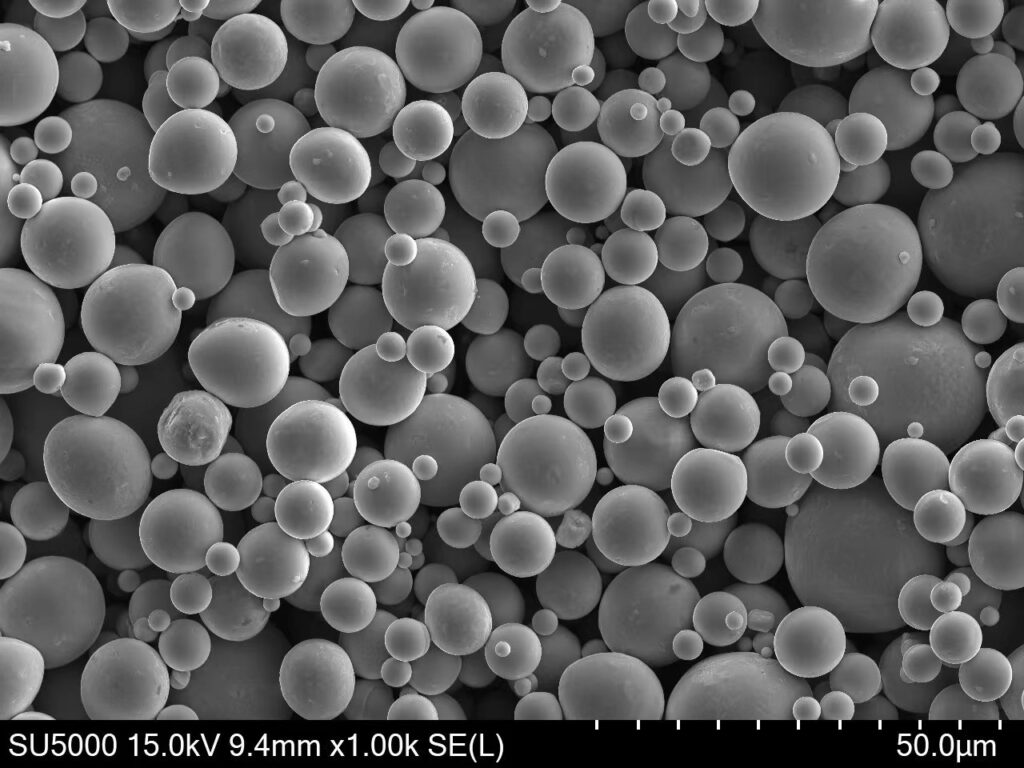
CoCrMo dental & implant powder is a medical-grade cobalt-based alloy powder whose principal elements are cobalt, chromium, and molybdenum. In the dental sector, it is associated with fixed and removable prosthetic frameworks, while in the broader medical device sector it is linked to orthopedic bearing surfaces, implant components, and surgical hardware. The powder is typically produced as a spherical feedstock for laser powder bed fusion, electron beam processing, or related additive routes that need consistent flow and predictable melting behavior.
From a metallurgical standpoint, CoCrMo belongs to the cobalt-chromium alloy family, which is known for a distinctive combination of corrosion resistance, hot strength, wear resistance, and biologically acceptable performance. The chromium content forms a passive oxide film that protects the alloy in saliva and body fluids, while molybdenum improves pitting resistance and strengthens the matrix. Cobalt provides the base high-temperature stability and contributes to the alloy’s strength after solidification and heat treatment.
CoCrMo Dental & Implant Powder in the Medical Alloy Family
Within implant materials, CoCrMo sits alongside titanium alloys, stainless steels, tantalum-containing systems, and high-nitrogen specialty alloys. It is not as light as titanium, and it is stiffer than both titanium and bone, but it offers superior wear resistance and excellent resistance to many forms of tribological damage. That makes it particularly useful where surface durability matters as much as bulk biocompatibility.
In dentistry, the alloy’s role is partly historical and partly technical. Long before metal additive manufacturing matured, cobalt-chromium alloys were already established in cast crowns, bridges, and removable partial denture structures. AM did not create the material’s relevance; it improved how precisely the material could be shaped, especially for thin frameworks, lattice retention features, and individualized patient geometries.
Distinguishing Characteristics of CoCrMo AM Powder
The most important traits are Biokompatibilität, corrosion resistance, wear resistance, and high strength at relatively thin wall sections. For powder users, additional advantages include good laser absorptivity, repeatable layer melting, and strong final part density when the powder chemistry, PSD, and oxygen level are tightly controlled.
In dental and implant manufacturing, cobalt-chromium is often selected not because it is the easiest alloy, but because it combines strength, surface durability, and corrosion resistance in one clinically familiar system.
Why the Material Exists in Powder Form
CoCrMo powder exists because conventional casting cannot always deliver the design freedom, surface consistency, and digital repeatability required by modern dental labs and medical manufacturers. Powder-based production supports patient-specific geometry, thin yet rigid frameworks, and efficient small-batch manufacturing. For buyers comparing medical cobalt alloys with a broader cobalt alloy powder range, the key difference is that dental and implant grades are selected around biological exposure, finishing response, and validation requirements rather than only general high-temperature service.
Chemische Zusammensetzung
The chemistry of CoCrMo is tightly controlled because every major element contributes to passive-film stability, matrix strength, carbides, and long-term in-service behavior. Although exact ranges vary by product form and standard, medical and dental compositions are usually aligned with the chemistry envelope associated with cast or wrought cobalt-28 chromium-6 molybdenum families.
Typical Composition of CoCrMo Dental & Implant Powder
| Element | Typical wt.% | Rolle in der Metallurgie | Functional Effect in Medical/Dental Use |
|---|---|---|---|
| Co | Bilanz | Base matrix element | Provides strength, hot stability, and the core cobalt alloy structure |
| Cr | 26.0-30.0 | Passivation and solid-solution strengthening | Builds corrosion resistance through a stable chromium oxide film |
| Mo | 5.0-7.0 | Strengthening and pitting resistance | Improves resistance to localized corrosion and supports wear performance |
| C | 0.02-0.35 | Carbide formation control | Raises hardness and wear resistance, but excess can reduce ductility |
| Si | 0.2-1.0 | Deoxidation and castability support | Helps processing, though excessive levels can alter toughness |
| Mn | 0.1-1.0 | Deoxidation and processing aid | Supports melt cleanliness and chemistry balance |
| Fe | 0.75 max | Residual impurity control | Kept low to preserve alloy consistency and corrosion behavior |
| Ni | 0.5 max, often lower | Residual element limitation | Minimized for biocompatibility and standard compliance considerations |
| N | 0,25 max | Interstitial strengthening in some grades | Can improve strength but must be controlled for consistency |
| O | Supplier controlled, low | Surface oxide / powder cleanliness factor | Influences printability, flow, and final ductility in AM parts |
The cobalt base determines the alloy family, but chromium and molybdenum do most of the visible work in corrosive service. Chromium is responsible for the passive film that protects the surface from attack in saliva, cleaning chemicals, and body fluids. Molybdenum then helps that passive system remain stable in crevice-like conditions and under repeated exposure cycles.
Role of Carbon in CoCrMo Dental & Implant Powder
Carbon deserves special attention because it changes microstructure more dramatically than its low percentage suggests. In cobalt-chromium systems, carbon promotes carbide formation, which can increase hardness and wear resistance. However, when carbon is too high for the target application or processing window, the alloy may lose ductility and become more difficult to polish or post-process.
This is why some dental powders emphasize a lower-carbon profile for laser processing, while other implant-related compositions stay within broader legacy standard envelopes. The intended balance depends on whether the manufacturer prioritizes surface polish, clasp flexibility, wear resistance, or print-window stability.
Chemistry Control in Additive Manufacturing Powder
Powder chemistry is not just a melt certificate issue. Oxygen pickup during atomization, handling, or recycling can affect ductility, while fine composition shifts can alter cracking tendency, residual stress response, and carbide distribution. In medical AM, the powder therefore has to be understood as a process material, not merely a nominal alloy designation.
Physikalische und mechanische Eigenschaften
CoCrMo is valued because it combines high specific performance in harsh environments with the rigidity needed for thin, load-bearing geometries. The exact properties depend on whether the part is cast, wrought, hot isostatically pressed, laser printed, or electron-beam processed, and they also depend on stress relief, solution treatment, and final surface finishing. Still, typical engineering values are well established enough to guide material screening and process selection.
Typical Physical and Mechanical Properties of CoCrMo Powder-Built Parts
| Eigentum | Typischer Wert | Einheit | Test Standard |
|---|---|---|---|
| Dichte | 8.3-8.5 | g/cm³ | Reference alloy property data |
| Solidus / liquidus range | 1330-1390 | °C | Reference alloy property data |
| Young’s modulus | 210-230 | GPa | ASTM E111 |
| Ultimate tensile strength | 900-1450 | MPa | ASTM E8/E8M |
| Yield strength (0.2%) | 600-1100 | MPa | ASTM E8/E8M |
| Dehnung | 6-25 | % | ASTM E8/E8M |
| Härte | 300-450 | HV | ASTM E384 |
| Fatigue behavior | Process dependent, generally strong after HIP and finishing | - | ASTM E466 or application-specific |
| Wärmeleitfähigkeit | 13-16 | W/m-K | Reference alloy property data |
| Korrosionsbeständigkeit | High in chloride-bearing biological environments | Qualitative | Evaluated by electrochemical methods |
The property spread is wider than in some wrought materials because AM introduces variables such as scan strategy, layer thickness, powder reuse, heat treatment, and build orientation. A laser-printed dental framework optimized for fine detail may not be processed the same way as an orthopedic trial component designed for maximum density and fatigue resistance.
Mechanical Strength vs. Ductility
One reason CoCrMo remains popular is that it can sustain very high strength without losing all clinical usefulness in thin sections. Properly processed AM parts often show yield and tensile values that exceed traditional cast dental alloys, especially when porosity is minimized and residual stress is relieved. The trade-off is that extremely hard, carbide-rich conditions may reduce elongation and complicate fitting or chairside adjustment.
This matters in dental frameworks because rigidity is not the only goal. Clasps, connector zones, and support structures need enough toughness to survive handling and insertion, while polished surfaces must resist wear and corrosion over time.
Corrosion, Wear, and Surface Finish Response
The alloy’s excellent wear resistance is a major reason it is still specified for certain articulating or abrasion-prone uses. Polished cobalt-chromium surfaces can perform well in repeated sliding contact, and the chromium-rich passive film offers dependable resistance in oral conditions. Compared with titanium, CoCrMo typically offers better wear behavior but a higher elastic modulus and greater density.
For medical engineers comparing different biometal platforms, the balance becomes application-specific. A thinner dental bridge may benefit from high-strength cobalt alloy stiffness, whereas a bone-facing implant structure may favor lower-modulus titanium.
Technische Daten und verfügbare Güteklassen
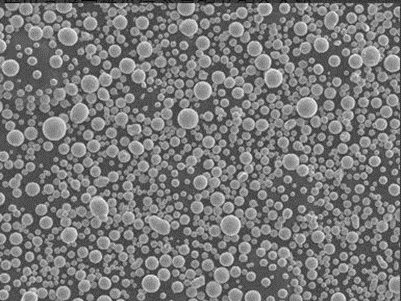
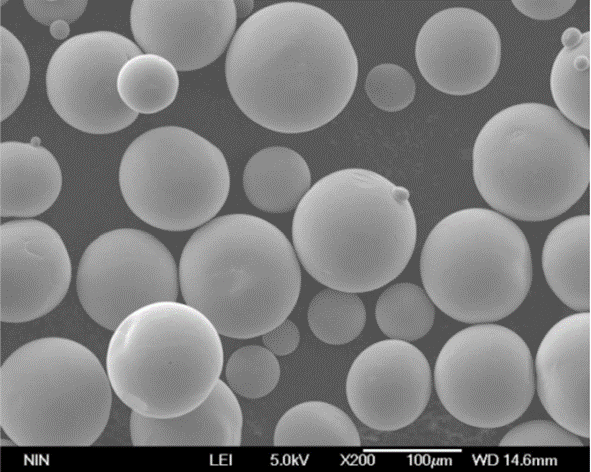
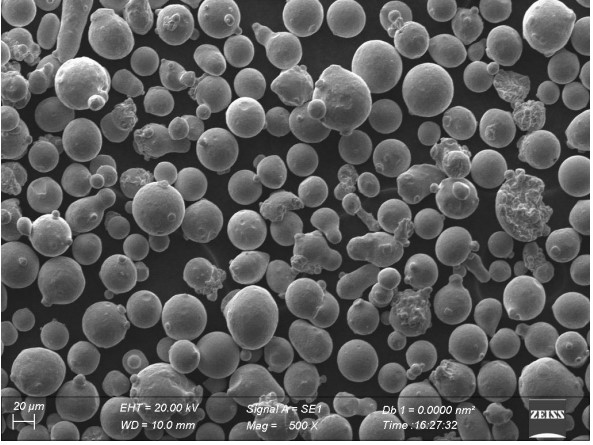
Commercial CoCrMo dental & implant powder is normally purchased through a combination of chemistry compliance, PSD window, morphology control, powder cleanliness, and process fit. Buyers usually want spherical particles, low satellites, low oxygen, and stable flow behavior for layer-by-layer spreading. In regulated sectors, they also want documentation tied to recognized standards and internal quality release criteria.
Typical CoCrMo Dental & Implant Powder Grades and Specifications
| Grade / Supply Condition | Typischer PSD-Bereich | Scheinbare Dichte | Zapfstellendichte | Hall-Strömung | Sauerstoffgehalt | Kugelförmigkeit / Morphologie | Cross-Reference / Typical Use |
|---|---|---|---|---|---|---|---|
| Fine SLM dental grade | 10-30 µm | 4,2–4,8 g/cm³ | 4,8–5,5 g/cm³ | 14–20 s/50 g | 0.08-0.15 wt.% | High, low satellite | Fine dental copings and crown frameworks |
| Standard LPBF medical grade | 15-45 µm | 4,3–4,9 g/cm³ | 5.0-5.8 g/cm³ | 13-18 s/50 g | 0.06-0.12 wt.% | High spherical | General implant and dental AM builds |
| Broad-range SEBM grade | 45-105 µm | 4,5–5,1 g/cm³ | 5.3-6.0 g/cm³ | 12–17 s/50 g | 0.05-0.10 wt.% | Spherical, coarser cut | Electron beam and high-energy applications |
| DED / cladding grade | 53–150 µm | 4,6–5,2 g/cm³ | 5.4-6.2 g/cm³ | 11-16 s/50 g | 0.05-0.12 wt.% | Spherical, robust flow | Directed energy deposition and repair |
| Standards alignment row | Supplier-specific | - | - | - | - | - | Commonly aligned to medical CoCrMo chemistry families such as ASTM F75, ASTM F1537, ISO 22674, and related internal AM release criteria |
The most common size range for laser powder bed fusion is 15-45 µm, though some dental systems work well with narrower fine cuts for better feature definition. Coarser fractions are more typical for electron beam systems or deposition processes where larger particles improve feeding stability. In every case, the nominal PSD has to be read together with morphology, recycle policy, and machine parameter set.
Standards Landscape for Dental and Implant Grades
There is no single one-size-fits-all rulebook covering every CoCrMo powder application, but the chemistry and end-use framework often refer back to recognized material standards such as the ASTM medical cobalt alloy framework, the ISO dentistry metallic materials standard familyund die ISO/ASTM additive manufacturing terminology. For dental labs, ISO dentistry references matter because they connect material selection to prosthodontic practice. For implant manufacturers, ASTM-oriented documentation becomes more important when linking alloy identity to validation and quality systems.
Powder Release Criteria That Matter Most
Beyond standards names, engineers pay attention to oxygen, nitrogen, moisture, particle morphology, and sieve distribution drift after reuse. Recycled powder that remains chemically compliant may still behave differently if fines increase or satellites accumulate. That is why lot acceptance often includes chemistry checks, flow metrics, microscopy, and build-trial data rather than relying on nominal alloy designation alone.
Herstellungsprozess
The manufacturing process of CoCrMo powder strongly influences printability, porosity risk, and final part reproducibility. For dental and implant use, the market generally prefers spherical powder with controlled gas content and tight PSD, which makes atomization-based routes more relevant than mechanical comminution or reduction methods.
CoCrMo Dental & Implant Powder Production Route Comparison
| Prozess | Sphärizität | Sauerstoffaufnahme | PSD-Steuerung | Durchsatz | Relative Kosten |
|---|---|---|---|---|---|
| Gaszerstäubung (GA) | Hoch | Low to moderate, depending on atmosphere and handling | Gut bis sehr gut | Hoch | Mäßig |
| Vakuum-Induktions-Gaszerstäubung (VIGA) | Sehr hoch | Niedrig | Sehr gut | Mittel bis hoch | Mäßig bis hoch |
| Elektrodeninduktions-Gaszerstäubung (EIGA) | Sehr hoch | Sehr niedrig | Sehr gut | Mittel | Hoch |
| Plasma-Rotations-Elektroden-Verfahren (PREP) | Extremely high, very clean | Sehr niedrig | Good, often with coarser emphasis | Medium to low | Hoch |
| Plasma / specialty reconditioning routes | Variable to high | Controlled | Anwendungsspezifisch | Niedrig bis mittel | Hoch |
Gas Atomization and VIGA for Medical Spherical Powder
Gas atomization is the most widely used route for CoCrMo AM powder because it balances cost, throughput, and particle quality. Melt is disintegrated by high-pressure gas into droplets that solidify into near-spherical powder, after which the product is sieved into target size fractions. VIGA adds vacuum induction melting before atomization, which improves melt cleanliness and helps reduce contamination risks in higher-value medical powder lots.
For most dental and implant production, GA or VIGA gives the best industrial balance. The powders flow well, can be classified into tight LPBF ranges, and scale more easily than very specialized electrode routes. This is one reason cobalt-chromium powders are common in digital dentistry: the production route aligns well with the volumes and consistency requirements of serial small-part manufacturing.
EIGA and PREP Trade-Offs
EIGA and PREP are sometimes discussed together because both are associated with premium spherical powder quality. EIGA avoids ceramic contact during melting of the feedstock, while PREP forms powder from a rotating consumable electrode exposed to plasma. The result is excellent cleanliness and highly spherical particles, but at a higher cost and often with less flexibility in fine-volume economics.
For CoCrMo, PREP is technically attractive when ultra-clean powder and very low contamination are prioritized, but GA and VIGA remain more common for commercial dental powder supply. The decision usually comes down to required cleanliness, particle shape preference, and cost tolerance.
Pulveraufbereitung nach der Zerstäubung
After primary powder formation, the material is screened, blended, sampled, and passivated as needed. Additional steps may include magnetic separation of foreign particles, moisture control, and packaging under protective conditions. These stages are especially important for sphärisches AM-Pulver because a nominally good chemistry can still perform poorly if fines, agglomerates, or oxygen drift are not controlled between production and machine loading.
Shanghai Truer’s process context is relevant here because its powder equipment portfolio spans GA and PREP, while its additive manufacturing ecosystem also includes SEBM and downstream process support. That makes CoCrMo powder part of a broader technical chain rather than a standalone commodity feedstock.
Anwendungen nach Branche
Although the keyword centers on dental and implant use, CoCrMo powder also serves adjacent medical and industrial sectors where a corrosion-resistant, wear-resistant cobalt alloy offers benefits over titanium, stainless steel, or nickel systems. The application map is therefore broader than restorative dentistry alone.
Dental Frameworks and Restorative Components
In dentistry, CoCrMo powder is widely used for crowns, bridges, copings, bars, removable partial denture frameworks, and implant superstructures. AM allows dental labs to build intricate clasp geometries, support bars, and thin sections that would be harder to produce consistently by casting. The rigidity of cobalt-chromium is especially valuable in long-span frameworks where deflection must be limited.
Surface finishing remains important after printing. Even when the part geometry is digitally accurate, contact surfaces and esthetic zones typically need blasting, polishing, machining, or ceramic veneering. Powder quality therefore affects not only build success, but also the efficiency of downstream finishing.
Orthopedic and Implant-Adjacent Medical Uses
In medical manufacturing, CoCrMo is used for orthopedic components, bearing surfaces, trial devices, and selected patient-matched parts where strength and wear resistance are central. It has longstanding relevance in joint systems and implant hardware because it tolerates sustained loading while maintaining good corrosion performance in physiological environments. Medical teams comparing cobalt systems with a broader titanium implant powder selection usually weigh modulus, wear, osseointegration strategy, and finishing requirements rather than just tensile strength.
Tools, Wear Parts, and Specialized Industrial Uses
Outside medicine, CoCrMo powder can also be used for high-wear tooling, valve seats, corrosion-resistant overlays, and functional metal AM parts exposed to abrasion. These are not the headline markets for dental-grade material, but they demonstrate why the alloy family remains strategically important. If a manufacturer already runs cobalt-chromium on medical jobs, the same process knowledge can sometimes translate into industrial wear components with different qualification pathways.
Process Fit Across Manufacturing Routes
For laser powder bed fusion, CoCrMo is one of the more mature and forgiving medical alloys, especially compared with more oxidation-sensitive refractory powders. In electron beam environments, coarser fractions can also perform well when machine settings are tuned correctly. Companies evaluating full-route deployment often compare CoCrMo not only with titanium, but also with metal powder use cases by process to decide whether SLM, SEBM, DED, or conventional PM offers the best validation path.
Vergleich mit alternativen Materialien
Material selection for dental and implant work is never purely about strength. Density, modulus, corrosion resistance, post-processing, polishability, patient-specific design, and long-term wear all influence whether CoCrMo is the right choice. The best comparison is therefore against the alloys most often considered in the same decision set.
CoCrMo Dental & Implant Powder vs Alternative AM Materials
| Material | Dichte (g/cm³) | Typisches Leistungsniveau | Druckbarkeit | Korrosionsbeständigkeit | Abnutzungswiderstand | Relative Kosten |
|---|---|---|---|---|---|---|
| CoCrMo dental & implant powder | 8.3-8.5 | Hoch bis sehr hoch | Strong for LPBF and medical AM | Ausgezeichnet | Ausgezeichnet | Mittel bis hoch |
| Ti-6Al-4V-Pulver | 4.4-4.5 | Hoch | Excellent for LPBF and EBM | Ausgezeichnet | Mäßig | Hoch |
| 316L-Edelstahlpulver | 7.9-8.0 | Mäßig | Very strong and forgiving | Gut | Mäßig | Niedrig bis mittel |
| Nickel-based alloy powder | 8.1-8.5 | High at elevated temperature | Good, process dependent | Very good in many chemical environments | Gut | Hoch |
| Commercially pure titanium powder | 4.5 | Mäßig | Gut | Ausgezeichnet | Lower than CoCrMo | Hoch |
Compared with titanium alloys, CoCrMo is heavier and stiffer, but usually offers better wear resistance and often better rigidity in slender dental structures. Compared with 316L, it is stronger, harder, and more wear resistant, though typically more expensive and more demanding to finish. Compared with nickel alloys, it is more closely aligned with medical and dental biocompatibility expectations, while nickel systems are more commonly selected for turbine, chemical, or high-temperature corrosion service.
For manufacturers with broader portfolios, crossover decisions also arise against nickel superalloy powder options when corrosion and heat resistance are needed but human implantation is not. In dental and implant contexts, however, CoCrMo remains one of the most clinically familiar and technically balanced choices.
Unser Unternehmen
Shanghai Truer Technology Co., Ltd., operating am-printing.com, was established in 2009 and created its additive manufacturing business in 2019. The company works on integrating 3D printing powder-making equipment and services with metal powders, including CoCrMo as well as TiNi, TiTa, TiAl, TiNbZr, nickel-based, cobalt-based, titanium-based, copper-based, aluminum-based, and stainless steel spherical powders. Its stated process and equipment scope includes Selective Electron Beam Melting equipment, Plasma Rotating Electrode Process powder-making equipment, and gas atomization-related capability, serving SLM, SEBM, DED, laser cladding, PM, MIM, HIP, spraying, welding, and coating across medical, aerospace, nuclear power, 3C electronics, hand tools, and related sectors. Company details, capabilities, and background are summarized in the corporate profile page.
FAQ
Q1. Is CoCrMo dental & implant powder biocompatible enough for medical use?
Yes, cobalt-chromium-molybdenum alloys are widely used in medical and dental applications because they offer good corrosion resistance and a long history of clinical use. Final biocompatibility depends not only on nominal alloy chemistry, but also on manufacturing cleanliness, post-processing, surface condition, and the regulatory pathway of the finished device.
Q2. What particle size is best for CoCrMo dental 3D printing?
For most laser powder bed fusion dental systems, 15-45 µm is the common industrial window, with some machines using finer cuts for small features and thin copings. The best PSD depends on the recoater design, laser parameters, layer thickness, and whether the user prioritizes surface finish, throughput, or feature fidelity.
Q3. How does CoCrMo dental & implant powder compare with titanium powder?
CoCrMo is generally stronger, stiffer, and more wear resistant, which helps in thin frameworks and highly loaded contact areas. Titanium is much lighter and has a lower elastic modulus, so it is often preferred for bone-facing implants and applications where weight and modulus matching matter more than surface wear resistance.
Q4. Can CoCrMo powder be used for both dental and orthopedic parts?
Yes, the same alloy family can serve both fields, but the qualification route, documentation package, and final processing requirements may differ significantly. Dental restorations, surgical instruments, and implant-adjacent parts are not automatically interchangeable even when the base chemistry appears similar.
Q5. Why is oxygen control important in CoCrMo AM powder?
Excess oxygen can affect ductility, powder flow behavior, and consistency across repeated builds. In medical additive manufacturing, low and stable oxygen is important because it supports reliable melting, helps maintain target mechanical properties, and reduces variability after powder recycling.
Q6. Is CoCrMo dental & implant powder suitable for mirror-polished dental surfaces?
Yes, but the final polish quality depends on print density, support strategy, heat treatment, and finishing sequence as much as on the powder itself. High-quality spherical powder helps minimize porosity and surface defects, which makes grinding and polishing more predictable for clinical dental work.