簡単な回答
6061 aluminum alloy powder is a heat-treatable Al-Mg-Si feedstock used in additive manufacturing, powder metallurgy, and related powder-fed processes. It is chosen for 3D printing when engineers need low density, good corrosion resistance, familiar secondary machining behavior, and a broadly accepted structural aluminum grade rather than the easiest possible print alloy. In practice, it fits lightweight housings, fixtures, brackets, tooling, and industrial parts where balanced performance and known post-processing routes are more important than maximum as-printed process tolerance.
What Is 6061 aluminum alloy powder
6061 aluminum alloy powder is the powdered form of one of the most widely used precipitation-hardening aluminum grades in industrial manufacturing. In standard metallurgy, 6061 belongs to the 6xxx family, meaning its primary alloying system is aluminum with magnesium and silicon. In powder form, the alloy is converted into controlled particle distributions that can be used in laser powder bed fusion, directed energy deposition, laser cladding, thermal spray, and selected powder metallurgy routes.
The significance of the alloy is not just that it is aluminum. It is that 6061 occupies a practical engineering middle ground. It is lighter than steel and nickel alloys, more structurally useful than commercially pure aluminum, and more familiar to machine shops than many niche AM-specific chemistries. That is why design teams often consider it when they want to extend conventional 6061 design logic into additive production.
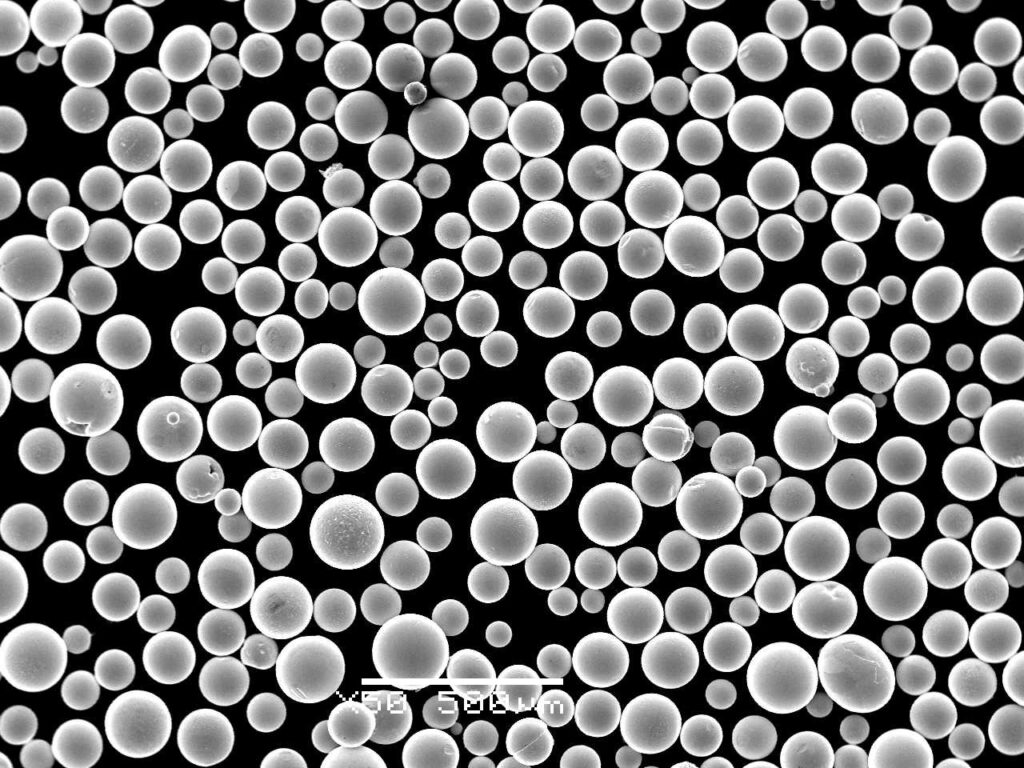
6061 aluminum alloy powder within the 6xxx series
The 6xxx series is defined by magnesium and silicon additions that form magnesium silicide during aging. That precipitation mechanism gives 6061 its heat-treatable character. In wrought plate, bar, and extrusion, the alloy is known for useful strength, good corrosion resistance, and broad fabrication compatibility.
When translated into 粉末添加剤, those same metallurgical fundamentals still matter, but the process environment changes. Rapid melting and solidification, fine particle oxidation, reflectivity under laser energy, and residual stress development all become part of the material-performance equation. As a result, 6061 aluminum alloy powder is never evaluated only by alloy name; it must be assessed as a full powder system.
Why 6061 exists in powder form
Powder form allows 6061 to be fed into manufacturing processes that cannot use bulk wrought stock directly. Powder-bed systems require tight particle size windows and good spreading. Powder-fed deposition systems need stable flow through hoppers and nozzles. Spray and cladding operations require controlled feed and predictable melting behavior.
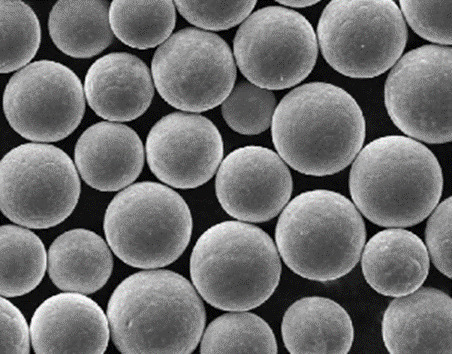
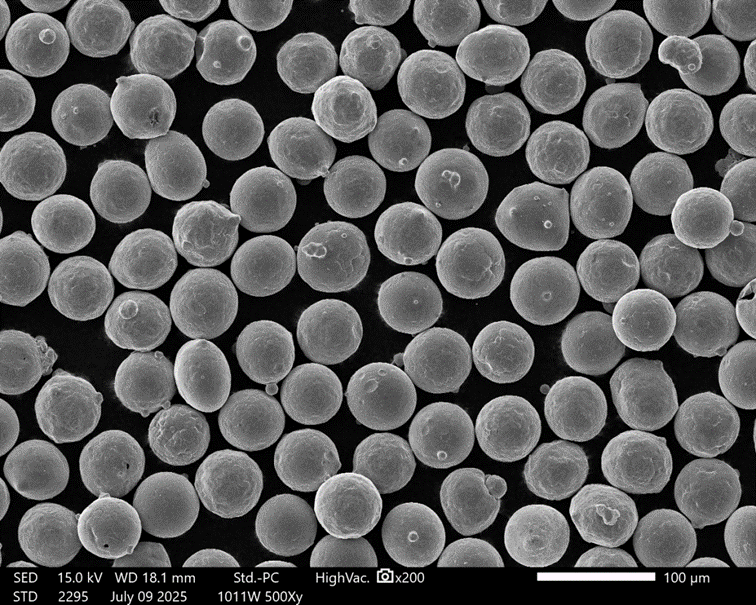
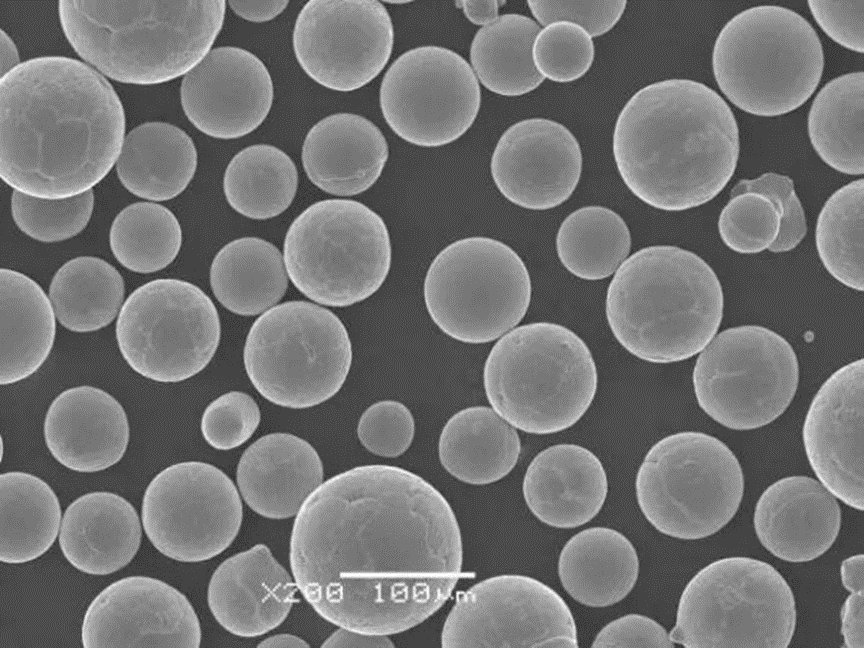
That requirement is why morphology matters. For most high-value AM use, near-spherical powder is preferred over irregular powder because it improves flowability, packing density, and deposition consistency. Many buyers therefore start their selection process by reviewing an [aluminum powder product range] that separates alloys not only by chemistry but also by intended process route.
Distinguishing 6061 from other aluminum AM powders
6061 aluminum alloy powder is often compared with AlSi10Mg because both are lightweight aluminum options for metal AM. The difference is that AlSi10Mg is generally favored for print robustness, while 6061 is more often chosen for its familiarity as a structural engineering alloy. Compared with 7075, 6061 typically gives up some peak strength in exchange for better corrosion balance and easier all-around manufacturing acceptance.
This distinction matters because materials are not chosen in isolation. They are chosen within a workflow that includes printing, machining, finishing, heat treatment, inspection, and service use.
In metal AM, the most successful alloy is often the one that fits the full manufacturing chain, not just the build chamber.
化学組成
The chemical composition of 6061 aluminum alloy powder follows the accepted chemistry envelope of 6061 aluminum, but powder production adds further concerns such as oxidation, vaporization of volatile elements, and batch-to-batch control after atomization. For engineering users, composition determines not only nominal alloy identity but also age-hardening response, corrosion behavior, and compatibility with qualification data based on conventional 6061.
| エレメント | Typical Content (wt%) | 合金における役割 | Functional Effect in Powder and Built Parts |
|---|---|---|---|
| アルミニウム(Al) | バランス | Matrix metal | Provides low density, corrosion-resistant oxide layer, and thermal conductivity |
| マグネシウム (Mg) | 0.80-1.20 | Primary strengthening element with Si | Enables precipitation hardening and strongly affects post-build aging response |
| ケイ素 (Si) | 0.40-0.80 | Combines with Mg to form Mg2Si | Supports strength development and influences melt behavior |
| 銅(Cu) | 0.15-0.40 | Secondary strength contributor | Raises strength potential but can slightly reduce corrosion resistance if elevated |
| クロム(Cr) | 0.04-0.35 | Grain structure and corrosion support | Helps control microstructure and can improve resistance to localized degradation |
| 鉄(Fe) | 0.00-0.70 max | 残留不純物 | High levels may form brittle intermetallics and lower ductility |
| マンガン (Mn) | 0.00-0.15 max | Minor structure stabilizer | Usually low, but contributes to overall metallurgical balance |
| 亜鉛 | 0.00-0.25 max | Residual element | Controlled to prevent unintended shifts in response or corrosion behavior |
| チタン(Ti) | 0.00-0.15 max | Grain refinement aid | Can assist solidification behavior at low levels |
Magnesium and silicon as the key pair in 6061 aluminum alloy powder
Magnesium and silicon are the alloy’s central functional elements. Their interaction governs the formation of strengthening precipitates during aging, which is why deviations in either element can change how printed material responds to heat treatment. In powder production, magnesium control is especially important because it can be affected by thermal exposure during melting and atomization.
This is one reason powder certificates must reflect the final powder, not merely the target melt recipe. A supplier may charge the melt correctly, but unless the atomized product is tested, the actual delivered batch may not reflect the intended strengthening balance.
Impurity control in aluminum AM powder
Iron, zinc, and other residual elements are usually present in small amounts, but they still matter. Excess iron can promote hard, brittle intermetallic phases that reduce ductility and fatigue tolerance. For additive manufacturing users, these effects may become more pronounced because the material experiences rapid thermal cycling and fine microstructural development.
Oxygen is equally important even though it is not part of the nominal alloy designation. Every aluminum particle naturally develops an oxide film, but excessive surface oxidation can interfere with fusion behavior, powder reuse consistency, and final density. That is why high-quality 6061 powder programs combine chemistry limits with morphology and oxygen control.
Chemistry versus actual print behavior
Composition defines the alloy family, yet it does not define printability by itself. Two batches that both meet 6061 chemistry may spread differently, absorb energy differently, and produce different defect populations if their particle shape, satellite content, or surface condition varies. Industry terminology published in the [ISO/ASTM additive manufacturing vocabulary] helps explain why feedstock characteristics are treated as process-critical variables rather than as secondary details.
物理的および機械的特性
The physical and mechanical profile of 6061 aluminum alloy powder should be interpreted across two stages: the powder itself as a feedstock and the consolidated material after printing and any subsequent thermal treatment. The alloy’s baseline physical properties are stable and well understood, but the final mechanical values in AM parts depend heavily on density level, scan strategy, orientation, porosity, and post-build heat treatment.
| プロパティ | 代表値 | 単位 | Test Standard or Condition |
|---|---|---|---|
| Solid density | 2.70 | g/cm³ | Typical room-temperature alloy value |
| 融点範囲 | 582-652 | °C | Typical alloy reference range |
| Ultimate tensile strength | 260-340 | MPa | Typical heat-treated AM or wrought-comparable condition |
| Yield strength, 0.2% offset | 220-280 | MPa | Typical aged condition |
| 破断伸度 | 6-17 | % | Strongly process- and orientation-dependent |
| 硬度 | 80-100 | HB | Typical for aged structural condition |
| 弾性率 | 68-70 | GPa | 室温における代表的な値 |
| 熱伝導率 | 150-170 | W/m-K | Condition-dependent engineering range |
| 熱膨張係数 | 23-24 | µm/m·K | Approximate ambient-to-moderate temperature range |
Density and lightweighting value
The low density of 6061 aluminum alloy powder is one of its clearest engineering advantages. At roughly one-third the density of stainless steel and much lower than nickel or cobalt alloys, it allows meaningful weight reduction in brackets, housings, jigs, enclosures, and robotic or aerospace subcomponents.
This lower density changes more than part weight. It can reduce inertial loads, improve handling during assembly, and lower the structural penalty of topology-optimized or lattice-based designs.
Strength after consolidation and heat treatment
6061 is not typically selected because it offers the highest aluminum strength available. It is selected because it can deliver a useful combination of strength, ductility, and familiar age-hardening response once the build is stress relieved, solution treated where appropriate, and aged according to the target property profile.
Printed values vary considerably by machine and process window. Laser-based AM of 6061 can be more sensitive to cracking and defect formation than silicon-rich aluminum systems, so the achievable property range depends strongly on successful process development rather than on datasheet numbers alone.
Hardness, conductivity, and corrosion balance
Hardness levels in 6061 are sufficient for many industrial structural and fixture applications, though not for severe wear environments without additional design or surface engineering measures. Thermal conductivity is significantly higher than that of titanium and most stainless steels, which helps in enclosures, supports, and thermally responsive structural parts.
Corrosion resistance is another reason 6061 remains relevant. The alloy forms a stable oxide film in many service environments, making it suitable for indoor industrial use and many outdoor applications where severe chloride attack is not the dominant concern.
Limitations of property reporting in AM
Mechanical properties published for powder alloys are best treated as representative rather than universal. Powder quality, machine calibration, atmosphere quality, and post-processing all affect outcomes. For that reason, serious qualification plans validate the material in the user’s own equipment instead of assuming that published values will transfer directly.
仕様および取り扱いグレード
Specifications for 6061 aluminum alloy powder must bridge metallurgy and process control. Buyers usually review particle size distribution, apparent density, tap density, flow behavior, oxygen level, morphology, moisture control, and packaging format alongside chemical composition. The correct grade depends not only on the alloy but also on whether the powder is intended for powder-bed fusion, directed energy deposition, thermal spray, or cladding.
| Grade or Reference Type | 代表的なPSD範囲 | 見かけ密度 | タップ密度 | ホールの流れ | 酸素含有量 | Sphericity or Morphology | Standards or Cross-Reference |
|---|---|---|---|---|---|---|---|
| Fine LPBF grade | 15-45 µm | 1.35-1.55 g/cm³ | 1.55-1.75 g/cm³ | 18-28 s/50 g* | ≤0.20 wt% typical | High sphericity, low satellites | Internal AM grade aligned to 6061 composition |
| Standard LPBF grade | 15-53 µm | 1.40-1.60 g/cm³ | 1.60-1.80 g/cm³ | 17-26 s/50 g* | ≤0.20 wt% typical | Spherical, screened for stable recoating | Common PBF supply range |
| DED grade | 45-105 µm | 1.45-1.65 g/cm³ | 1.65-1.85 g/cm³ | 15-24 s/50 g* | ≤0.22 wt% typical | Free-flowing spherical powder | Suitable for directed deposition |
| Cladding or spray grade | 53~150 µm | 1.50-1.70 g/cm³ | 1.70-1.90 g/cm³ | 14-22 s/50 g* | ≤0.25 wt% typical | Coarser spherical fraction | Used in laser cladding and spray systems |
| Standards reference row | - | - | - | - | Controlled by lot | Verified by microscopy | Commonly cross-checked with [ASTM materials standards] and internal QA methods |
| Documentation row | - | - | - | - | Reported per batch | Morphology documented | Terminology often aligned with ISO/ASTM frameworks and customer specifications |
*Fine aluminum powders can show method-sensitive flow results, so alternate reporting methods may also be used depending on particle size and lab practice.
Particle size distribution for 3D printing powder
For laser powder bed fusion, 15-45 µm and 15-53 µm are typical because they support thin layers and reasonably dense packing. Finer cuts may improve surface resolution but can raise handling sensitivity and oxidation risk. Coarser cuts tend to feed better in blown-powder systems and are therefore more common in directed energy deposition or cladding.
Particle size must also match the recoater style, laser spot characteristics, and target layer thickness. A powder that works well in one machine may underperform in another if the process envelope shifts.
Morphology, flowability, and oxygen limits
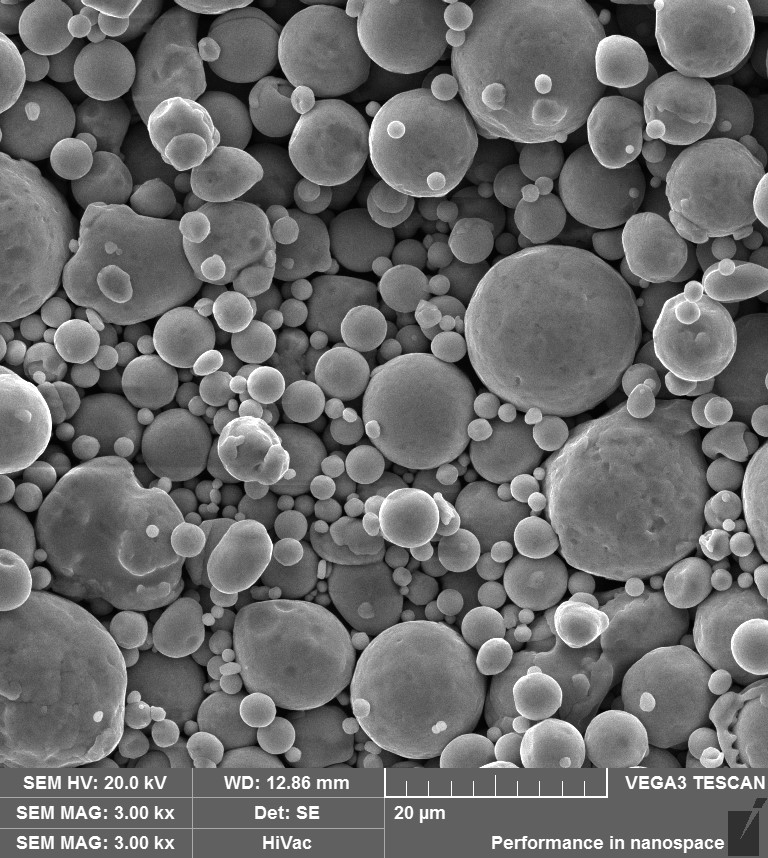
Morphology is usually assessed by microscopy and image-based analysis rather than by alloy chemistry alone. Highly spherical powder with limited satellites usually spreads more consistently and supports better layer quality. Oxygen content must remain controlled because excessive oxide burden can interfere with melt pool stability and powder reuse.
These data points are especially important when users plan multi-cycle powder reuse. A batch that looks acceptable when virgin may drift outside the preferred window after several handling and exposure cycles if storage and sieving practices are not tightly managed.
Cross-reference logic and practical supply grades
Because 6061 is historically a wrought alloy, AM supply grades are often cross-referenced to chemistry-based frameworks rather than a single universal AM specification. Many procurement teams therefore specify chemistry, PSD, morphology, and process target together. Suppliers with broad portfolios may place 6061 beside [titanium alloy powder options] or steel-based alternatives during early material down-selection when the design brief is still open.
製造工程
The manufacturing route of 6061 aluminum alloy powder largely determines whether it behaves as premium AM feedstock or as general industrial metal powder. Powder route affects roundness, internal porosity, oxygen pickup, size distribution, and lot consistency. In aluminum systems, that process control is especially important because fine particles oxidize easily and reflect laser energy strongly.
Gas atomization of 6061 aluminum alloy powder
Gas atomization is the dominant commercial route for producing spherical aluminum AM powder. In this process, molten 6061 is disintegrated by high-velocity inert gas into droplets that solidify during flight. The resulting powder is collected, sieved, classified, and packaged under controlled conditions.
The main advantages are scalability, relatively good sphericity, and commercially practical cost. For 6061 in particular, gas composition, melt handling, and cooling conditions must be tightly controlled to limit oxidation and preserve the intended magnesium level.
PREP, VIGA, and EIGA in premium powder production
PREP, or Plasma Rotating Electrode Process, ejects droplets from a rotating metal electrode melted by plasma. It is best known for highly spherical, clean powders in reactive alloy systems. For 6061, it is less common as a mainstream route than gas atomization, but it remains relevant when comparing achievable morphology and cleanliness.
VIGA combines vacuum induction melting with gas atomization, adding tighter control over the melt environment. EIGA, or electrode induction-melting gas atomization, reduces crucible-related contamination risks by atomizing from an electrode feed. These premium routes can improve cleanliness but usually involve higher cost or lower throughput.
| Process Route | Basic Principle | 球形度 | Oxygen Pickup Risk | PSDコントロール | スループット | 相対的なコスト | Typical Relevance to 6061 |
|---|---|---|---|---|---|---|---|
| ガスアトマイズ(GA) | Inert gas disrupts molten stream into droplets | 良い~非常に良い | Low with proper inert control | 非常に良い | 高い | 中程度 | Main commercial route for AM-grade 6061 |
| VIGA | Vacuum induction melting followed by gas atomization | 非常に良い | 低い | 非常に良い | 中~高 | 中~高 | Useful where melt cleanliness is emphasized |
| 準備 | Plasma-melted rotating electrode produces droplets | 素晴らしい | 非常に低い | グッド | ミディアム | 高い | Technically attractive but less common for routine 6061 supply |
| EIGA | Electrode induction melting with gas atomization | Very good to excellent | 非常に低い | 良い~非常に良い | ミディアム | 高い | Chosen when contamination control is critical |
| 水の霧化 | Water jets atomize molten metal | Poor to fair for AM | 高い | グッド | 高い | 低い | Generally unsuitable for premium spherical AM powder |
Screening, classification, and packaging
Powder manufacturing does not end at atomization. After production, the powder must be screened into commercial size cuts, checked for oversize particles and fines, tested for morphology and chemistry, and packed in a way that limits moisture uptake and surface oxidation.
For aluminum, packaging discipline is a real technical issue, not just a logistics detail. Exposure to humidity can degrade powder condition over time, especially in finer fractions with higher surface area.
Process trade-offs that matter to buyers
Buyers often assume that alloy chemistry is the main variable. In reality, atomization route and downstream handling are equally important for additive manufacturing. A nominally correct 6061 chemistry made by a poorly controlled process may show unstable flow, broad PSD, or excess oxide and therefore produce inconsistent results in the machine.
This is why multi-material manufacturers often compare production routes across portfolios that include [nickel-based AM powders] and more temperature-resistant systems. The same basic lesson holds across all of them: feedstock quality begins at the powder-making stage.
業界別の用途
6061 aluminum alloy powder is most relevant in industries that value low weight, corrosion resistance, and conventional aluminum engineering familiarity. It is not usually the first choice for the most severe temperature environments or highly regulated implant applications, but it performs well in a wide range of industrial and developmental roles.
Aerospace and lightweight industrial structures
In aerospace, 6061 powder is most suitable for secondary structures, fixtures, housings, brackets, covers, and support hardware rather than the hottest or most highly stressed engine-adjacent components. Its advantage is the combination of low mass and broad familiarity with downstream machining, fastening, and finishing practices.
It is also useful in aerospace tooling and prototype work. When a development team needs a lightweight custom fixture or low-volume bracket quickly, 6061 can be a practical bridge between design and tested hardware.
Automotive, robotics, and mobility systems
Automotive engineering teams use aluminum powders in prototype components, assembly fixtures, low-volume mounts, and motorsport hardware where weight reduction matters. Robotics applications benefit from lower inertial loads, especially in arms, end effectors, sensor housings, and mobile platforms.
The alloy’s machinability is valuable here. Many printed parts still require threads, sealing surfaces, bores, or post-build finishing, and 6061 fits that workflow well.
Electronics, tools, and manufacturing support
In electronics and industrial equipment, 6061 aluminum alloy powder is suitable for housings, carriers, frames, cooling-adjacent structures, and manufacturing aids. It is not as conductive as copper, but it often provides enough thermal performance for enclosures and structural parts that also need stiffness and low mass.
For use cases where conductivity becomes the lead requirement rather than a secondary benefit, engineers may compare it with [copper alloy powder materials]. Where hardness, wear resistance, or elevated-temperature strength dominate, iron-, cobalt-, or nickel-based systems may become more appropriate.
Oil and gas, energy, and general industrial use
In oil and gas and broader energy equipment, 6061 powder can be relevant for lightweight external hardware, instrumentation mounts, covers, and special-purpose tooling. It is generally not the first selection for high-temperature downhole environments or the most corrosive service conditions, but it can be useful in support components where weight and machinability matter.
Where the alloy is less ideal
Medical implants are not a standard application area for 6061 aluminum alloy powder. High-load wear pairs, severe chloride immersion, and sustained high-temperature service also push the alloy beyond its most comfortable range. In those cases, the material may still be printable, but it is no longer the most rational choice.
代替材料との比較
Choosing 6061 aluminum alloy powder is always a relative decision. Engineers rarely ask whether 6061 is good in the abstract; they ask whether it is better than AlSi10Mg, 7075, titanium, or stainless steel for a particular manufacturing route and service condition.
| 素材 | 密度 (g/cm³) | 一般的な筋力レベル | Relative Printability | 耐食性 | 相対的なコスト | 熱伝導率 | 最適なユースケース |
|---|---|---|---|---|---|---|---|
| 6061 aluminum alloy powder | 2.70 | Moderate to high after heat treatment | 中程度 | グッド | 中程度 | 高い | Lightweight structural parts with familiar aluminum behavior |
| AlSi10Mg粉末 | 2.67 | 中~高 | 非常に良い | グッド | 中程度 | 中程度 | General-purpose aluminum LPBF production |
| 7075 aluminum powder | 2.81 | 高い | Difficult to moderate | 中程度 | 中~高 | 中程度 | Higher-strength lightweight parts with tighter controls |
| Ti-6Al-4V粉末 | 4.43 | 高い比強度 | 良い~非常に良い | 非常に良い | 高い | 低~中程度 | Aerospace and medical-grade high-performance structures |
| 316Lステンレス鋼粉末 | 7.90-8.00 | 中程度 | 素晴らしい | 非常に良い | 中程度 | 低い | Corrosion-resistant industrial components where weight is secondary |
6061 versus AlSi10Mg
This is the most common comparison in aluminum metal AM. AlSi10Mg generally offers easier processing and a wider print window, which is why it is so common in production powder-bed fusion. 6061, by contrast, is often selected when designers want to stay closer to a familiar wrought-alloy design language and downstream manufacturing ecosystem.
6061 versus 7075
7075 is the stronger headline alloy, but strength is not the only criterion. 6061 is often preferred when corrosion balance, manufacturability, and general-purpose engineering usability outweigh the need for maximum strength.
6061 versus titanium or stainless steel
Titanium provides superior specific strength and high-performance credibility but at much higher cost and density than aluminum. Stainless steel brings robust printability and corrosion resistance, but its weight penalty is substantial. Balanced lightweight performance is the main reason 6061 stays relevant despite not dominating any single metric.
当社
Shanghai Truer Technology Co., Ltd., the company operating am-printing.com, was established in 2009 and created its additive manufacturing business in 2019. Based on the published company profile, its activities include integrating 3D printing powder-making equipment and services with metal AM powders, with core technologies that include Selective Electron Beam Melting equipment, Plasma Rotating Electrode Process powder-making equipment, and Gas Atomization where relevant. Its portfolio covers TiNi, TiTa, TiAl, TiNbZr, CoCrMo, and spherical powders across nickel-, cobalt-, titanium-, copper-, aluminum-, and stainless-steel families for processes such as SLM, SEBM, DED, laser cladding, powder metallurgy, MIM, HIP, cold or hot spraying, welding, and coating in sectors including 3C electronics, hand tools, remote-control cars, medical, aerospace, and nuclear power. Additional company background appears on the [corporate profile page].
よくあるご質問
Q1. Is 6061 aluminum alloy powder good for metal 3D printing?
Yes, 6061 aluminum alloy powder can be a good metal 3D printing material when the goal is lightweight structural performance, corrosion resistance, and familiar machining behavior. It is generally more process-sensitive than AlSi10Mg, so successful use depends on tight parameter development and powder quality control.
Q2. What particle size is typical for 6061 aluminum alloy powder in additive manufacturing?
Laser powder bed fusion commonly uses 15-45 µm or 15-53 µm ranges, while directed energy deposition more often uses coarser cuts such as 45-105 µm. The correct size distribution depends on layer thickness, machine configuration, and target surface finish.
Q3. Why is spherical 6061 aluminum powder preferred over irregular powder?
Spherical powder usually flows more consistently, packs more uniformly, and spreads better across the build plane than irregular particles. Those features help stabilize the process and reduce the chance of layer defects, feeding interruptions, or uneven local density.
Q4. How does 6061 aluminum alloy powder compare with AlSi10Mg?
AlSi10Mg is typically easier to print and is often the first choice for production aluminum LPBF. 6061 is more attractive when users want a well-known structural aluminum grade with familiar post-processing routes and broader alignment to existing 6061-based designs.
Q5. Does 6061 aluminum alloy powder require heat treatment after printing?
In many structural applications, yes. Stress relief and aging are commonly used to improve dimensional stability and develop the desired strength profile, although the exact thermal cycle depends on the printed condition and the required final properties.
Q6. What should buyers verify before qualifying 6061 aluminum alloy powder?
They should review chemistry, PSD, apparent density, tap density, flow behavior, oxygen level, morphology, and packaging integrity rather than relying on alloy name alone. Lot traceability, reuse strategy, and machine-specific build validation are also essential because powder performance depends on both feedstock quality and process control.