簡単な回答
dental CoCrMo alloy powder is a cobalt-chromium-molybdenum metal powder engineered for additive manufacturing of dental frameworks, copings, bridges, and other high-strength oral prosthetic components. It is widely chosen because it combines strong printability in laser powder bed fusion, high corrosion resistance in the oral environment, excellent stiffness, and proven suitability for thin-walled dental geometries. For laboratories and manufacturers balancing precision, durability, and production efficiency, it remains one of the most established metal AM materials in digital dentistry. (nature.com)
What Is dental CoCrMo alloy powder
dental CoCrMo alloy powder is a pre-alloyed spherical feedstock based on the cobalt-chromium-molybdenum family long used in biomedical and dental metal applications. In additive manufacturing, it is typically processed by selective laser melting or laser powder bed fusion to create dense, intricate prosthetic structures that would be slower or less predictable to produce by casting. Its chemistry overlaps with recognized cobalt-chromium-molybdenum implant and medical alloy families, including compositions associated with ASTM F75-type material practice and ISO cobalt-chromium-molybdenum specifications. (store.astm.org)
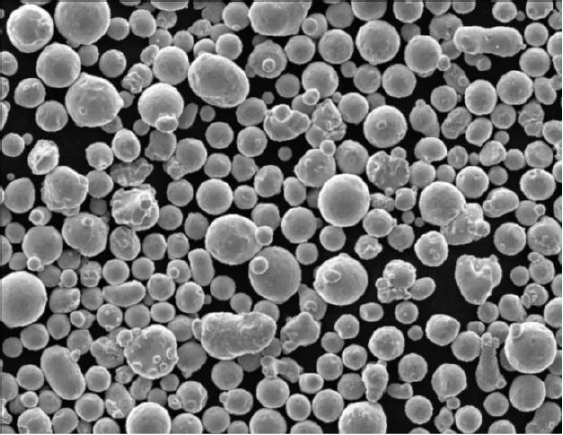
dental CoCrMo alloy powder within the cobalt-based family
This material sits inside the broader cobalt-based alloy category rather than the lightweight aluminum or titanium classes used elsewhere in metal AM. Cobalt provides the matrix, chromium supports passivation and corrosion resistance, and molybdenum contributes to strength and wear performance. In dentistry, that combination is valuable because restorations and frameworks must tolerate repeated loading, saliva exposure, thermal cycling, and long service intervals. (en.wikipedia.org)
Why dental CoCrMo AM powder became important
Dental manufacturing moved toward CoCrMo powder because conventional casting introduces variability in fit, shrinkage control, and surface finishing, especially in thin frameworks. Additive manufacturing gives labs a digital route from scan to CAD to printed framework with better repeatability for many part classes. Published reviews of dental Co-Cr AM consistently focus on powder quality, build parameters, orientation, and post-processing because these variables strongly influence fit and final mechanical behavior. (nature.com)
How dental CoCrMo differs from other dental metals
Compared with precious metal dental alloys, CoCrMo is generally harder, stiffer, and more economical as a structural framework material. Compared with titanium, it is denser and less favorable where low weight is the primary objective, but it often offers higher rigidity and excellent wear resistance for removable and fixed prosthetic frameworks. Compared with stainless steel, it is more established in high-performance dental prosthetic applications requiring corrosion resistance and long-term dimensional stability. A broader cobalt-based powder range helps place CoCrMo within the larger family of spherical cobalt alloys used in AM.
The importance of spherical powder quality
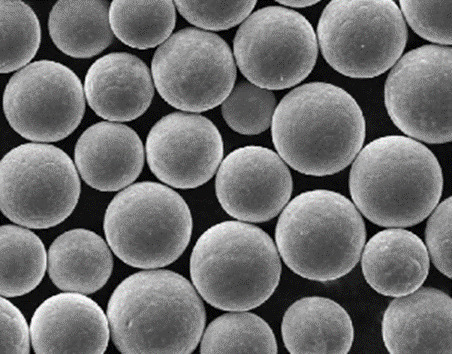
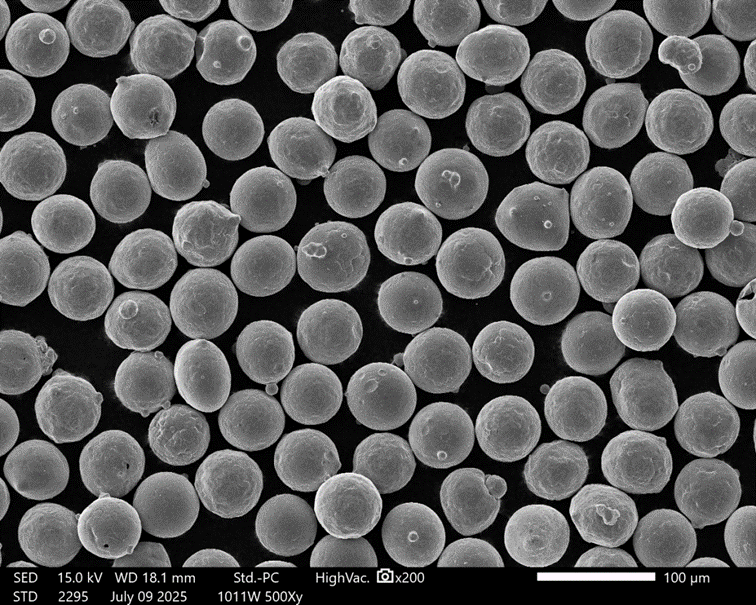
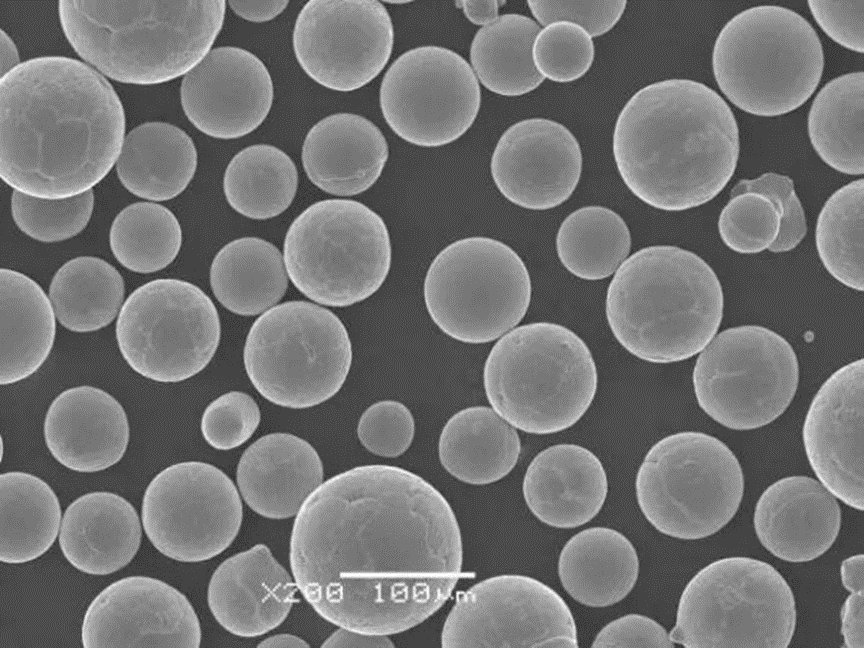
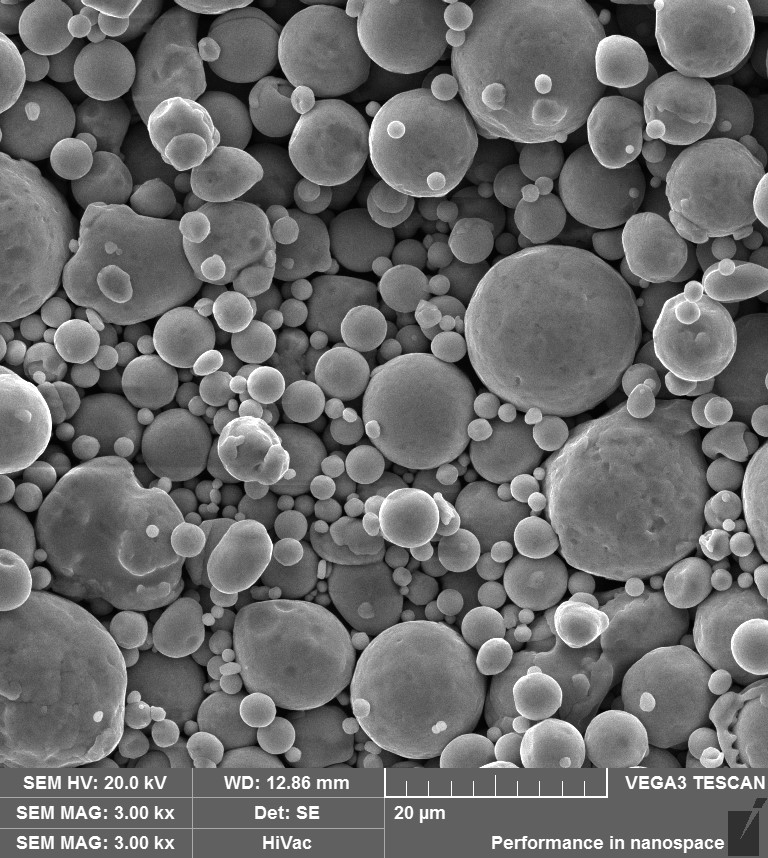
For dental parts, powder quality matters almost as much as alloy chemistry. Small frameworks, thin connectors, detailed occlusal surfaces, and precise marginal zones demand narrow particle size distribution, high sphericity, and good flowability. That is why 球状粉末の形態 is central to dental CoCrMo process consistency, especially in fine-layer laser systems. (nature.com)
In dental metal AM, accuracy begins with powder behavior before the laser ever starts scanning.
化学組成
Dental CoCrMo alloys are usually specified within a cobalt-rich composition window containing chromium and molybdenum as the principal alloying additions, with minor elements tightly controlled to protect biocompatibility, corrosion behavior, and process consistency. The table below reflects typical ranges associated with Co-Cr-Mo dental and medical practice, aligned in broad terms with ASTM F75-type chemistry and ISO cobalt-chromium-molybdenum cast alloy references, while recognizing that commercial dental powders may fine-tune residual levels for AM performance. (store.astm.org)
| エレメント | Typical Content (wt%) | Common Limit / Range (wt%) | 冶金上の役割 | Influence on Dental AM Performance |
|---|---|---|---|---|
| コバルト | バランス | バランス | Base matrix, high strength, wear resistance | Provides stiffness and structural integrity |
| クロム(Cr) | 27.0–30.0 | 27.0–30.0 | Forms passive oxide film, improves corrosion resistance | Supports oral corrosion resistance and biocompatibility |
| モリブデン (Mo) | 5.0–7.0 | 5.0–7.0 | Solid-solution strengthening, wear and pitting resistance | Improves strength and service durability |
| カーボン(C) | 0.02–0.25 | 最大0.35 | Carbide formation, hardness contribution | Higher levels can increase hardness but reduce ductility |
| ケイ素 (Si) | 0.2–1.0 | 最大1.0 | Deoxidation and casting/process support | Excess may reduce toughness |
| マンガン (Mn) | 0.1–1.0 | 最大1.0 | Deoxidation and hot-working/process support | Controlled levels aid metallurgy consistency |
| 鉄(Fe) | 0.1–0.75 | 0.75 max | Residual impurity control | High content may affect corrosion and mechanical balance |
| ニッケル(Ni) | トレース | 0.5 max typical | Residual element, generally minimized | Controlled low for dental/medical suitability |
| タングステン(W) | Trace to minor | Product specific | Secondary strengthening in some variants | May appear in adjacent CoCrW dental systems |
| Nitrogen / Oxygen | Process controlled | Product specific | Interstitial control rather than primary alloying | Affects powder cleanliness and fusion behavior |
Chromium and corrosion resistance in dental CoCrMo alloy powder
Chromium is the key element behind the passive surface film that protects CoCrMo in the oral environment. In saliva, pH fluctuations and food-related exposure can challenge metallic restorations, so passive-film stability is not a secondary property; it is fundamental to long-term service. That is one reason chromium is held in a relatively high range in both dental and surgical Co-Cr-Mo compositions. (store.astm.org)
Molybdenum as a strengthening and durability element
Molybdenum contributes to solid-solution strengthening and also supports corrosion and wear behavior. In dental frameworks, where connectors and clasps may experience repeated loading, that contribution matters because the material must remain rigid without becoming unmanageably brittle. Some dental systems use tungsten-bearing variants instead, but CoCrMo remains a primary reference composition for AM discussion. (pmc.ncbi.nlm.nih.gov)
Residual elements and powder cleanliness
Small residual elements are tightly watched in dental CoCrMo powder because they can influence ductility, passivation, and batch reproducibility. For additive manufacturing, cleanliness extends beyond chemistry: oxygen pickup, satellite formation, and contamination during recycling can all affect layer spreading and melt-pool stability. This is why laboratories purchasing powder for repeat dental production tend to review certificates for chemistry, morphology, and reuse handling together rather than as separate quality topics.
物理的および機械的特性
The engineering value of dental CoCrMo comes from its unusual combination of high stiffness, good strength, wear resistance, and corrosion performance. It is much denser than titanium or aluminum, but for thin dental structures the decisive issue is usually rigidity and precision rather than low mass. Property values vary with powder chemistry, machine parameters, build orientation, heat treatment, and whether the comparison is made against cast, milled, or additively manufactured dental parts. Published dental Co-Cr AM studies report substantial strength together with high hardness and elastic modulus, which explains the alloy’s continued role in frameworks and prosthetic substructures. (nature.com)
| プロパティ | 代表値 | 単位 | Test Standard / Reference Basis |
|---|---|---|---|
| 密度 | 8.2–8.5 | g/cm³ | Typical CoCrMo alloy range |
| ソリダス温度 | 1,280–1,350 | °C | Typical alloy reference range |
| 液相線温度 | 1,350–1,450 | °C | Typical alloy reference range |
| Ultimate Tensile Strength, AM Condition | 900–1,350 | MPa | Typical dental LPBF range |
| 降伏強度 | 600–1,000 | MPa | Typical dental LPBF range |
| 破断伸度 | 3–12 | % | Build and post-process dependent |
| 硬度 | 300–450 | HV | Typical printed and finished range |
| 弾性係数 | 190–230 | GPa | Typical cobalt-chromium alloy range |
| 熱伝導率 | 12–18 | W/m-K | 一般的な室温の範囲 |
| 耐食性 | 高い | Qualitative | Passive Cr-rich surface film basis |
Strength and rigidity for dental frameworks
For bridges, removable partial denture frames, and crown-and-bridge substructures, high modulus is often more important than absolute lightness. CoCrMo resists bending under mastication loads, helping maintain geometry in thin sections that would be more flexible in softer or lower-modulus alloys. That stiffness is one reason the material remains deeply embedded in digital dental manufacturing workflows. (pmc.ncbi.nlm.nih.gov)
Wear and oral-environment performance
Dental restorations experience repeated contact, polishing, and in some cases clasp deflection or localized rubbing. CoCrMo performs well in such service because it pairs surface hardness with corrosion resistance. The passive chromium-rich film helps limit degradation in saliva-exposed conditions, while molybdenum supports localized corrosion resistance in more demanding environments. (en.wikipedia.org)
Why elongation numbers require context
Elongation in AM CoCrMo can vary significantly with scan strategy, energy density, orientation, and post-build thermal treatment. A low-ductility number on paper does not automatically disqualify the alloy for dental use, because many dental structures are designed around stiffness and fit rather than high bulk plastic deformation. Even so, process qualification should consider fracture-critical features such as connectors, clasp arms, and support-removal zones.
Thermal behavior in processing
The alloy’s thermal conductivity is far lower than copper and lower than aluminum, which affects how heat accumulates during laser scanning. In practice, that can be favorable for energy absorption but requires careful parameter control to manage residual stress and microstructural gradients. Many dental machine settings are therefore optimized for thin walls and small build envelopes rather than the large-section strategies used in industrial tooling alloys.
仕様および取り扱いグレード
Powder specification for dental use is more granular than simply naming the alloy. Labs and machine owners usually qualify a powder by particle size distribution, flow, density behavior, oxygen level, and compatibility with a defined build recipe. For dental CoCrMo, the most common grades are fine, highly spherical cuts intended for laser powder bed fusion rather than coarser feedstocks for DED or cladding. Terminology around these process categories is commonly framed using ISO/ASTM 52900 積層造形用語集. (nature.com)
| Grade / Reference | Typical PSD (µm) | 見かけ密度 (g/cm³) | Tap Density (g/cm³) | Hall Flow (s/50 g) | 酸素含有量 | Sphericity / Standards Note |
|---|---|---|---|---|---|---|
| Ultra-Fine Dental LPBF Grade | 10-30 | 4.2–4.8 | 4.8–5.5 | 13–20 | Low, product specific | Very high sphericity for fine layers |
| Standard Dental LPBF Grade | 15-45 | 4.3–4.9 | 4.9–5.6 | 12–19 | Low, product specific | Common dental 3D printing powder cut |
| Broad LPBF Grade | 15-53 | 4.2–4.8 | 4.8–5.5 | 13–20 | Low, product specific | General-purpose AM powder window |
| 粗粒DED/クラッディング用グレード | 45-105 | 4.5–5.2 | 5.1–5.9 | 11–17 | Product specific | Less common in dental prosthetics |
| Wide Engineering Grade | 53-150 | 4.6–5.3 | 5.2–6.0 | 10–16 | Product specific | More relevant outside fine dental LPBF |
| Cross-Reference Grade Set | Product specific | Measured per method | Measured per method | Measured per method | Product specific | Ordered with ASTM, ISO, GB, DIN, or internal spec references |
dental CoCrMo alloy powder size selection
For crown-and-bridge frameworks and high-detail partial denture structures, fine size cuts such as 10–30 µm or 15–45 µm are widely preferred because they support thinner layer application and better edge definition. Wider distributions may improve packing in some systems, but they can also increase variability in recoating and feature control if the process window is narrow. In dental production, geometric fidelity often justifies the tighter powder cut.
Standards and cross-reference language
Dental buyers often encounter chemistry and materials language borrowed from medical or surgical standards rather than a single universal dental-powder specification. ASTM F75 and ISO 5832-4 are commonly referenced for chemistry family alignment, even when the powder is ultimately supplied with machine-specific internal controls for PSD, flowability, and oxygen. The ASTM F75 implant alloy specification そして、その ISO 5832-4 cobalt-chromium-molybdenum standard are therefore useful reference points for understanding how Co-Cr-Mo compositions are framed in regulated metal applications.
Powder handling, reuse, and lot control
Dental labs may be tempted to focus only on fit accuracy, but powder lifecycle management is equally important. Reuse changes the fine-particle fraction, oxide condition, and sometimes the flow profile of the material. For repeatable dental output, users generally define sieving steps, virgin-to-recycled blend limits, and lot-level retesting before powder is returned to production.
Relation to broader alloy choices
Although CoCrMo is central to dental metal printing, labs often compare it with alternative materials when selecting a workflow for a new indication. A titanium alloy powder portfolio is relevant where lower density or implant-centered material strategies are being evaluated, while dental framework work often remains more naturally aligned with cobalt-based systems.
製造工程
Commercial dental CoCrMo powder is most often made by gas atomization because the process can produce large volumes of highly spherical particles with controlled particle size distributions. Other routes such as PREP, VIGA, and EIGA are technically relevant, especially when cleanliness and morphology are prioritized, but their economics and throughput profiles differ. Process route matters because morphology, satellites, oxygen pickup, and lot consistency all feed directly into powder-bed behavior and final restoration quality. Descriptions of powder-bed AM routes for cobalt-chrome alloys are consistent with general metal AM process references and dental Co-Cr AM literature. (nature.com)
| プロセス | 球形度 | Oxygen Pickup Risk | PSDコントロール | スループット | 相対的なコスト | Typical Relevance to Dental CoCrMo |
|---|---|---|---|---|---|---|
| ガスアトマイズ(GA) | 高い | Low with inert control | 良い~非常に良い | 高い | 中程度 | Mainstream route for dental AM powder |
| プラズマ回転電極プロセス(PREP) | 非常に高い | 低い | 中程度 | 低~中程度 | 高い | High-quality route, less common at dental scale |
| VIGA | 高い | Very low to low | 良い~非常に良い | 中程度 | 中~高 | Useful where melt cleanliness is prioritized |
| EIGA | 高い~非常に高い | 非常に低い | グッド | 中程度 | 高い | Specialty route for premium spherical powder |
| 水の霧化 | 低~中程度 | より高い | 中程度 | 高い | 低い | Usually unsuitable for fine dental LPBF use |
Gas atomization for dental CoCrMo alloy powder
In gas atomization, a melt of pre-alloyed CoCrMo is broken into droplets by inert gas and rapidly solidified into powder. The resulting particles are then screened into narrow fractions suited to laser powder bed fusion. For dental applications, the appeal of GA is straightforward: it offers the best balance of sphericity, commercial scale, and cost control for precision production.
PREP and when it matters
PREP produces exceptionally spherical particles with low satellite content because droplets are thrown from a rotating electrode rather than formed by a conventional atomization nozzle. That morphology can be attractive for very demanding powder-bed applications. However, because dental CoCrMo already prints effectively from high-quality gas-atomized powder, PREP is usually more of a specialty route than the default commercial choice.
VIGA, EIGA, and cleanliness trade-offs
VIGA and EIGA are often discussed when users want stronger control over contamination and melt handling. These routes can reduce contact with crucibles or improve atmosphere control, which is especially important in reactive or premium alloys. For dental CoCrMo, the practical question is less about prestige and more about whether measurable gains in flowability, oxygen control, and consistency justify the higher powder cost.
What buyers should prioritize
From a production perspective, the best powder-making route is the one that repeatedly delivers the same build result on the target machine. Buyers should focus on PSD, morphology, cleanliness, and lot repeatability rather than assuming a named process guarantees better outcomes. A supplier active across powder technologies and broader industrial application sectors may therefore discuss route selection in terms of end-use process fit, not just abstract metallurgy.
業界別の用途
Despite the word “dental” in the target phrase, CoCrMo powder belongs to a wider class of high-strength cobalt alloys with uses beyond oral prosthetics. The dental version is primarily optimized around fine-feature powder-bed manufacturing, but the same alloy family logic extends into medical and industrial domains where corrosion resistance, wear behavior, and rigidity are valuable.
Dental laboratories and prosthetic manufacturing
This is the core application field. Dental CoCrMo powder is used for removable partial denture frameworks, fixed bridge frameworks, copings, crowns, bars, and other substructures that require dimensional precision and high rigidity. Digital workflows reduce wax-pattern and investment-casting variability, while AM supports batch production across multiple patient-specific geometries. (nature.com)
Medical-adjacent and biomedical manufacturing
The chemistry family behind dental CoCrMo overlaps with long-established biomedical cobalt-chromium-molybdenum practice. That does not mean every dental powder is automatically qualified for implantable use, but it does mean the alloy family is familiar in regulated medical materials engineering. Users comparing dental frameworks with broader healthcare metal applications often place CoCrMo alongside recognized cobalt-chromium alloy background material. (store.astm.org)
Tooling and wear-focused components
Outside dentistry, cobalt-based powders are selected for parts exposed to wear, heat, or repeated contact. Fine dental CoCrMo powder is not the usual choice for heavy industrial tooling because the size cut is optimized for precision LPBF rather than deposition rate. Still, the alloy family’s wear resistance explains why cobalt-chromium materials remain relevant in multiple AM-adjacent manufacturing routes.
R&D, qualification, and material benchmarking
Dental CoCrMo is also important in research environments because it serves as a benchmark for studying surface roughness, support design, heat treatment, and microstructural evolution in medical-style AM alloys. Its combination of maturity and complexity makes it useful for comparing process windows against titanium, stainless steel, and tungsten-bearing cobalt variants. In that sense, the material is not only a production alloy but also a reference system for digital dentistry development.
代替材料との比較
Selecting a dental AM alloy is never just a matter of chemistry. The correct material depends on whether the priority is framework rigidity, low weight, implant compatibility, polishing behavior, cost, or elevated-temperature stability during ceramic veneering cycles. The table below compares dental CoCrMo with several common alternatives used either directly in dental production or as relevant AM substitutes.
| 素材 | 密度 (g/cm³) | 一般的な筋力レベル | 印刷適性 | 耐食性 | 相対的なコスト | Typical Best Fit |
|---|---|---|---|---|---|---|
| dental CoCrMo alloy powder | 8.2–8.5 | 高い | Very good in LPBF | 高い | 中程度 | Dental frameworks, copings, bridges, RPD structures |
| Ti-6Al-4V粉末 | 4.4–4.5 | 高い | グッド | 素晴らしい | 高い | Implant-related and lightweight medical parts |
| 316Lステンレス鋼粉末 | 7.9–8.0 | 中程度 | 素晴らしい | 非常に良い | Moderate to low | General corrosion-resistant parts and prototyping |
| CoCrW dental alloy powder | 8.3–8.7 | 高い | 良い~非常に良い | 高い | 中~高 | Dental systems emphasizing rigidity and wear |
| Nickel-based superalloy powder | 8.1–8.5 | High, especially at temperature | グッド | 高い | 高い | High-temperature industrial parts, not routine dental frameworks |
Where dental CoCrMo alloy powder is strongest
Its main advantage is the combination of rigidity, corrosion resistance, fine-feature printability, and long-standing dental relevance. In frameworks where flex must be limited and geometry must remain stable across thin sections, CoCrMo holds a strong position. That makes it particularly suitable for removable partial denture structures and bridge substructures.
Where titanium or stainless steel may be preferable
Titanium is attractive when lower density or implant-oriented material strategies matter more than maximum rigidity. Stainless steel can be easier and less expensive for non-dental prototyping or general industrial AM, but it is not the default choice for high-performance dental framework work. These alternatives are useful comparators, yet they address somewhat different design priorities.
Why the comparison is application-specific
No table can replace part-level qualification. A small clasped framework, a full-arch bar, and a ceramic-supported coping may all weight the trade-offs differently. That is why digital dental manufacturing teams typically qualify the alloy together with the scan strategy, support design, build orientation, and finishing route instead of selecting by bulk material data alone.
当社
Shanghai Truer Technology Co., Ltd was established in 2009 and created its additive manufacturing business in 2019. Operating am-printing.com, the company integrates metal powder-making equipment and additive manufacturing services, with stated capabilities including Selective Electron Beam Melting equipment, Plasma Rotating Electrode Process powder-making equipment, and gas atomization-related work. Its published powder portfolio includes TiNi, TiTa, TiAl, TiNbZr, CoCrMo, and broader nickel-based, cobalt-based, titanium-based, copper-based, aluminum-based, and stainless steel spherical metal powders for SLM, SEBM, DED, laser cladding, powder metallurgy, MIM, HIP, cold and hot spraying, welding, and coating. The company also states that it operates a joint innovation center for metal 3D printing with laboratories and experts and serves sectors including 3C electronics, hand tools, remote control cars, medical, aerospace, and nuclear power; neutral corporate information appears on the company background page.
よくあるご質問
Q1. Is dental CoCrMo alloy powder biocompatible enough for dental prosthetic use?
It is widely used for dental frameworks and prosthetic substructures because the cobalt-chromium-molybdenum family has a long history in biomedical and dental metal applications. Biocompatibility in practice depends on the exact composition, manufacturing route, finishing condition, and local regulatory requirements, so users should qualify the specific product rather than relying only on alloy family name.
Q2. What particle size is best for dental CoCrMo alloy powder in laser powder bed fusion?
Fine cuts such as 10–30 µm or 15–45 µm are commonly favored for dental LPBF because they support thin layers and detailed geometry. The best range still depends on the machine, recoater, layer thickness, and validated parameter set. Very coarse powder is generally less suitable for precision dental frameworks.
Q3. Why is dental CoCrMo alloy powder preferred over cast CoCr in some labs?
Additive manufacturing can reduce casting-related variability in shrinkage, porosity, and manual process steps. It also fits digital workflows better, especially when many patient-specific geometries must be produced in parallel. The result is often improved reproducibility, although post-processing and fit verification remain essential.
Q4. Can dental CoCrMo alloy powder be used for removable partial denture frameworks?
Yes, that is one of its most common applications. The alloy’s high modulus and wear resistance make it well suited to thin but rigid framework sections and clasp-related design features. Final performance still depends on design thickness, build quality, and finishing practice.
Q5. How does dental CoCrMo alloy powder compare with titanium for dental manufacturing?
CoCrMo is denser but generally stiffer, which can be an advantage in framework applications where rigidity is the goal. Titanium is lighter and highly valued in implant-centered medical uses, but its lower modulus changes how thin structures behave. The better choice depends on indication, geometry, and workflow requirements.
Q6. What should buyers verify before ordering dental CoCrMo alloy powder?
They should review chemistry, particle size distribution, apparent density, tap density, flowability, oxygen level, sphericity, packaging condition, and intended AM process. It is also important to confirm whether the powder is qualified for dental LPBF rather than a broader industrial use. In repeat production, lot consistency and documented reuse rules are as important as nominal alloy composition.
Learn more: