簡単な回答
Gas atomized spherical 6061 aluminum powder is a heat-treatable Al-Mg-Si alloy powder engineered for additive manufacturing, thermal spray, powder metallurgy, and related powder-fed processes. It is chosen when manufacturers want a lightweight aluminum feedstock with good corrosion resistance, balanced mechanical properties, and better flowability than irregular powder. For metal AM, its value lies in low density, good machinability after printing, and broad industrial familiarity, although it is generally assessed against more established printable aluminum grades such as AlSi10Mg when crack sensitivity and process window are critical.
What Is gas atomized spherical 6061 aluminum powder
Gas atomized spherical 6061 aluminum powder is the powder form of AA 6061, one of the best-known wrought aluminum alloys in the 6xxx family. The alloy is based on aluminum with magnesium and silicon as the principal alloying elements, allowing it to be precipitation hardened through solution treatment and aging. In bulk product form, 6061 is widely used in structural components, transportation, tooling, and general engineering because it balances strength, corrosion resistance, weldability, and cost.
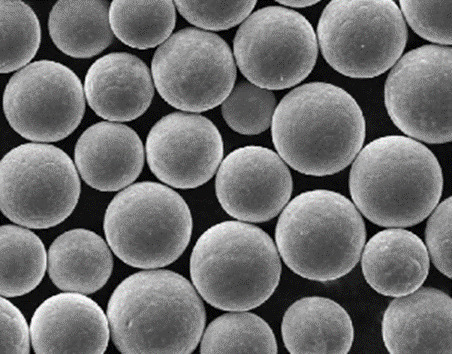
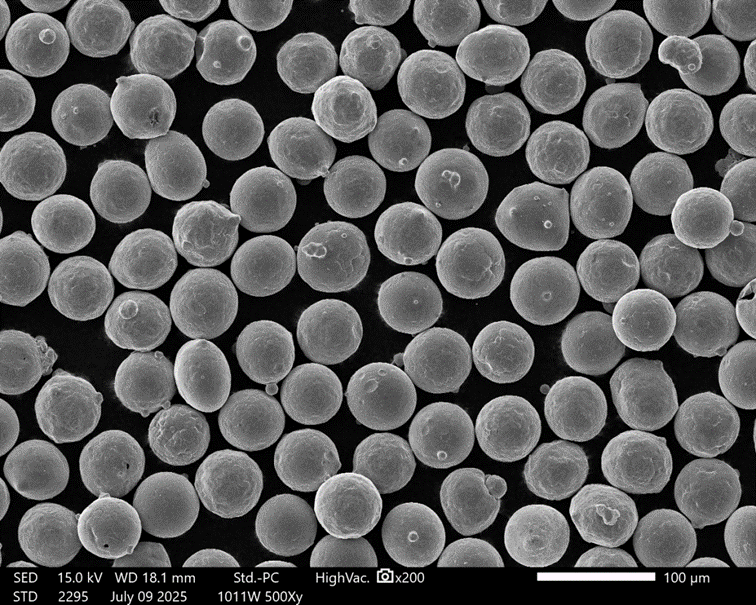
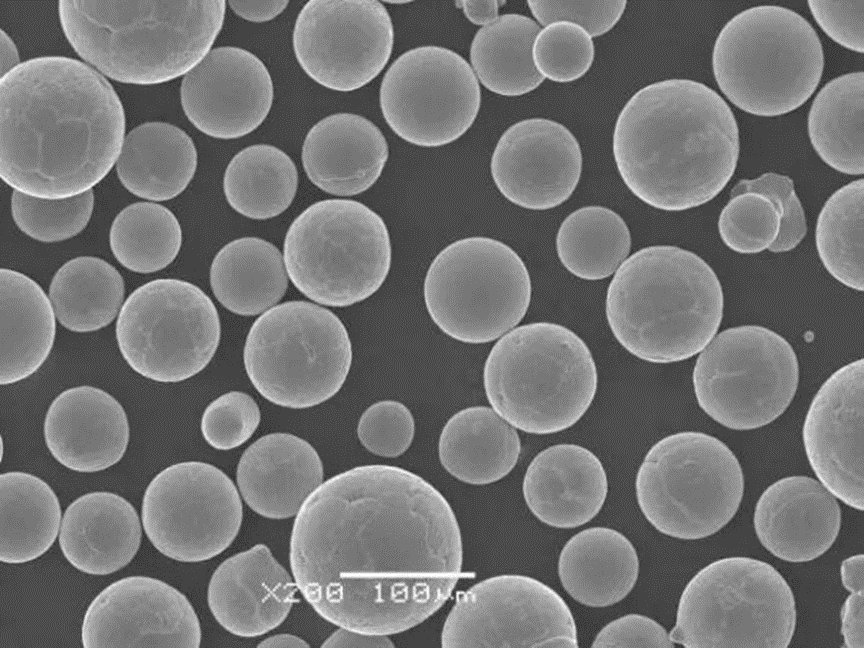
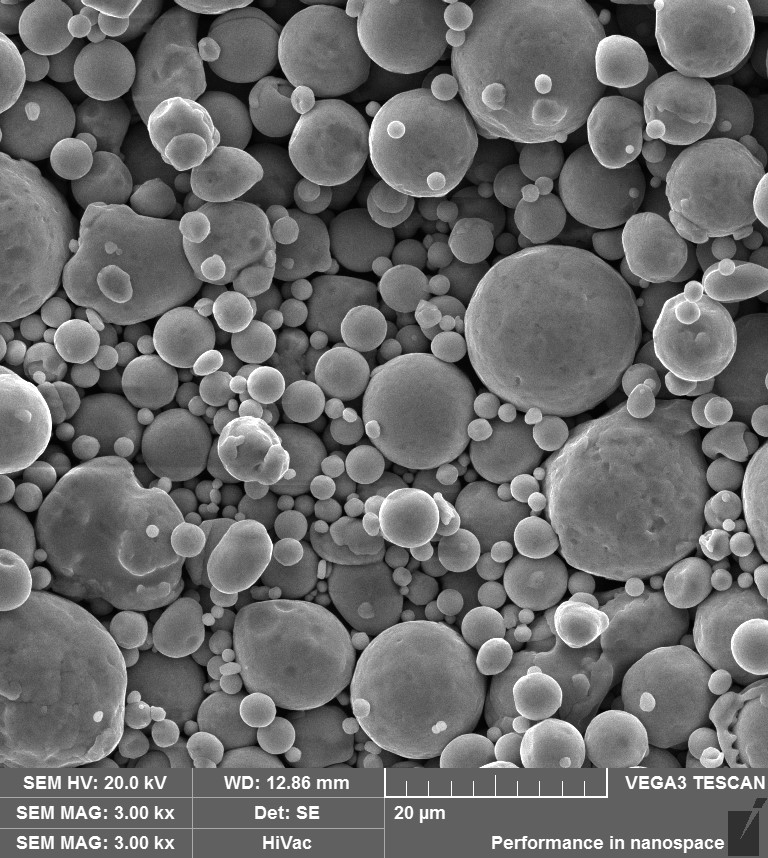
In powder form, the alloy serves a different but related purpose. Instead of being rolled, extruded, or forged first, it is melted and atomized into fine spherical particles that can feed advanced manufacturing processes. That powder geometry matters because additive manufacturing systems, especially powder-bed and blown-powder platforms, depend on repeatable powder spreading, steady flow, and predictable melt behavior.
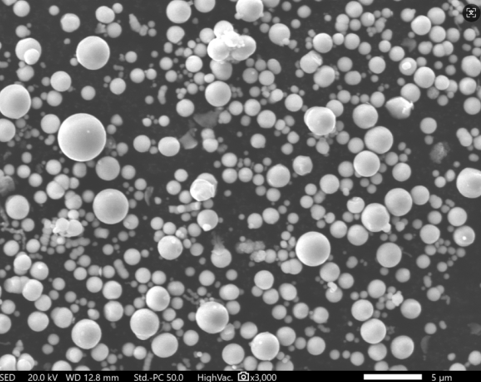
Alloy family and metallurgical identity
6061 belongs to the 6xxx aluminum alloy family, meaning magnesium and silicon are used to form magnesium silicide during age hardening. That makes it fundamentally different from cast-oriented Al-Si powders such as AlSi10Mg, which emphasize silicon-rich solidification behavior and a wider AM processing window. By contrast, 6061 is attractive because the industry already understands its downstream machining, joining, anodizing, and general service behavior.
The phrase “gas atomized spherical” identifies the particle production route and morphology rather than the chemistry alone. A 6061 chemistry made by mechanical crushing or water atomization would behave very differently in AM and powder delivery equipment. For this reason, buyers evaluating powder for laser-based processes usually focus on both alloy designation and particle engineering.
Why this material exists in powder form
The motivation for producing 6061 as spherical powder is straightforward: many engineers want the low density and familiar engineering profile of 6061 in manufacturing routes that need free-flowing feedstock. Those routes include additive manufacturing, metal injection molding development, cold spray, hot spray, laser cladding, and specialty powder metallurgy applications.
When converted into high-quality spherical powder, 6061 becomes suitable for precise feed control and can support complex or near-net-shape part production. That does not automatically make it the easiest aluminum alloy to print, but it does make it strategically useful where a designer wants a recognizable structural alloy rather than a more cast-like AM aluminum.
Distinguishing gas atomized spherical 6061 aluminum powder from other AM aluminum powders
Compared with AlSi10Mg, 6061 usually offers a closer match to traditional structural aluminum expectations but may require tighter process control because it is more prone to hot cracking in some AM systems. Compared with 7075, it generally offers lower strength potential but better corrosion resistance and often easier post-processing. Compared with pure aluminum powders, it provides significantly stronger structural performance.
In aluminum AM, feedstock selection is never only about chemistry; powder shape, oxide control, and process compatibility often decide whether a build succeeds.
Manufacturers that work across several aluminum grades often review 6061 in the context of a wider aluminum alloy powder portfolio because alloy choice depends on printability, target strength, conductivity, and end-use environment rather than on a single mechanical property.
化学組成
The nominal composition of 6061 aluminum is well established in wrought alloy specifications, and powder producers generally aim to stay within those limits while also controlling oxide content and trace contamination. In additive manufacturing, chemistry affects not only strength after heat treatment but also solidification behavior, crack tendency, and the stability of the melt pool during rapid thermal cycling.
| エレメント | Typical Range (wt%) | Primary Role in Alloy | Relevance to Powder and AM Processing |
|---|---|---|---|
| アルミニウム(Al) | バランス | Base matrix metal | Provides low density, thermal conductivity, and corrosion-resistant oxide film |
| マグネシウム (Mg) | 0.8–1.2 | Strengthening with silicon through Mg2Si formation | Critical to age hardening; loss during melting can shift final response |
| ケイ素 (Si) | 0.4–0.8 | Forms Mg2Si and improves castability modestly | Supports hardening but remains much lower than in AlSi10Mg |
| 銅(Cu) | 0.15–0.40 | Secondary strengthening contribution | Raises strength but can slightly reduce corrosion resistance if elevated |
| クロム(Cr) | 0.04–0.35 | Grain structure control and corrosion support | Helps manage microstructure and stress-corrosion performance |
| 鉄(Fe) | ≤0.70 | Residual impurity element | Excess can form brittle intermetallics and reduce toughness |
| マンガン (Mn) | ≤0.15 | Minor microstructural influence | Usually controlled as a residual to maintain alloy consistency |
| 亜鉛 | ≤0.25 | Residual element | Typically limited to avoid unintended property shifts |
| チタン(Ti) | ≤0.15 | Grain refinement support | Can assist microstructural control in solidification |
| Other each / total | ≤0.05 / ≤0.15 | Residual impurity limits | Important for powder cleanliness and repeatability |
The role of magnesium and silicon in 6061 spherical powder
Magnesium and silicon define the alloy. When present in the correct balance, they enable precipitation hardening and distinguish 6061 from non-heat-treatable aluminum grades. For powder users, that means chemistry control is not just a certificate requirement; it directly influences how much strength the printed and heat-treated part can develop.
Because magnesium is relatively volatile compared with aluminum, melting and atomization practice matter. Poor melt management can change the effective alloy balance, so experienced powder suppliers watch chemistry before and after atomization rather than assuming the nominal charge composition is enough.
Impurity control and aluminum powder quality
Aluminum powders naturally form surface oxide, and that oxide behavior is more consequential than in many heavier alloys. Fine particles have higher surface area, so oxygen pickup and moisture exposure can influence powder performance, powder reuse, and laser interaction. That is why specifications for aluminum AM powder frequently combine alloy composition with strict handling and packaging controls.
For readers who want a general overview of the base alloy outside powder form, the 6061 aluminum alloy reference entry is useful because it frames the chemistry and conventional uses that AM users are trying to translate into powder-fed manufacturing.
Why chemistry alone does not guarantee printability
A powder may meet 6061 composition limits and still perform poorly if morphology, size distribution, or oxide condition are not well controlled. In practice, chemistry is one layer of qualification; particle shape, flow, packing behavior, and contamination control are equally important for consistent builds.
物理的および機械的特性
The physical and mechanical profile of gas atomized spherical 6061 aluminum powder must be interpreted in context. Some properties belong to the powder itself, such as flow and apparent density, while structural performance belongs to the consolidated material after printing, heat treatment, or another densification route. Engineers should therefore separate powder handling properties from part performance properties.
| プロパティ | 代表値 | 単位 | 試験規格/試験条件 |
|---|---|---|---|
| Solid density | 2.70 | g/cm³ | 室温における代表的な合金の値 |
| 融点範囲 | 582–652 | °C | Typical alloy reference range |
| Ultimate tensile strength | 290–340 | MPa | Typical T6-like condition in wrought reference; AM values vary |
| Yield strength (0.2%) | 240–280 | MPa | Typical heat-treated structural condition |
| 伸び | 8–17 | % | Process- and orientation-dependent |
| 硬度 | 85–100 | HB | Typical age-hardened reference range |
| 弾性率 | 68–70 | GPa | 室温における代表的な値 |
| 熱伝導率 | 150–170 | W/m-K | Typical room-temperature range by condition |
| 熱膨張係数 | 23–24 | µm/m·K | Approximate 20–100 °C range |
Low density as a design advantage
The strongest reason to evaluate 6061 instead of a nickel or cobalt alloy is low density. At roughly one-third the density of many superalloys, it offers obvious value in weight-sensitive parts, portable equipment, robotic systems, transportation assemblies, and housings where mass reduction is more important than extreme-temperature capability.
Low density also affects build economics. A given powder volume contains less mass, which can improve cost efficiency in some geometries and reduce inertial loads in moving assemblies after production.
Strength levels and heat-treatment response
6061 is rarely chosen because it delivers the highest aluminum strength available. It is chosen because it offers a usable strength range combined with corrosion resistance, machinability, and a widely understood heat-treatment path. Solution treatment and artificial aging can raise strength significantly compared with the annealed condition, though the exact response in AM parts depends on porosity, microstructure, and residual stress.
Printed 6061 often needs careful parameter tuning because high thermal conductivity and solidification behavior can narrow the process window. Even when density is acceptable, mechanical properties may vary strongly with scan strategy, support design, and post-build thermal treatment.
Thermal and corrosion behavior
6061 has far better thermal conductivity than nickel-based alloys and substantially lower thermal conductivity than pure copper, placing it in a useful middle ground for structural parts that also need to move heat. Its natural oxide film gives the alloy good atmospheric corrosion resistance, especially compared with some higher-strength aluminum grades.
Limits of the material in metal AM
Gas atomized spherical 6061 aluminum powder is not the universal answer for every aluminum build. In some laser powder-bed workflows, higher-silicon alloys remain easier to process because they resist hot cracking better. That is why engineers often compare 6061 with established AM grades before locking the material for production parts.
仕様および取り扱いグレード
Powder specification is where a nominal alloy becomes a usable industrial feedstock. For gas atomized spherical 6061 aluminum powder, the specification package normally includes chemistry, particle size distribution, apparent density, tap density, flowability, oxygen level, morphology, and packaging atmosphere. Different AM platforms require different PSD windows, so a serious supplier usually offers multiple cuts rather than a single universal grade.
| Grade / Supply Condition | 代表的なPSD範囲 | 見かけ密度 | タップ密度 | ホールの流れ | 酸素含有量 | 真球度/形態 | Standards / Cross-Reference |
|---|---|---|---|---|---|---|---|
| Fine LPBF grade | 15-45 µm | 1.35–1.55 g/cm³ | 1.55–1.75 g/cm³ | 18–28 s/50 g* | ≤0.20 wt% typical | High sphericity, low satellite content | Internal AM grade aligned to 6061 chemistry limits |
| Standard LPBF grade | 15–53 µm | 1.40–1.60 g/cm³ | 1.60–1.80 g/cm³ | 17–26 s/50 g* | ≤0.20 wt% typical | Spherical with controlled fines | Common laser powder-bed distribution |
| EBM / coarse PBF development grade | 45-105 µm | 1.45–1.65 g/cm³ | 1.65–1.85 g/cm³ | 15–24 s/50 g* | ≤0.20 wt% typical | Free-flowing coarser powder | More relevant to development than routine Al EBM use |
| DED / cladding grade | 53-150 µm | 1.50–1.70 g/cm³ | 1.70–1.90 g/cm³ | 14–22 s/50 g* | ≤0.25 wt% typical | Spherical with limited agglomerates | Suitable for blown-powder deposition and coating |
| Alloy chemistry basis | - | - | - | - | Powder-spec controlled | Chemistry within 6061-type limits | Commonly referenced against ASTM B209 alloy chemistry heritage |
| Terminology / QA cross-reference | - | - | - | - | QA-plan dependent | Morphology verified by microscopy | Powder characterization often framed with NIST additive manufacturing guidance |
*Hall flow for fine aluminum powder may be reported as difficult, modified, or method-dependent depending on particle size and test setup.
Particle size distribution for gas atomized spherical 6061 aluminum powder
The most common PSD for laser powder bed fusion is 15–45 µm or 15–53 µm. Those ranges usually offer a practical compromise between spreadability, packing density, and the need to avoid too many ultrafine particles that increase oxidation risk. Coarser grades are more typical for directed energy deposition, thermal spray, and laser cladding.
Quality metrics beyond size range
A purchase specification should address apparent density, tap density, oxygen content, morphology, moisture control, and batch traceability. For aluminum powders, storage under inert atmosphere or moisture-resistant packaging is especially important because oxide growth and humidity exposure can degrade reuse behavior.
Standards, test methods, and realistic qualification practice
There is no single universal “6061 AM powder standard” that substitutes for application-level qualification. Instead, programs usually combine alloy chemistry references, internal powder acceptance criteria, and AM terminology from ISO/ASTM 52900 の用語. Buyers comparing material families often review these requirements against broader catalogs of lightweight metal powder grades to decide whether 6061, AlSi10Mg, or a different aluminum alloy best fits the process route.
製造工程
The phrase “gas atomized spherical” is central to this material because the powder production route determines whether 6061 can function well in additive and powder-fed systems. Among the available powder-making methods, gas atomization is the main industrial route for aluminum AM feedstock. Other routes such as PREP, VIGA, and EIGA are technically relevant for comparison, even though they are used less often for conventional 6061 aluminum powder.
How gas atomization produces spherical 6061 powder
In gas atomization, molten alloy is poured through a nozzle and disintegrated by high-velocity inert gas jets into fine droplets. Those droplets solidify rapidly in flight, producing near-spherical particles with relatively smooth surfaces and controlled size fractions after screening. For aluminum alloys, inert-gas protection is essential to reduce oxidation and preserve the target chemistry as closely as possible.
Because 6061 contains magnesium, melt handling must be disciplined. Temperature control, atmosphere management, and residence time affect both composition retention and the thickness of the oxide film on each particle.
PREP, VIGA, and EIGA in context
PREP is better known for premium titanium and reactive-alloy powders than for mainstream aluminum grades. VIGA and EIGA can also be discussed as higher-control routes because they reduce contamination risk and can improve powder cleanliness, but they are not the default commercial answer for 6061. In practice, the choice often comes down to whether the application values throughput and cost efficiency more than the marginal benefits of a premium route.
| プロセス | How It Works | 球形度 | Oxygen Pickup Risk | PSDコントロール | スループット | 相対的なコスト | Typical Relevance to 6061 Powder |
|---|---|---|---|---|---|---|---|
| 遺伝的アルゴリズム | Inert gas atomizes molten stream into droplets | 良い~非常に良い | Low when properly controlled | 非常に良い | 高い | 中程度 | Primary industrial route for 6061 spherical powder |
| VIGA | Vacuum induction melting followed by gas atomization | 非常に良い | 低い | 非常に良い | 中~高 | 中~高 | Useful when tighter cleanliness control is required |
| 準備 | Plasma melts rotating electrode; droplets form centrifugally | 素晴らしい | 非常に低い | グッド | ミディアム | 高い | Less common for 6061; more typical for premium reactive alloys |
| EIGA | Electrode induction melting with gas atomization | Very good to excellent | 非常に低い | 良い~非常に良い | ミディアム | 高い | Specialty route where crucible contamination must be minimized |
| 水の霧化 | High-pressure water disrupts molten stream | Poor to fair for AM use | High oxidation tendency | グッド | 高い | より低い | Generally unsuitable for high-end AM due to irregular shape and oxide burden |
Why morphology matters so much
For AM users, 球状粉末 is not a cosmetic preference. Spherical particles generally flow through hoppers more consistently, spread into thinner and more uniform layers, and produce fewer powder-bed disturbances during recoating. That improves repeatability and lowers the risk of localized density variation.
Post-atomization classification and handling
After atomization, the powder is screened, classified, sampled, and packaged. These steps influence final quality as much as the melt itself. A technically sound 6061 powder can still become problematic if it picks up moisture, experiences cross-contamination, or contains too many fines after handling.
Shanghai Truer’s process context is relevant here because the company works with gas atomization and PREP equipment while supporting multiple downstream processes across the industrial applications served, including SLM, SEBM, DED, powder metallurgy, and spraying routes.
業界別の用途
Gas atomized spherical 6061 aluminum powder is not a one-sector material. It is used when designers want a structural aluminum with familiar engineering behavior in a powder-fed process, especially where reduced weight and moderate strength are more important than peak temperature capability.
Aerospace and lightweight structural hardware
6061 powder is relevant for non-combustion-zone aerospace parts, lightweight brackets, housings, ducts, support structures, and ground-support hardware. It is especially attractive when machinability after printing matters, because 6061 is a familiar post-processing alloy for many manufacturing teams.
In aerospace development, engineers often use 6061 for tooling, fixtures, and secondary hardware even when flight-critical printed structures ultimately move to titanium or higher-performance aluminum grades. That allows process teams to leverage a lower-density structural alloy while managing cost and lead time.
Automotive, robotics, and industrial equipment
Automotive prototypes, motorsport fixtures, robot end effectors, custom enclosures, and lightweight machine components are logical use cases. In these environments, the alloy’s combination of mass reduction, corrosion resistance, and downstream machinability can be more important than pushing absolute strength to the limit.
Thermal management and electronics support structures
Although not as conductive as copper, 6061 can still be useful in structural heat-spreading parts, housings, mounting frames, and cooling-adjacent hardware where geometry freedom matters. Designers who need significantly higher thermal conductivity often compare it against copper alloy powder options before deciding whether structural efficiency or heat transfer should dominate the material choice.
Spray, cladding, and powder metallurgy uses
Outside laser powder-bed AM, 6061 spherical powder can support thermal spray feedstock, blown-powder deposition, near-net-shape build-up, and specialty powder metallurgy projects. The powder’s controlled size range and flow properties make it adaptable to multiple delivery systems, which is one reason aluminum spherical powder remains important beyond a narrow definition of 3D printing.
Where 6061 is not the first choice
The alloy is usually not the top candidate for high-temperature components, implant devices, or parts requiring maximum wear resistance. In those cases, titanium, cobalt, nickel, or refractory systems may be more appropriate. The decision is usually less about whether 6061 is a good powder and more about whether it is the right alloy for the service environment.
代替材料との比較
Selecting gas atomized spherical 6061 aluminum powder means weighing familiar structural-aluminum behavior against other powders that may print more easily, conduct heat better, or achieve higher strength. The best choice depends on design priorities, not branding or alloy popularity.
| 素材 | 密度 (g/cm³) | Strength Level | Relative Printability | 耐食性 | 相対的なコスト | 熱伝導率 | 最適なユースケース |
|---|---|---|---|---|---|---|---|
| Gas atomized spherical 6061 aluminum powder | 2.70 | Moderate to high after heat treatment | 中程度 | グッド | 中程度 | 高い | Lightweight structural parts needing familiar 6061 behavior |
| AlSi10Mg粉末 | 2.67 | 中~高 | 非常に良い | グッド | 中程度 | 中程度 | General-purpose aluminum LPBF with strong processability |
| 7075 aluminum powder | 2.81 | 高い | More difficult | 中程度 | 中~高 | 中程度 | High-strength lightweight parts with stricter process control |
| CP copper powder | 8.96 | Low structural strength | Challenging in laser AM | グッド | 高い | 非常に高い | Heat exchangers, conductors, thermal management |
| Ti-6Al-4V粉末 | 4.43 | 高い比強度 | 非常に良い | 非常に良い | 高い | 低~中程度 | Aerospace and medical parts needing higher strength-to-weight ratio |
6061 versus AlSi10Mg
This is the most practical comparison in aluminum AM. AlSi10Mg usually provides a more forgiving print window because its higher silicon content improves castability and reduces crack sensitivity. 6061, however, can be preferred when users want a more traditional structural alloy identity with established downstream finishing and service familiarity.
6061 versus 7075
7075 can achieve higher strength, but its printability and corrosion profile often make qualification more demanding. For many industrial users, 6061 represents a more balanced engineering compromise even if the headline strength number is lower.
6061 versus titanium and copper powders
Titanium offers much higher specific strength and better high-end structural performance, while copper dominates where thermal or electrical conductivity drives the design. Gas atomized spherical 6061 aluminum powder sits between those extremes as a versatile, lightweight engineering material rather than a specialist conductivity or super-strength solution.
当社
Shanghai Truer Technology Co., Ltd., the company behind am-printing.com, was established in 2009 and launched its additive manufacturing business in 2019. Its stated focus is integrating 3D printing powder-making equipment and services with high-quality AM powders, including gas atomization and Plasma Rotating Electrode Process equipment as well as Selective Electron Beam Melting equipment. The company’s metal powder portfolio includes TiNi, TiTa, TiAl, TiNbZr, CoCrMo, and spherical nickel-, cobalt-, titanium-, copper-, aluminum-, and stainless-steel powders for SLM, SEBM, DED, laser cladding, powder metallurgy, MIM, HIP, spraying, welding, and coating across industries such as 3C electronics, hand tools, remote-control cars, medical, aerospace, and nuclear power. A factual overview of its organization and capabilities appears on the corporate information page.
よくあるご質問
Q1. Is gas atomized spherical 6061 aluminum powder good for additive manufacturing?
It can be, but its suitability depends on the machine platform and qualification target. The alloy offers low density, corrosion resistance, and familiar heat-treatable behavior, but many users find it less forgiving than higher-silicon aluminum powders. That means successful production usually depends on tighter parameter development and stronger powder control.
Q2. Why is spherical morphology important for 6061 aluminum powder?
Spherical particles usually flow more consistently through feed systems and spread more evenly in powder beds. That improves layer quality, supports more stable melt behavior, and reduces the chance of recoating defects. For aluminum powders, good morphology also helps offset some handling challenges linked to oxide-covered particle surfaces.
Q3. What particle size distribution is typical for gas atomized spherical 6061 aluminum powder?
For laser powder bed fusion, 15–45 µm and 15–53 µm are common commercial cuts. Directed energy deposition and cladding systems often use coarser ranges such as 45–105 µm or 53–150 µm. The optimal range depends on layer thickness, feed mechanism, laser strategy, and the minimum feature size required.
Q4. How does 6061 compare with AlSi10Mg in metal 3D printing?
AlSi10Mg is usually easier to print because its chemistry is more tolerant of rapid solidification and less prone to hot cracking. 6061 is often selected when engineers want a more traditional structural aluminum profile with known post-machining and finishing behavior. In practice, the trade-off is usually between printability margin and alloy familiarity.
Q5. Does gas atomized spherical 6061 aluminum powder require heat treatment after printing?
In most structural applications, yes. Post-build stress relief and age-hardening steps are commonly evaluated to improve strength and dimensional stability. The exact cycle depends on the printed microstructure, target properties, and whether the goal is to approximate a T6-like response or optimize a build-specific condition.
Q6. What should buyers check before qualifying a batch of 6061 aluminum AM powder?
They should review chemistry, particle size distribution, apparent density, tap density, morphology, oxygen level, moisture control, and lot traceability rather than relying on alloy name alone. For aluminum powder especially, packaging condition and reuse behavior can strongly influence consistency from one build campaign to the next. Qualification should therefore cover both incoming powder data and machine-specific print validation.