簡単な回答
Inconel 718 powder for additive manufacturing is a precipitation-hardenable nickel-based superalloy feedstock used for metal 3D printing of parts that must retain strength, corrosion resistance, and dimensional stability at elevated temperatures. It is chosen when engineers need a material that prints reliably in powder bed fusion and directed energy systems while still delivering strong post-heat-treatment mechanical properties. For aerospace, energy, oil and gas, and high-performance industrial hardware, it offers one of the best overall balances of printability, weldability, and high-temperature service capability.
What Is Inconel 718 powder for additive manufacturing
Inconel 718 powder for additive manufacturing is the powder form of Alloy 718, a nickel-chromium-iron superalloy originally developed for demanding elevated-temperature service. In powder metallurgy and AM, it is valued because it combines relatively forgiving process behavior with strong tensile properties, useful fatigue performance, and resistance to oxidation and corrosion.
The alloy belongs to the family of age-hardenable nickel superalloys. Unlike simple solid-solution-strengthened alloys, 718 gains much of its strength from controlled precipitation during heat treatment, especially through gamma double-prime and gamma-prime phases. That gives the material a favorable combination of as-built processability and final mechanical performance.
Why this AM powder grade is so widely used
Many high-temperature alloys are difficult to weld or prone to cracking during rapid thermal cycling. Inconel 718 occupies a practical middle ground: it is not the lightest alloy, and it is not the highest-temperature nickel alloy available, but it is comparatively versatile in additive manufacturing. That versatility explains why it remains a benchmark material for process qualification, machine development, and certified production programs.
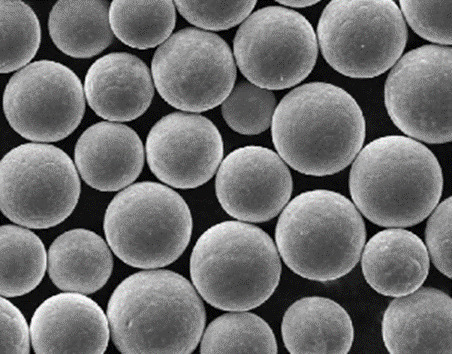
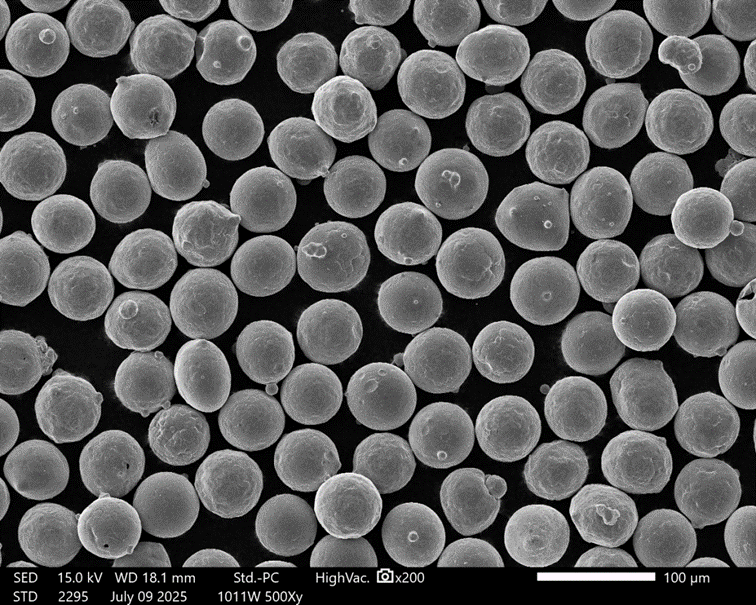
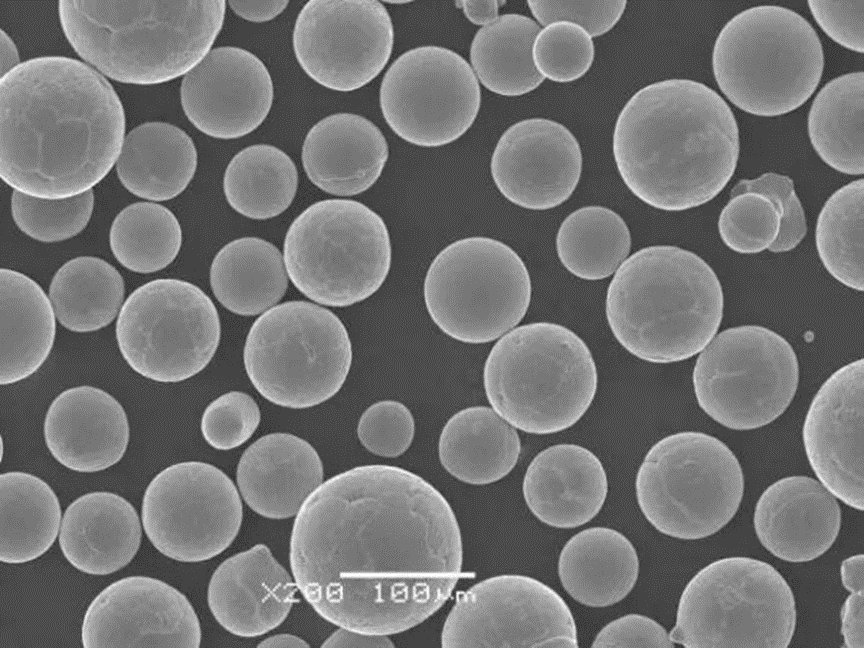
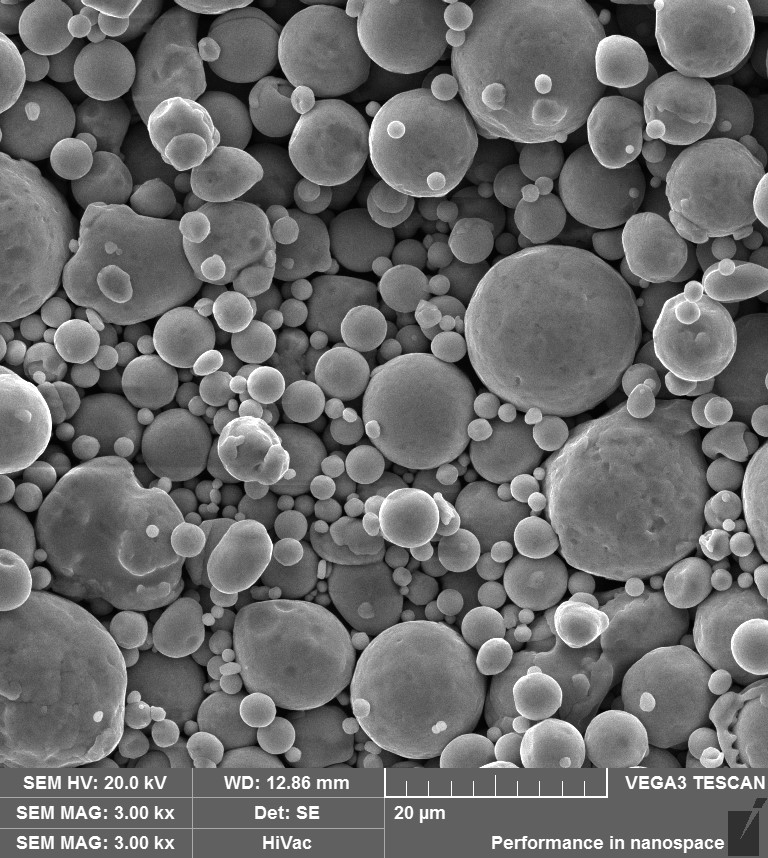
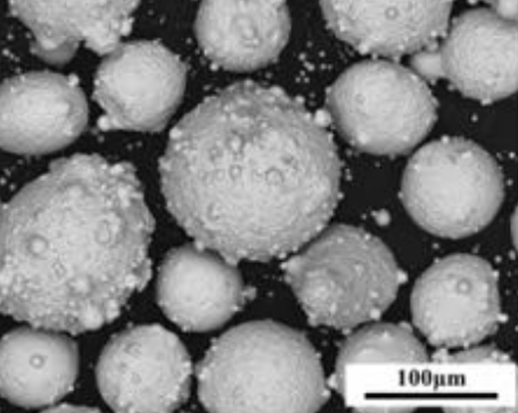
For AM users, powder characteristics are as important as alloy chemistry. A high-quality 718 feedstock is expected to show spherical morphology, controlled particle size distribution, low satellite content, good flowability, and tightly managed oxygen levels. Those factors influence recoating behavior, layer uniformity, melt stability, and the likelihood of porosity or lack-of-fusion defects.
Distinguishing Inconel 718 from related nickel alloys
Compared with Inconel 625, Alloy 718 generally offers higher age-hardened strength. Compared with more extreme high-temperature superalloys, it is typically easier to process and qualify in additive systems. That is one reason many suppliers list it alongside broader nickel-based AM powder grades as a core production alloy rather than a niche research material.
From an engineering standpoint, the alloy exists to solve a recurring design problem: how to produce complex metal parts that face heat, pressure, corrosion, and cyclic stress without shifting to a harder-to-manufacture superalloy. In additive manufacturing, that problem becomes even more relevant because geometries such as lattice-reinforced walls, internal channels, and integrated manifolds are now routine.
In high-value metal AM, feedstock quality is not a secondary variable; it is part of the process itself.
化学組成
The chemistry of Inconel 718 powder for additive manufacturing is tightly controlled because precipitation response, crack resistance, corrosion behavior, and final heat-treated strength all depend on relatively narrow alloy windows. Powder suppliers normally certify the chemistry by weight percent and also monitor interstitial contamination introduced during melting, atomization, handling, or recycling.
| エレメント | Typical Range (wt%) | Primary Metallurgical Role | Relevance to AM Performance |
|---|---|---|---|
| ニッケル(Ni) | 50.0–55.0 | Base matrix; stabilizes austenitic structure | Provides heat resistance, toughness, and corrosion performance |
| クロム(Cr) | 17.0–21.0 | 耐酸化性と耐食性 | Helps printed parts resist scaling and aggressive environments |
| 鉄(Fe) | バランス | Matrix constituent and cost control | Maintains alloy balance and workable processing characteristics |
| Niobium + Tantalum (Nb+Ta) | 4.75–5.50 | Main age-hardening contribution through gamma double-prime | Critical for high strength after solution and aging treatment |
| モリブデン (Mo) | 2.80–3.30 | Solid-solution strengthening | Supports hot strength and creep resistance |
| チタン(Ti) | 0.65–1.15 | Precipitation support | Contributes to hardening response and microstructural stability |
| アルミニウム(Al) | 0.20–0.80 | Gamma-prime formation support | Helps strengthen the alloy after heat treatment |
| コバルト | ≤1.00 | Minor hot-property influence | Usually present as a controlled residual |
| カーボン(C) | ≤0.08 | Carbide formation | Excess can reduce ductility and complicate weldability |
| マンガン (Mn) | ≤0.35 | Residual control | Kept low to support cleanliness |
| ケイ素 (Si) | ≤0.35 | Residual control | Excess may reduce toughness and process stability |
| リン (P) | ≤0.015 | 不純物制限 | Restricted to avoid embrittlement |
| 硫黄(S) | ≤0.015 | 不純物制限 | Restricted for hot-workability and ductility |
| 酸素 (O) | Powder-spec controlled | Interstitial contaminant, not intentional alloying | Affects cleanliness, fatigue behavior, and reuse stability |
The role of niobium in Inconel 718 powder for additive manufacturing
Niobium is the defining strength element in 718. During proper aging treatment, it promotes formation of the metastable gamma double-prime phase that gives the alloy much of its characteristic yield and tensile strength. In practical AM terms, that means chemistry drift in niobium can directly affect final property consistency.
Why chromium, molybdenum, and nickel matter together
Nickel forms the corrosion-resistant and heat-resistant matrix. Chromium protects the alloy against oxidation and hot corrosion, while molybdenum enhances strength under thermal and mechanical loading. This combination is why 718 performs in gas paths, pressure systems, and aggressive industrial environments where stainless steels often reach their limit.
Trace elements and cleanliness control
In additive manufacturing, contamination control matters almost as much as nominal chemistry. Low sulfur, phosphorus, and oxygen levels help preserve ductility, reduce defect sensitivity, and improve confidence in demanding applications. Many quality systems use both chemistry certification and powder characterization methods consistent with the terminology defined in ISO/ASTM 52900 積層造形用語集.
物理的および機械的特性
The performance profile of Inconel 718 powder for additive manufacturing must be understood in two states: as powder during printing and as consolidated metal after post-processing. Engineers usually specify the latter, but manufacturing success depends heavily on the former.
| プロパティ | 代表値 | 単位 | 試験規格/試験条件 |
|---|---|---|---|
| Solid density | 8.19 | g/cm³ | 室温における代表的な合金の値 |
| 融点範囲 | 1260–1336 | °C | Typical alloy reference range |
| Ultimate tensile strength | 1240–1500 | MPa | Typical AM material after solution + aging |
| Yield strength (0.2%) | 1030–1280 | MPa | Typical heat-treated condition |
| 伸び | 12–25 | % | Depends on build orientation and post-processing |
| 硬度 | 35–45 | HRC | Typical aged condition |
| 弾性率 | 200–205 | GPa | Approximate room-temperature value |
| 熱伝導率 | 11–16 | W/m-K | Condition- and temperature-dependent |
| 熱膨張係数 | 13.0–13.5 | µm/m·K | Approximate 20–100 °C range |
Powder-related physical behavior
For printing, the most important practical properties are not tensile strength but flowability, packing density, and spreadability. Spherical particles with low satellite content tend to deliver more stable powder layers, which can improve melt-pool consistency and reduce build interruptions.
This is one reason premium feedstock commands attention even when the nominal alloy is common. Good AM outcomes depend on powder morphology, not chemistry alone.
Mechanical properties after printing and heat treatment
As-built 718 can already show good strength, but standard industrial practice usually includes stress relief followed by solution treatment and aging. These thermal steps transform the printed microstructure into the precipitation-hardened condition for which the alloy is known.
Mechanical values vary with machine platform, scan strategy, build orientation, support design, porosity level, and whether hot isostatic pressing is applied. In many validated production routes, tensile performance approaches or exceeds conventional minimum expectations, while fatigue behavior remains highly sensitive to internal defects and surface finish.
Thermal and corrosion performance
Inconel 718 is not chosen for maximum thermal conductivity or low density. It is chosen because it retains useful strength over a broad elevated-temperature range while resisting oxidation, many corrosive media, and stress-assisted environmental degradation better than general-purpose steels.
That balance gives designers room to consolidate assemblies, reduce weld counts, and add internal features through AM without surrendering service performance. In applications where low mass is more important than hot strength, engineers often compare it with titanium alloy powder options.
仕様および取り扱いグレード
Powder specification for Inconel 718 in additive manufacturing combines alloy chemistry with particle engineering. In real purchasing practice, the specification package typically covers particle size distribution, apparent density, tap density, Hall flow, oxygen content, particle morphology, and applicable quality documentation.
| Grade / Supply Condition | 代表的なPSD範囲 | 見かけ密度 | タップ密度 | ホールの流れ | 酸素含有量 | 真球度/形態 | Standards / Cross-Reference |
|---|---|---|---|---|---|---|---|
| Fine LPBF grade | 15-45 µm | 4.4–4.9 g/cm³ | 5.0–5.6 g/cm³ | 14–18 s/50 g | ≤0.03 wt% typical | Highly spherical, low satellites | Common for fine-layer laser powder bed fusion |
| Standard LPBF grade | 15–53 µm | 4.5-5.0 g/cm³ | 5.1–5.7 g/cm³ | 13–17 s/50 g | ≤0.03 wt% typical | Spherical powder with controlled fines | Widely used general AM range |
| EBM grade | 45-105 µm | 4.6–5.1 g/cm³ | 5.2–5.8 g/cm³ | 12–16 s/50 g | ≤0.03 wt% typical | Free-flowing coarser distribution | Suitable for thicker powder layers |
| DED / cladding grade | 53-150 µm | 4.7–5.2 g/cm³ | 5.3–5.9 g/cm³ | 12–15 s/50 g | ≤0.04 wt% typical | Spherical with controlled coarse fraction | Used in blown-powder deposition systems |
| Chemistry basis grade | - | - | - | - | Powder-spec controlled | Alloy 718 nominal chemistry | Typically aligned with AMS 5662 / AMS 5663 chemistry basis |
| AM standards reference | - | - | - | - | QA-plan dependent | Powder quality defined by application | Often specified within the ASTM additive manufacturing standards framework |
Common particle size distributions
The best PSD depends on the process. Laser powder bed fusion usually favors 15–45 µm or 15–53 µm because those cuts balance packing behavior with layer resolution. Electron beam systems often use coarser powder because thicker layers and different energy coupling shift the preferred flow regime.
AM powder quality metrics that matter most
A data sheet should not stop at chemistry and size range. Buyers normally look for apparent density, tap density, Hall flow, oxygen level, and visual confirmation of spherical particles. In regulated or flight-oriented programs, lot traceability and reuse guidance are often just as important as the initial certificate.
Standard and customized supply grades
Suppliers may offer standard laser, electron beam, and DED grades, but advanced users often request narrower PSD windows or tighter oxygen limits to match internal machine parameters. In mixed manufacturing environments, 718 may also sit alongside iron-based spherical powders and other alloy families so that users can select material by service temperature, cost, and corrosion exposure rather than by AM process alone.
製造工程
The manufacturing route used to produce Inconel 718 powder has a direct influence on its suitability for additive manufacturing. Two powders may share the same nominal chemistry yet behave differently in recoating, spreading, and melting because morphology and cleanliness are route-dependent.
Gas atomization and spherical powder production
Gas atomization is the most common industrial route for 718 powder. In this process, a molten alloy stream is broken into droplets by high-velocity inert gas, and the droplets solidify into particles. When done well, gas atomization yields good sphericity, broad industrial throughput, and strong cost-performance balance.
Vacuum induction gas atomization, or VIGA, improves control by melting under vacuum or controlled atmosphere before atomization. This can reduce contamination and improve consistency, which matters for demanding aerospace and energy specifications.
PREP and EIGA for higher-purity AM powder
Plasma Rotating Electrode Process forms droplets from a rotating alloy electrode melted by plasma, while Electrode Induction Gas Atomization melts feedstock without conventional crucible contact. Both are valued for high cleanliness and excellent particle morphology, though they generally carry higher production cost than standard gas atomization.
These premium routes are often selected when contamination tolerance is extremely low or when the part qualification burden justifies tighter powder control. For many users, the route decision is a trade-off between quality margin and cost per kilogram rather than a simple pass-fail choice.
| プロセス | How It Works | 球形度 | Oxygen Pickup Risk | PSDコントロール | スループット | 相対的なコスト | Typical Use Case for 718 |
|---|---|---|---|---|---|---|---|
| 遺伝的アルゴリズム | Inert gas breaks molten stream into droplets | 良い~非常に良い | 低~中程度 | 非常に良い | 高い | 中程度 | Mainstream LPBF and DED production powder |
| VIGA | Vacuum induction melting followed by gas atomization | 非常に良い | 低い | 非常に良い | 中~高 | 中~高 | Higher-spec industrial AM lots |
| 準備 | Plasma melts rotating electrode; droplets form centrifugally | 素晴らしい | 非常に低い | グッド | ミディアム | 高い | Premium powder for critical builds |
| EIGA | Induction melting of bar/electrode with gas atomization | Very good to excellent | 非常に低い | 良い~非常に良い | ミディアム | 高い | Clean specialty and high-integrity powder |
| Plasma atomization variants | Plasma-based feed melting and droplet formation | 素晴らしい | 低い | グッド | ミディアム | 高い | Premium spherical AM powder production |
Post-atomization handling
Powder quality is also shaped by classification, screening, drying, packaging, and storage. Even a well-made powder can degrade if moisture pickup, cross-contamination, or mechanical damage occurs after production. That is why aerospace users often treat powder logistics as part of process validation, not just warehouse handling.
Why process route affects part quality
The route does not directly determine tensile strength, but it influences the consistency of the print process that produces the final part. Better flow and cleaner particles reduce variability in layer deposition and may lower the risk of defects propagating into fatigue-critical sections. That is especially important when the same powder must support repeatable builds across multiple machines or production campaigns.
業界別の用途
Inconel 718 powder for additive manufacturing is used where design complexity and harsh service conditions overlap. The alloy is especially relevant when conventional machining wastes expensive material or when internal geometry provides a functional advantage.
Aerospace and aero-engine components
Aerospace remains the leading application domain for AM 718. Typical parts include brackets, ducts, manifolds, structural supports, seals, and combustor-adjacent hardware. The alloy’s strength, oxidation resistance, and heat-treatment response make it practical for both prototype and serial production.
Energy, turbines, and oil and gas systems
The material is widely used for valve components, pressure hardware, downhole tools, turbine-adjacent fixtures, and corrosive-service equipment. In these sectors, engineers value 高温安定性 combined with resistance to aggressive operating media.
Additive manufacturing adds a second layer of value by enabling internal passages, rapid spare-part production, and part consolidation. In the context of broader end-use sectors, many such use cases sit within the industrial categories outlined on the metal AM applications overview.
Automotive, motorsport, and thermal tooling
Although 718 is too dense for many volume automotive applications, it is useful in motorsport, turbo-related hardware, exhaust-side components, and thermal-mechanical tooling. AM is particularly attractive here because production batches are smaller, part complexity is higher, and speed of design iteration has commercial value.
Medical, nuclear, and advanced engineering support
Inconel 718 is not a mainstream implant alloy, but it has relevance in medical tooling, process fixtures, and specialized non-implant components. It also appears in nuclear and advanced engineering environments where reliability under thermal and corrosive loading matters.
For users comparing it with higher-conductivity alternatives for heat transfer hardware, copper-based AM powder materials may be more appropriate. For wear-driven or biocompatibility-led use cases, cobalt alloys often enter the comparison instead.
代替材料との比較
Material selection for metal AM rarely asks whether Inconel 718 is “good” in isolation. The real question is whether it outperforms the alternatives for the required service environment, geometry, and cost target.
| 素材 | 密度 (g/cm³) | Strength Level | High-Temperature Capability | 耐食性 | 相対的なコスト | 印刷適性 | Best-Fit AM Use Case |
|---|---|---|---|---|---|---|---|
| Inconel 718 powder for additive manufacturing | 8.19 | High after aging | 高い | 高い | 高い | 非常に良い | Complex parts needing balanced strength, heat resistance, and manufacturability |
| インコネル625粉 | 8.44 | 中~高 | 中~高 | 素晴らしい | 高い | 非常に良い | Corrosion-focused components with less reliance on age hardening |
| Ti-6Al-4V粉末 | 4.43 | 高い比強度 | 中程度 | 良い~非常に良い | 高い | 素晴らしい | Lightweight aerospace and medical structures |
| CoCrMo粉末 | 8.3–8.5 | 高い | 中~高 | 素晴らしい | 高い | 良い~非常に良い | Wear, valve, and selected medical components |
| 316Lステンレス鋼粉末 | 7.9–8.0 | 中程度 | 中程度 | グッド | より低い | 素晴らしい | General industrial parts, fixtures, and low-cost prototyping |
Inconel 718 versus Inconel 625
This is a common comparison because both are nickel alloys with strong corrosion performance. The decisive difference is strengthening mechanism: 718 is age-hardenable and typically stronger after heat treatment, while 625 is often chosen when corrosion resistance and fabrication simplicity matter more than maximum structural strength.
Inconel 718 versus titanium and stainless steels
Titanium alloys provide far lower density and excellent specific strength, which is why they dominate weight-sensitive applications. Stainless steels are less expensive and often easier to justify for moderate environments, but they generally cannot match 718 in hot-strength retention.
Inconel 718 in the broader superalloy landscape
Within the superalloy family, 718 is often treated as the practical production alloy rather than the extreme-performance alloy. The broader superalloy material overview helps explain why: it occupies a useful balance point among processability, strength, corrosion resistance, and industrial familiarity.
当社
Shanghai Truer Technology Co., Ltd., which operates am-printing.com, was established in 2009 and started its additive manufacturing business in 2019. The company works across metal powder equipment and powder supply, including Selective Electron Beam Melting equipment, Plasma Rotating Electrode Process powder-making equipment, and gas atomization-related capabilities. Its powder portfolio includes TiNi, TiTa, TiAl, TiNbZr, CoCrMo, and spherical nickel-, cobalt-, titanium-, copper-, aluminum-, and stainless-steel powders for SLM, SEBM, DED, laser cladding, powder metallurgy, MIM, HIP, spraying, welding, and coating. A factual corporate profile, product scope, and industry coverage are provided on the company background page.
よくあるご質問
Q1. Is Inconel 718 powder for additive manufacturing suitable for both SLM and EBM?
Yes. Fine powder cuts such as 15–45 µm or 15–53 µm are commonly used in laser powder bed fusion, while coarser cuts such as 45–105 µm are often preferred for electron beam systems. The exact choice depends on layer thickness, machine settings, and required feature resolution.
Q2. Why is spherical morphology important for Inconel 718 AM powder?
Spherical particles usually flow better, spread more evenly, and pack more consistently across the build plane. That improves layer uniformity and can reduce process instability, especially in long or high-volume builds.
Q3. Does Inconel 718 powder for additive manufacturing require heat treatment after printing?
In most production workflows, yes. Stress relief is typically followed by solution treatment and aging so the alloy can develop its precipitation-hardened microstructure and full strength potential. Some applications also include hot isostatic pressing to further improve density and fatigue performance.
Q4. What is the difference between GA and PREP Inconel 718 powder?
Gas-atomized powder is more common and often offers a stronger cost-throughput balance. PREP powder is generally selected when users prioritize very high sphericity, low contamination, and premium powder quality for critical parts.
Q5. Which industries use Inconel 718 powder for additive manufacturing most heavily?
Aerospace, energy, oil and gas, motorsport, and advanced industrial tooling are among the most active sectors. These industries value the alloy because it can handle high mechanical loads and elevated temperatures while still benefiting from complex AM geometry.
Q6. How should buyers evaluate Inconel 718 powder quality before qualification?
They should review chemistry, particle size distribution, apparent and tap density, Hall flow, oxygen content, and particle morphology rather than relying on alloy name alone. For serious qualification work, lot traceability, powder reuse behavior, and consistency across multiple batches are just as important as the initial certificate.