簡単な回答
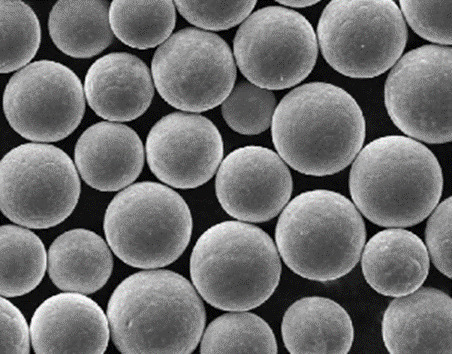
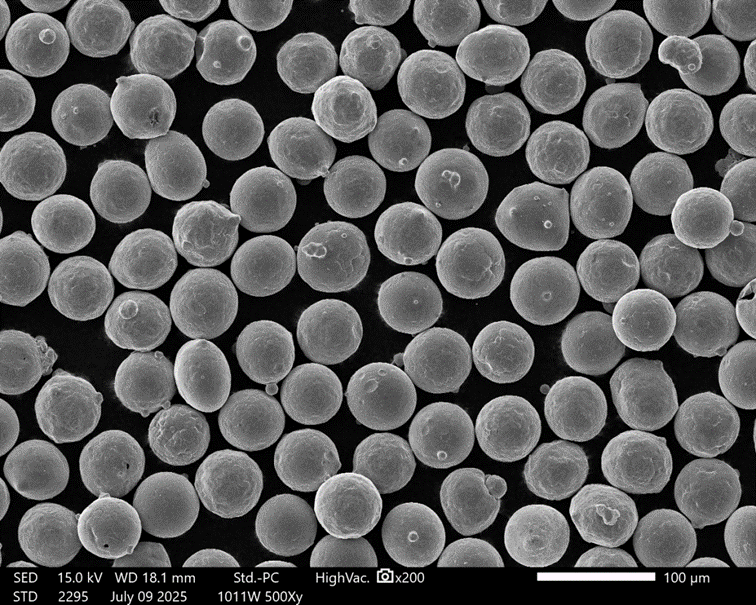
PREP spherical Inconel 718 powder is a nickel-based superalloy feedstock made into highly spherical particles through the Plasma Rotating Electrode Process. It is chosen for 3D printing when users need a powder with very high cleanliness, strong flowability, low satellite content, and dependable mechanical performance after heat treatment. In practical terms, it is one of the most trusted options for aerospace-grade additive manufacturing parts because Inconel 718 combines mature printability with high strength, corrosion resistance, and good elevated-temperature capability.
What Is PREP spherical Inconel 718 powder
PREP spherical Inconel 718 powder is the powder form of Inconel 718, a precipitation-hardenable nickel-chromium superalloy widely used in additive manufacturing, aerospace engines, power systems, and other high-performance applications. The term “PREP” refers specifically to the Plasma Rotating Electrode Process, a powder-making method that produces dense, highly spherical particles with low contamination and a narrow defect profile. In other words, the alloy defines the metallurgy, while PREP defines the morphology and cleanliness level of the powder.
In the broader family of nickel superalloys, Inconel 718 occupies an important middle ground. It does not reach the extreme hot-section ceiling of some gamma-prime-dominant turbine alloys, but it offers a rare balance of strength, weldability, fatigue resistance, and process stability. That is one reason it became a benchmark alloy for metal additive manufacturing rather than remaining only a wrought or cast engineering material.
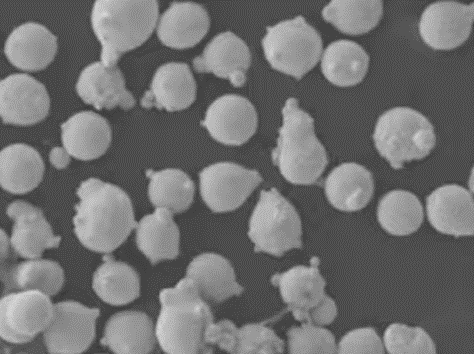
PREP Spherical Inconel 718 Powder in the Nickel Superalloy Family
Inconel 718 belongs to the age-hardenable nickel-based superalloy class. Its mechanical performance comes largely from strengthening phases based on niobium and related precipitation behavior rather than from solid-solution hardening alone. That makes it more structurally capable than many corrosion-focused nickel alloys and more forgiving to process than several hotter but crack-sensitive turbine grades.
Why PREP Matters for Spherical Powder Quality
PREP is valued because powder shape is not a cosmetic issue; it affects how the powder spreads, packs, melts, and feeds. Spherical particles typically show lower internal friction, more predictable powder-bed behavior, and smoother delivery in powder-fed systems. With Inconel 718, that translates into more stable additive manufacturing conditions, especially where consistency across multiple builds matters.
Distinguishing Features of This 3D Printing Powder
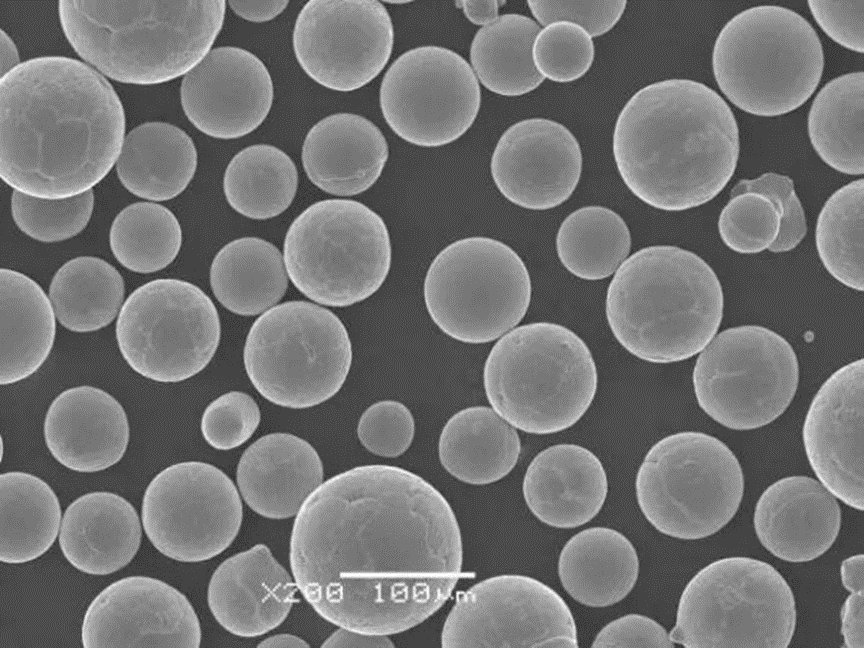
The defining advantages of this feedstock are its excellent sphericity, low oxygen pickup risk, minimal satellite population, and strong suitability for precision additive processes. Compared with some gas-atomized materials, PREP powder is often preferred for critical programs where cleanliness and flow consistency outweigh raw throughput economics. Buyers comparing broader nickel superalloy powder options generally view PREP Inconel 718 as a premium feedstock inside a familiar and highly qualified alloy family.
Why Inconel 718 Became an AM Standard
Many metal powders can print dense parts, but fewer can also support predictable post-build heat treatment, machining, inspection, and long-term structural service. Inconel 718 became an additive manufacturing standard because it checks all of those boxes with fewer compromises than most competing superalloys. That is especially important in regulated sectors where material pedigree and repeatability often matter as much as peak strength.
Powder quality sets the process window, but alloy stability determines whether the printed part remains useful after it leaves the build chamber.
化学組成
The chemistry of Inconel 718 is engineered to provide a strong combination of precipitation hardening, corrosion resistance, and thermal stability. Nickel forms the matrix, chromium protects against oxidation and general corrosion, and niobium is central to the alloy’s strengthening response. Additional elements such as molybdenum, titanium, and aluminum fine-tune the alloy’s precipitation sequence and hot-strength behavior.
| エレメント | Typical wt.% | 冶金上の役割 | Functional Effect in Service |
|---|---|---|---|
| ニッケル(Ni) | 50.0–55.0 | Matrix phase | Provides the nickel-base structure and supports high-temperature strength |
| クロム(Cr) | 17.0–21.0 | 耐酸化性と耐食性 | Forms protective oxide films and improves environmental resistance |
| 鉄(Fe) | バランス | Matrix balance and cost control | Helps maintain alloy structure while controlling composition economics |
| Niobium + Tantalum (Nb+Ta) | 4.75–5.50 | Precipitation strengthening | Drives major hardening response and supports strength after aging |
| モリブデン (Mo) | 2.80–3.30 | Solid-solution strengthening | Improves strength, creep resistance, and elevated-temperature capability |
| チタン(Ti) | 0.65–1.15 | Precipitation support | Contributes to age hardening and tensile performance |
| アルミニウム(Al) | 0.20–0.80 | Precipitation support | Assists strengthening and oxidation behavior |
| コバルト | ≤1.0 | Residual or minor addition | Generally limited; not a primary strengthening driver in 718 |
| カーボン(C) | ≤0.08 | Carbide control | Helps grain-boundary behavior when tightly controlled |
| マンガン (Mn) | ≤0.35 | Residual control | Limited to preserve alloy consistency |
| ケイ素 (Si) | ≤0.35 | Residual control | Controlled to avoid adverse effects on ductility and cleanliness |
| Phosphorus / Sulfur (P/S) | 非常に低い | Impurity control | Kept minimal to protect hot workability and toughness |
The Strengthening System Behind Inconel 718 Powder
The alloy is best known for its precipitation-hardening response. After solution treatment and aging, strengthening phases form within the nickel matrix and substantially increase yield and tensile strength. This is why as-built properties are only part of the story; the full engineering value of Inconel 718 usually appears after a controlled thermal cycle.
Chromium, Molybdenum, and Environmental Resistance
Chromium gives Inconel 718 its widely recognized resistance to oxidation and many corrosive environments. Molybdenum contributes additional strengthening and supports performance under mechanical load. Together, these elements help explain why the alloy works across aerospace, oil and gas, and energy sectors instead of being confined to one narrow service niche.
Why Niobium Is So Important
Niobium is the signature alloying element in 718. It is central to the formation of strengthening phases that distinguish the alloy from simpler nickel-chromium systems. Because of that, chemistry control around niobium content is particularly important in powder certification and in maintaining predictable heat-treatment response.
Composition Control in PREP Spherical Inconel 718 Powder
For additive manufacturing, chemistry must be considered alongside powder cleanliness. Low impurity levels, especially sulfur, phosphorus, and oxygen-related contamination, support better ductility and fatigue behavior in printed parts. That is one reason PREP is attractive for high-integrity feedstock production: it is often selected when users want both metallurgical compliance and premium particle quality.
物理的および機械的特性
The properties associated with PREP spherical Inconel 718 powder can be divided into two groups: powder characteristics and consolidated part performance. Powder users care about flow, packing, and morphology because these affect process stability. Designers care about density, strength, elongation, hardness, and temperature capability because those determine whether the printed part can survive in service.
| プロパティ | 代表値 | 単位 | Test Standard / Basis |
|---|---|---|---|
| 密度 | 8.19 | g/cm³ | Typical consolidated alloy reference |
| Solidus temperature | 1260–1336 | °C | Typical alloy reference range |
| Liquidus temperature | 1336–1370 | °C | Typical alloy reference range |
| Ultimate tensile strength | 1240–1510 | MPa | Typical heat-treated AM or wrought-comparable condition |
| 0.2% yield strength | 1030–1280 | MPa | Typical heat-treated AM or wrought-comparable condition |
| 伸び | 10–22 | % | Process and heat-treatment dependent |
| 硬度 | 36–45 | HRC | Typical aged condition |
| 弾性率 | 200–205 | GPa | Room-temperature engineering reference |
| 熱伝導率 | 9.5–11.5 | W/m-K | おおよその室温範囲 |
| Fatigue relevance | 高い | Qualitative | Highly dependent on porosity and post-processing |
Mechanical Performance of PREP Spherical Inconel 718 Powder Parts
Printed and heat-treated Inconel 718 is valued because it can reach high strength with usable ductility. That balance is not trivial in metal additive manufacturing, where very strong alloys often become crack-prone or difficult to process. The relatively mature processing window of 718 is a major reason it remains so common in laser powder bed fusion and other AM workflows.
Elevated-Temperature Capability and Service Limits
Inconel 718 is frequently used at elevated temperature, but it is important to define that statement carefully. It offers strong performance in many high-heat structural environments, though it is not the top-end choice for the hottest turbine sections where alloys such as 939 or certain Rene grades may be preferred. Its real strength lies in combining thermal resistance with manufacturability and lifecycle familiarity.
Hardness, Ductility, and Heat Treatment Effects
As-built hardness and strength can be substantially different from aged-condition values. Proper solution treatment, stress relief, and aging are typically required to unlock the alloy’s intended properties. Without those steps, residual stress and incomplete precipitation can reduce both predictability and service confidence.
Thermal Conductivity and Build Behavior
Like many nickel superalloys, Inconel 718 has modest thermal conductivity compared with aluminum or copper alloys. Heat therefore remains localized during melting, which can influence residual stress and microstructural gradients. That behavior is manageable, but it reinforces the importance of parameter optimization, scan strategy, and baseplate thermal control.
Why Property Data Must Be Qualified by Route
A PREP powder, a gas-atomized powder, and an aged final part are not the same thing, even when all are labeled Inconel 718. Machine type, atmosphere, reuse rate, layer thickness, and post-processing sequence all affect the final result. For critical programs, powder certification should be linked to build qualification rather than treated as an isolated purchasing exercise.
仕様および取り扱いグレード
Specifications for PREP spherical Inconel 718 powder must address both material identity and powder behavior. In most procurement settings, chemistry alone is insufficient. Users normally qualify the powder by particle size distribution, flowability, oxygen level, apparent density, tap density, and sphericity, then align those parameters with the chosen additive process.
| Supply Grade / Standard Basis | 典型的なPSD | 見かけ密度 | タップ密度 | ホールの流れ | 酸素含有量 | 真球度/形態 | Cross-Reference Use |
|---|---|---|---|---|---|---|---|
| Fine SLM grade | 15-45 µm | 4.5–4.9 g/cm³ | 5.0–5.6 g/cm³ | 13–18 s/50 g | ≤200 ppm typical | Very high sphericity, low satellites | Fine-feature laser powder bed fusion |
| Standard LPBF grade | 15–53 µm | 4.6–5.0 g/cm³ | 5.1–5.7 g/cm³ | 13–18 s/50 g | ≤200 ppm typical | Highly spherical PREP powder | General production powder bed AM |
| SEBM grade | 45-105 µm | 4.7–5.1 g/cm³ | 5.2–5.8 g/cm³ | 12–17 s/50 g | ≤250 ppm typical | Stable packing and feed characteristics | Electron beam-based powder bed processing |
| DED / cladding grade | 53-150 µm | 4.8–5.2 g/cm³ | 5.3–5.9 g/cm³ | 12–17 s/50 g | ≤250 ppm typical | Coarser spherical feedstock | Directed energy deposition and laser cladding |
| Documentation basis | By lot | By lot | By lot | By lot | By lot | By lot | ASTM / AMS / ISO / DIN / GB alignment practice |
Particle Size Grades for PREP Spherical Inconel 718 Powder
The selected particle size distribution should reflect the machine and process, not just availability. Fine powders support thinner layers and finer detail, while coarser grades are usually preferred for higher deposition rates or electron beam workflows. In powder-fed systems, consistent PSD also helps improve feeder stability and deposition efficiency.
Sphericity, Flow, and Powder Reuse
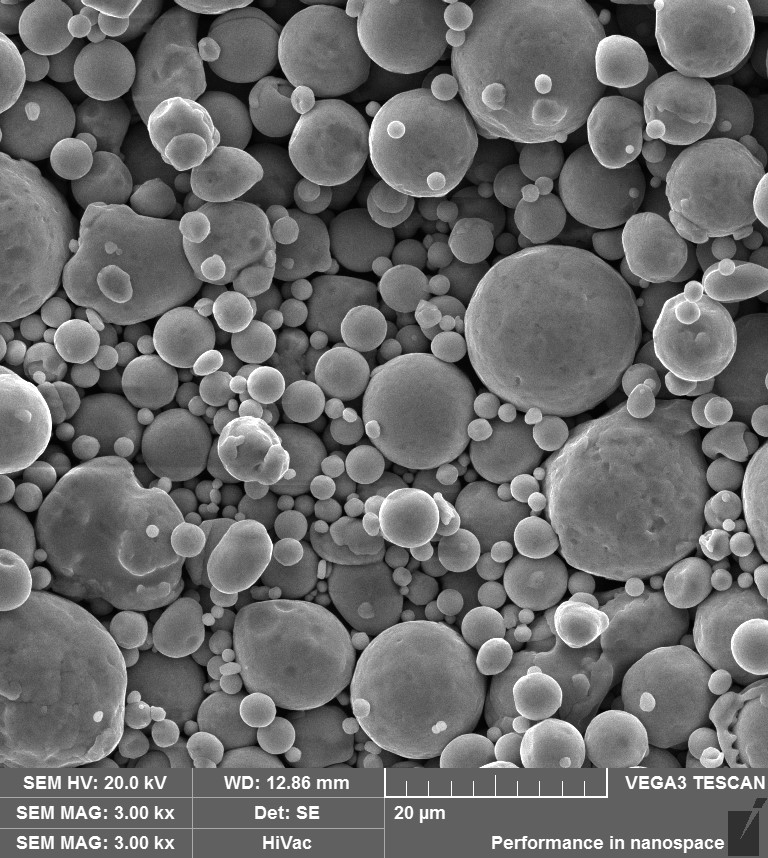
The term 球状粉末の形態 matters because it affects the behavior of every layer in the build. Powders with poor shape consistency or heavy satellite content can show erratic spreading and lower packing density. PREP material is often specified for programs that value long reuse consistency and low variability between lots.
Standards and Cross-Reference Practices
Additive manufacturing purchasing language frequently maps material qualification to established standards and terminology. General AM vocabulary is commonly aligned with ISO/ASTM 52900 積層造形用語集, while powder test methods may be interpreted alongside recognized ASTM International powder characterization resources. Aerospace users may also connect powder and part requirements to AMS-style expectations, even when customer-specific documents ultimately govern acceptance.
Available Supply Forms and Documentation
PREP Inconel 718 powder is commonly supplied with chemical analysis, PSD reports, oxygen and nitrogen data, and morphology documentation. More stringent programs may also request SEM images, flow test records, reuse guidance, or batch traceability down to raw electrode input. In practice, the required documentation level rises with the consequence of part failure.
製造工程
The manufacturing route is central to the identity of PREP spherical Inconel 718 powder. Although the alloy is Inconel 718 in every case, the powder-making process determines how the particles look, how clean they are, and how consistently they behave in AM equipment. That is why premium programs compare PREP with gas atomization, VIGA, and EIGA rather than assuming all spherical powders are functionally interchangeable.
| プロセス | Typical Sphericity | Oxygen Pickup Risk | PSDコントロール | スループット | 相対的なコスト | Main Advantages | Main Trade-Offs |
|---|---|---|---|---|---|---|---|
| ガスアトマイズ(GA) | 良い~非常に良い | 低~中程度 | グッド | 高い | 中程度 | Scalable, widely available, cost-efficient for volume | Can show more satellites and wider morphology variation |
| 真空誘導ガスアトマイズ法(VIGA) | 非常に良い | 低い | 良い~非常に良い | 中~高 | 中~高 | Better atmosphere control and cleaner melting | Higher cost than standard GA |
| 電極誘導ガスアトマイズ法(EIGA) | Very good to excellent | 非常に低い | グッド | ミディアム | 高い | Reduced contamination pathways and premium cleanliness | Specialized capacity and higher supply cost |
| プラズマ回転電極プロセス(PREP) | 素晴らしい | 非常に低い | Moderate to good after classification | Medium to low | 高い | Dense particles, exceptional roundness, very low satellites | Lower throughput and higher cost per kilogram |
| Plasma-based specialty routes | 素晴らしい | 非常に低い | グッド | 低~中 | 高い | Premium morphology for demanding applications | Narrower industrial availability |
How PREP Produces Spherical Inconel 718 Powder
In PREP, a rotating alloy electrode is melted at the tip by a plasma source. Centrifugal force throws off molten droplets, which solidify into highly spherical powder particles before collection. Because the droplets originate from a clean rotating electrode rather than from a free molten stream broken by gas jets, the route is associated with very round particles and low contamination potential.
GA, VIGA, and EIGA Compared with PREP
Gas atomization remains the dominant commercial route because it offers better throughput and lower cost. VIGA improves control over melting atmosphere, while EIGA further reduces contamination pathways by coupling clean feed mechanisms with gas atomization principles. PREP is usually selected not because GA is unusable, but because certain applications justify a higher-end morphology profile.
Trade-Offs in AM Powder Manufacturing
No route is universally best. GA often wins on economics and broad availability, while PREP often wins on particle perfection and cleanliness. For serial production, the right decision depends on whether the end user values kilogram cost, powder consistency, fatigue-sensitive performance, or extremely stable feed behavior.
Why PREP Is Associated with Critical Parts
PREP powder is frequently discussed in relation to aerospace, medical, and other high-consequence sectors because these users tend to be sensitive to inclusions, oxygen pickup, and irregular particles. That does not mean PREP guarantees better parts by itself, but it can reduce one major source of variability. In tightly controlled production, that reduction in variability is often the real value proposition.
Process Alignment with End Use
The powder-making route should be chosen together with the printing route. A fine PREP feedstock may be ideal for laser powder bed fusion, while a different cut may be better suited to SEBM or DED. When application requirements shift toward extreme temperature rather than the broader versatility of 718, engineers may also examine refractory metal powder grades or other specialized alloys, though those materials typically bring much tougher processing challenges.
業界別の用途
PREP spherical Inconel 718 powder is used where mechanical performance, traceability, and process reliability must coexist. Its appeal is strongest in sectors where parts see combined stress, heat, vibration, or corrosive exposure and where dimensional complexity favors additive manufacturing. In those cases, the cost premium of PREP can be justified by lower variability and stronger quality control.
Aerospace and Aero-Engine Hardware
Aerospace remains the most established market for Inconel 718 powder. Brackets, casings, manifolds, ducts, structural hot-end parts, and engine-adjacent hardware are common examples. The alloy’s fatigue capability, corrosion resistance, and mature qualification history make it one of the first nickel superalloys considered for flight-related AM development.
Power Generation and Energy Systems
In power generation, the material is used for components that require high strength, thermal stability, and resistance to aggressive environments. Turbine-related parts, repair builds, and energy-system hardware benefit from the alloy’s well-understood post-processing routes. For organizations managing fleets of expensive components, repeatable powder behavior can support both new-part production and repair workflows.
Oil and Gas Equipment
Oil and gas service can involve high pressure, sour environments, and complex thermal loading. Inconel 718 is often relevant for downhole, valve, tool, and structural parts where both corrosion resistance and strength are necessary. PREP powder may be selected when tight control over cleanliness and repeatability is especially important.
Automotive, Motorsport, and Research Programs
The alloy is too expensive for routine high-volume vehicle manufacturing, but it fits motorsport and advanced R&D very well. Turbo-related parts, hot gas fixtures, test rigs, and prototype components often use Inconel 718 because it offers structural reliability without the severe print sensitivity of some more exotic superalloys. In fast design cycles, that process maturity matters.
Medical and Industrial Tooling Context
Inconel 718 is not a primary medical implant alloy, but it can appear in specialized instruments, equipment parts, or industrial systems serving regulated industries. It is also relevant in tooling and fixture applications where thermal resistance and dimensional stability are important. When biocompatibility or low density becomes more important than high-temperature strength, engineers more often shift toward titanium alloy powder selections.
Cross-Process Industrial Use
This material is not limited to one AM route. It is used in SLM, SEBM, DED, laser cladding, and even adjacent powder-based processes where spherical morphology is advantageous. That broad process compatibility is one reason Inconel 718 remains central across many metal powder application sectors.
代替材料との比較
PREP spherical Inconel 718 powder is best understood by comparison. In many projects, the choice is not between using 718 and using nothing, but between 718 and other common AM feedstocks such as Inconel 625, Hastelloy X, IN939, or CoCrMo. Each alternative shifts the balance among printability, heat capability, corrosion resistance, cost, and qualification burden.
| 素材 | 密度 (g/cm³) | Relative Strength Level | High-Temperature Capability | Relative AM Printability | Corrosion / Oxidation Behavior | 相対的なコスト | Typical Best-Fit Use |
|---|---|---|---|---|---|---|---|
| PREP spherical Inconel 718 powder | 8.19 | 非常に高い | 高い | 非常に良い | 非常に良い | 高い | Aerospace-grade structural AM parts |
| インコネル625粉 | 8.44 | 中~高 | 中程度 | 素晴らしい | Excellent general corrosion resistance | 中程度 | Corrosion-led AM, cladding, chemical service |
| ハステロイXパウダー | 8.2–8.3 | 中程度 | 高い | グッド | Excellent oxidation and thermal-fatigue resistance | 高い | Combustion components and furnace hardware |
| IN939パウダー | 8.1–8.2 | 高い | 非常に高い | 中程度 | Very good at elevated temperature | 高い | Hotter turbine-adjacent parts |
| CoCrMo粉末 | 8.3–8.5 | 高い | 中~高 | グッド | Very good wear and corrosion resistance | 高い | Wear-critical and selected medical parts |
PREP Inconel 718 Versus Inconel 625
Inconel 625 is often easier to specify when corrosion is the dominant issue and very high strength is not essential. It is also known for forgiving processing behavior in both additive manufacturing and cladding. Inconel 718 becomes the better choice when structural load and heat treatment response matter more than general corrosion alone.
PREP Inconel 718 Versus Hastelloy X
Hastelloy X performs very well in oxidation-heavy and combustion-related environments. However, Inconel 718 usually offers higher structural strength and a more familiar qualification pathway in many AM programs. The decision often comes down to whether the application is driven primarily by thermal exposure or by a broader structural design case.
PREP Inconel 718 Versus IN939
IN939 can outperform 718 in hotter, more turbine-specific environments, but it is generally more specialized and may be less forgiving in AM. For many structural parts, 718 is preferred because it balances heat capability with printability and post-build maturity. That balance is exactly why 718 became so widely adopted.
PREP Inconel 718 Versus Cobalt-Based Powders
Cobalt-based materials can excel in wear, hot corrosion, or tribological service. Still, they are not always the first choice for highly loaded structural parts where the aerospace supply chain already has extensive experience with 718. Readers comparing tribological alternatives often also review コバルト合金粉末のグループ to understand where nickel and cobalt diverge.
Selection Depends on the Full Manufacturing Chain
The correct alloy cannot be chosen from a single strength number. Designers should evaluate part geometry, machine platform, support strategy, HIP or non-HIP routes, heat treatment, machining, and inspection burden together. For background on alloy identity and common nomenclature, the Inconel 718 material overview そして、より広範な NIST additive manufacturing materials research are useful technical reference points.
当社
Shanghai Truer Technology Co., Ltd., the operator of am-printing.com, was established in 2009 and created its additive manufacturing business in 2019. Based on the information provided on its corporate profile page, the company works in 3D printing powder-making equipment and metal powder supply, with core technologies including Selective Electron Beam Melting equipment, Plasma Rotating Electrode Process powder-making equipment, and gas atomization-related capabilities. Its stated portfolio includes TiNi, TiTa, TiAl, TiNbZr, CoCrMo, and spherical nickel-based, cobalt-based, titanium-based, copper-based, aluminum-based, and stainless steel powders for applications spanning SLM, SEBM, DED, laser cladding, powder metallurgy, MIM, HIP, cold and hot spraying, welding, and coating across industries such as aerospace, medical, nuclear power, 3C electronics, hand tools, and remote control cars.
よくあるご質問
Q1. Is PREP spherical Inconel 718 powder better than gas-atomized Inconel 718 powder?
It depends on the application and qualification target. PREP powder usually offers better sphericity, lower satellite content, and very high cleanliness, while gas-atomized powder often offers better supply scale and lower cost. For fatigue-sensitive or highly controlled programs, PREP may provide a useful consistency advantage.
Q2. What particle size is common for PREP spherical Inconel 718 powder in laser powder bed fusion?
Typical LPBF cuts are often in the 15–45 µm or 15–53 µm range. These distributions support thin layers, stable spreading, and consistent melting behavior. The exact PSD should still be matched to the machine, recoater design, and validated process window.
Q3. Does PREP spherical Inconel 718 powder require heat treatment after printing?
Yes, in most industrial cases it does. Stress relief, solution treatment, and aging are commonly used to develop the alloy’s precipitation-hardened microstructure and to stabilize final mechanical properties. As-built parts alone rarely represent the full design performance of Inconel 718.
Q4. Which industries use PREP spherical Inconel 718 powder most often?
Aerospace, energy, oil and gas, and advanced R&D are among the most common users. These sectors value the alloy’s combination of strength, corrosion resistance, and qualification maturity. PREP is especially relevant when the powder itself must meet a high standard of cleanliness and morphological consistency.
Q5. Is PREP spherical Inconel 718 powder suitable for SEBM as well as SLM?
Yes, it can be supplied in particle size ranges suitable for both processes. Finer cuts are typically used for SLM or LPBF, while coarser fractions are more appropriate for SEBM and some deposition routes. The alloy is versatile, but the PSD must be aligned with the specific process.
Q6. What should buyers check first when sourcing PREP spherical Inconel 718 powder?
The first checks should be chemistry, particle size distribution, oxygen level, apparent density, tap density, and morphology. After that, buyers should review traceability, batch consistency, and the intended use case, because a powder qualified for one AM route may not be optimal for another. In critical applications, supplier documentation and process-fit evidence are as important as the nominal alloy name.