簡単な回答
Pure copper powder for additive manufacturing is a high-purity, spherical metal feedstock designed for powder-bed fusion, directed energy deposition, and related advanced manufacturing processes. It is chosen when a part must deliver outstanding heat transfer and current carrying performance that steels, nickel alloys, and even many aluminum alloys cannot match. In practice, it is the right material for heat exchangers, induction components, busbars, RF devices, cooling inserts, and other applications where conductivity, not maximum structural strength, is the dominant design driver.
What Is pure copper powder for additive manufacturing
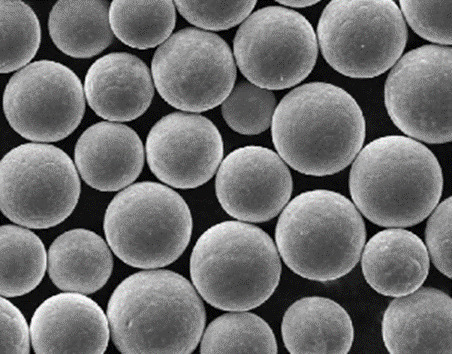
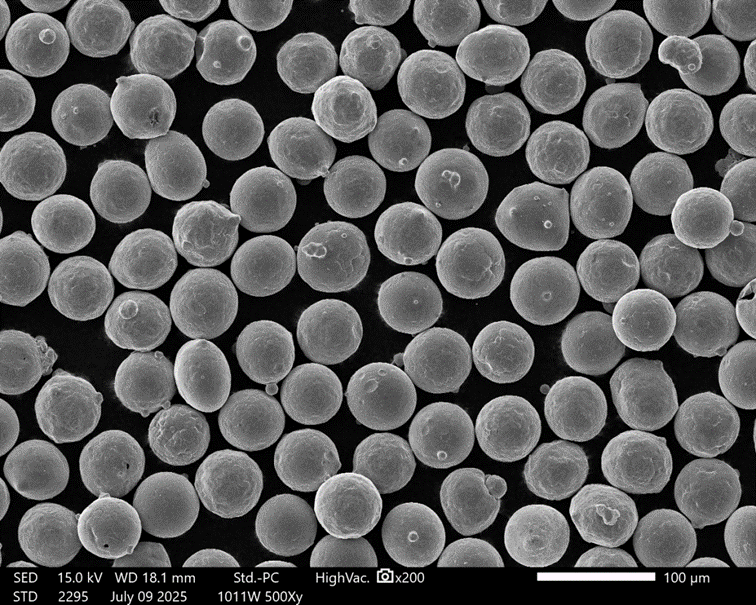
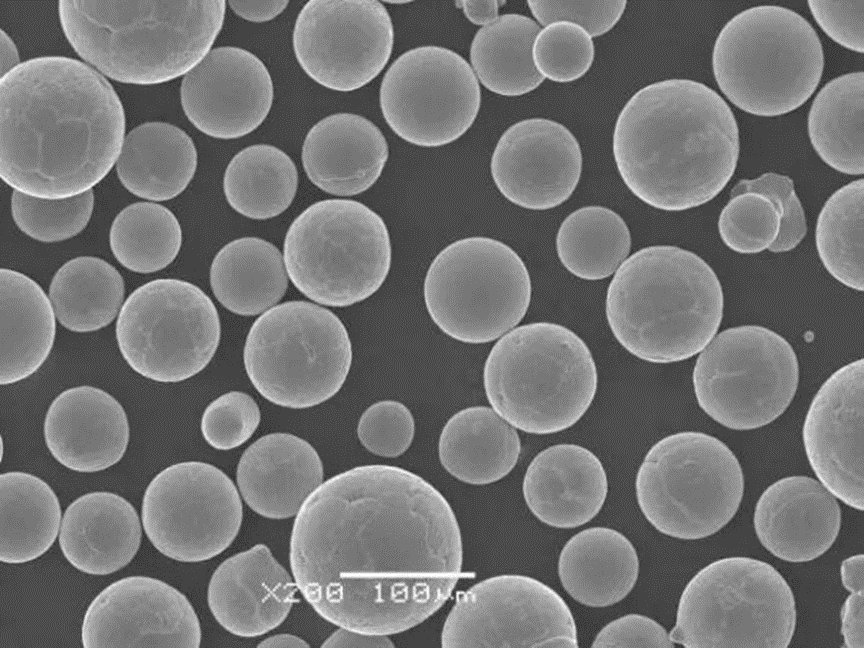
Pure copper powder for additive manufacturing refers to high-purity copper feedstock produced in a controlled powder form for use in metal AM systems such as laser powder bed fusion, electron beam processes, directed energy deposition, binder jetting, and some post-consolidation powder metallurgy routes. The material is usually supplied as spherical powder because particle shape directly affects flowability, layer uniformity, packing density, and part consistency.
Within the broader family of copper-based AM materials, pure copper sits at the high-conductivity end of the spectrum. Unlike alloyed copper grades such as CuCrZr or CuNiSi, pure copper is not selected primarily for strength or wear resistance. It is selected because it preserves copper’s intrinsic electrical and thermal performance as much as possible while still being processable in modern AM equipment.
This distinction matters because copper is not an easy material to print. It reflects a significant portion of the laser energy used in conventional infrared systems, and it dissipates heat extremely quickly from the melt pool. These characteristics narrow the processing window, but they also explain why engineers keep pursuing copper in AM: the finished parts can outperform more printable metals in thermal management and electrical service.
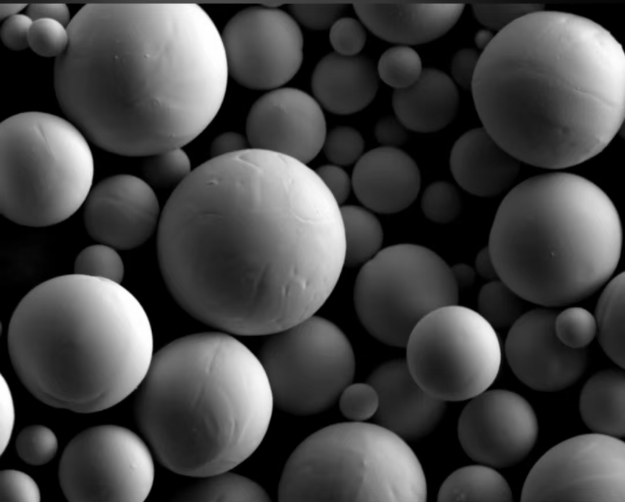
How pure copper AM powder differs from conventional copper powder
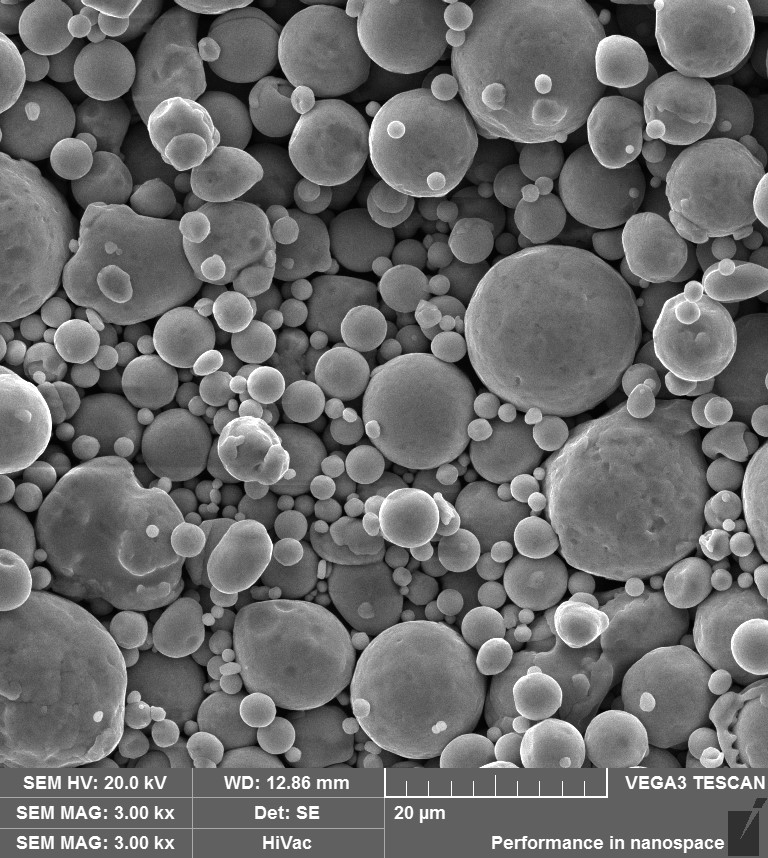
Conventional copper powder for pressing, sintering, brazing, or friction materials is often irregular in shape and optimized for cost or green strength. AM feedstock is different. It requires a carefully controlled size range, higher particle roundness, tighter chemistry, and lower contamination to ensure consistent recoating and dense melting behavior.
For that reason, buyers often evaluate pure copper powder for additive manufacturing using powder-centric criteria rather than bulk copper criteria alone. Powder morphology, oxygen level, satellite content, moisture exposure, and size distribution can matter just as much as nominal Cu content.
Why the material exists
The industrial reason for developing pure copper AM feedstock is geometric freedom. Traditional copper manufacturing can produce bars, plate, tubing, and machined features efficiently, but it becomes difficult or expensive when the part requires lattice cooling, internal channels, thin-wall heat-transfer surfaces, or compact multifunctional geometry. Additive manufacturing closes that gap.
In copper AM, the feedstock is successful only when chemistry, morphology, and process window are controlled together.
Pure copper powder for additive manufacturing is therefore best understood as a functional engineering material. It is not merely copper in a smaller form. It is a process-tuned material system intended to unlock conductive part geometries that are impractical with conventional machining, casting, or brazed assemblies.
化学組成
Although the term “pure copper” suggests a single chemistry, AM feedstocks are usually supplied within a controlled purity range rather than at one exact number. The practical goal is to maximize Cu content while limiting impurities that reduce conductivity, increase oxide formation, or destabilize printing performance.
| エレメント | Typical Content (wt%) | Common Limit Strategy | 冶金上の役割 | Effect on AM Performance |
|---|---|---|---|---|
| 銅 | 99.7–99.95 | バランス | Base metal providing conductivity and ductility | Determines core thermal and electrical behavior |
| O | 0.005–0.05 | Kept as low as practical | Influences oxide formation and conductivity loss | Excess oxygen can impair fusion consistency and part conductivity |
| P | ≤0.01 typical for high-conductivity grades | Controlled very low | Residual deoxidation-related element in some supply routes | Too much phosphorus improves deoxidation but lowers conductivity |
| フェ | ≤0.03 | Trace impurity control | Residual metallic impurity from melt handling or raw material | Higher Fe can reduce electrical performance and chemistry cleanliness |
| Pb + Bi | Each typically ≤0.005 | Strict trace control | Undesirable low-melting impurities | Can harm ductility, cleanliness, and critical-part reliability |
| S + C | Very low, often each ≤0.01 | Controlled low | Residual contamination indicators | May worsen melt behavior, outgassing, or inclusion risk |
The importance of copper purity
Copper is the matrix, but it is also the property engine. High Cu content is what gives the material its exceptional transport properties, making it valuable for parts that must conduct heat or electricity efficiently. Even small shifts in impurity content can have a measurable effect on conductivity, especially when the final part density is already being influenced by the printing process.
Why oxygen matters so much in pure copper powder for additive manufacturing
Among all impurity-related variables, low oxygen content is usually the most critical. Oxygen contributes to oxide films on powder surfaces, and those oxides can affect laser absorption, melting stability, pore formation, and the conductivity of the finished component.
The challenge is that copper is often produced in ways that naturally expose it to oxygen during melting or handling unless the route is tightly controlled. In AM-grade powder, low oxygen is not just a metallurgical preference; it is a process requirement for repeatable production.
Residual elements and conductivity trade-offs
Phosphorus, iron, lead, bismuth, sulfur, and carbon are usually treated as residuals to be minimized rather than functional alloy additions. In wrought copper metallurgy, some deoxidized grades deliberately use phosphorus for manufacturing advantages, but AM feedstock intended for peak conductivity generally avoids that direction because phosphorus lowers electrical performance.
In qualification work, users often find that chemistry alone does not predict results. The best outcomes come when purity, packing behavior, and machine parameters are aligned. That is why reputable purchasing specifications for copper powder include both elemental limits and process-related powder metrics.
物理的および機械的特性
Pure copper is a functional material before it is a structural one. Its greatest advantages are conductivity and thermal diffusivity, while its main limitations are modest strength and a narrower AM process window than more familiar printing alloys such as 316L or AlSi10Mg.
| プロパティ | 代表値 | 単位 | Test Standard / Reference |
|---|---|---|---|
| Theoretical density | 8.93–8.96 | g/cm³ | Reference density data |
| 融点 | 1083–1085 | °C | Standard materials reference |
| Thermal conductivity, dense condition | 320–390 | W/m-K | 一般的な室温の範囲 |
| Electrical conductivity, dense condition | 85–100 | % IACS | Typical for high-purity processed copper |
| Ultimate tensile strength, printed condition | 180–280 | MPa | Typical as-built to stress-relieved |
| Yield strength, printed condition | 70–180 | MPa | Typical, process dependent |
| 破断伸度 | 20–45 | % | Typical for dense builds |
| 硬度 | 45–85 | HB / HV equivalent range | Typical annealed to lightly strengthened state |
Conductivity is the defining property
The primary reason engineers specify electrical conductivity そして 熱伝導率 rather than switch to easier materials is application-level performance. A printed copper heat exchanger, induction component, or cooling insert can justify a more demanding process if the thermal transfer gain reduces cycle time, package size, or system complexity.
Because of this, part qualification often focuses on conductivity retention after printing and post-processing. Users care not only about nominal Cu purity, but also about how density, oxide content, and thermal history influence real part behavior.
Strength should be interpreted realistically
Pure copper is not weak in an absolute sense, but it is not intended to compete with precipitation-hardened copper alloys, martensitic steels, or nickel superalloys on strength alone. Its yield strength and hardness remain relatively modest unless additional processing or alloying is introduced.
That makes the material ideal for functional components where loads are manageable and conductivity is central. It is less suitable for applications dominated by high fatigue stress, severe wear, or sustained elevated temperature strength requirements.
Printed properties depend on density and post-processing
The property table above should be read as a typical performance envelope, not as a guaranteed datasheet promise. In AM, the path from powder to final property runs through particle morphology, spreading behavior, machine optics, energy density, scan strategy, inert atmosphere control, and heat treatment.
The terminology used in powder-bed and directed-energy workflows is commonly aligned with the ISO additive manufacturing standards organization, while reference property data for copper are often cross-checked through the NISTの材料測定リソース. For engineering decisions, the most meaningful numbers are always those measured on the user’s specific build geometry and process condition.
仕様および取り扱いグレード
The purchasing specification for pure copper powder for additive manufacturing should define far more than chemistry. Particle size distribution, flow behavior, tap response, oxygen level, and particle shape all influence whether the powder spreads evenly and melts consistently across repeated build cycles.
Common PSD windows for copper AM powder
For laser powder bed fusion, the most common size cuts are 15–45 µm and 15–53 µm. Finer cuts support thinner layers and better surface finish, but they may also raise concerns around powder handling sensitivity and oxygen exposure. Coarser cuts such as 45–105 µm are more typical for directed energy deposition, cladding, or spraying.
| Grade / Reference | Typical PSD (µm) | 見かけ密度 (g/cm³) | Tap Density (g/cm³) | Hall Flow (s/50 g) | Oxygen (wt%) | Sphericity / Cross-Reference |
|---|---|---|---|---|---|---|
| Pure Cu fine LPBF grade | 15-45 | 4.5–5.2 | 5.1–5.8 | 14–21 | 0.005–0.04 | High roundness, fine spherical AM powder |
| Pure Cu standard LPBF grade | 15-53 | 4.4–5.1 | 5.0–5.7 | 15–22 | 0.005–0.05 | General-purpose powder-bed feedstock |
| Pure Cu DED / spray grade | 45-105 | 4.8–5.5 | 5.5–6.2 | 12–19 | 0.01–0.06 | Coarser distribution, robust feed behavior |
| Pure Cu cladding / PM grade | 53-150 | 4.9–5.6 | 5.6–6.3 | 11–18 | 0.01–0.08 | Larger cut for non-LPBF routes |
| ASTM / ISO / DIN / GB mapping | Product specific | Measured per method | Measured per method | Measured per method | Product specific | Often referenced through ASTM powder tests, ISO AM terminology, and internal customer drawings |
| Custom screened batch | By agreement | By agreement | By agreement | By agreement | By agreement | Tailored PSD for machine or part qualification |
Powder characterization standards
No single universal copper-AM standard covers every supply condition, so specifications typically combine alloy purity limits with standardized powder test methods. Users commonly require apparent density, tap density, flowability, sieve analysis, and oxygen testing as batch-release data.
Apparent density and flow are often discussed in relation to the ASTM International standards catalog, especially for test methods widely used in metal powder quality control. In production, these test results are not paperwork exercises; they are predictors of how the powder will behave on the recoater, in the hopper, and under repetitive build conditions.
Available grade logic
Suppliers usually stock pure copper powder in several PSD bands rather than as one universal grade. A fine cut may suit thin layers and delicate thermal parts, while a coarser cut may be preferred for higher deposition-rate processes. Some customers also request tighter oxygen caps or narrower D10/D50/D90 windows for validation programs.
In portfolio terms, copper is often assessed beside a copper alloy powder range when users need stronger conductive options, or against an aluminum powder selection when lightweight thermal management is also part of the design brief.
製造工程
The manufacturing route strongly influences the usability of pure copper AM powder. Two powders with similar purity can behave differently if one has a broader size spread, more satellites, or more oxide pickup because of the way it was produced and handled.
Gas atomization and spherical copper powder
Gas atomization is the most common industrial route for producing AM-grade copper powder. A molten copper stream is broken into droplets by high-velocity inert gas, and those droplets solidify into near-spherical particles while falling through a controlled atmosphere.
This route is widely used because it balances scale, PSD flexibility, and powder roundness. For pure copper, gas atomization is particularly attractive when the system is designed to limit contamination and preserve spherical particle morphology across the target size band.
PREP for premium morphology
Plasma Rotating Electrode Process, or PREP, forms powder from a rotating copper feed rod melted by plasma. The centrifugal ejection mechanism often produces highly spherical particles with low satellite content and good cleanliness.
PREP is technically impressive, but it is less common for mainstream pure copper supply than gas atomization because throughput and feedstock economics are different. It is better viewed as a premium route for specialized powder requirements rather than the default high-volume choice.
VIGA and EIGA for tighter control
Vacuum Induction Melting Inert Gas Atomization, or VIGA, adds vacuum melting and tighter atmosphere control before gas atomization. This can improve melt cleanliness and reduce contamination risk, which is valuable when consistent low-oxygen powder is required.
Electrode Induction Melting Gas Atomization, or EIGA, reduces contact with refractory components by melting a feed bar inductively. Although often associated with reactive alloys, its logic is relevant to copper as well: fewer contamination pathways can improve chemistry control.
| プロセス | 球形度 | Oxygen Pickup Risk | PSDコントロール | スループット | 相対的なコスト | Typical Use in Copper Powder |
|---|---|---|---|---|---|---|
| 遺伝的アルゴリズム | 高い | Low to moderate, system dependent | 良い~非常に良い | 高い | 中程度 | Standard route for most AM-grade pure copper |
| 準備 | 非常に高い | 低い | 中程度 | 低~中程度 | 高い | Premium morphology, niche specialized use |
| VIGA | 高い | 低い | 良い~非常に良い | 中~高 | 中~高 | Cleaner melt route for tighter quality control |
| EIGA | 高い~非常に高い | 非常に低い | グッド | 中程度 | 高い | Specialized route where contamination avoidance matters |
| 水の霧化 | 低~中程度 | より高い | 中程度 | 高い | 低い | Usually not preferred for demanding powder-bed AM |
Trade-offs that affect process stability
For most industrial buyers, gas atomization offers the best compromise between morphology, cost, and availability. PREP can deliver excellent particle quality, but the price premium is not always justified for conductive hardware unless the application is highly sensitive.
The deeper lesson is that powder making route and downstream printing route must be matched. High-purity copper printed on a poorly tuned machine will still underperform, just as advanced optics cannot fully compensate for inconsistent powder. Material selection in copper AM is therefore a system decision rather than a chemistry decision alone.
業界別の用途
Pure copper AM is justified when conductivity-rich geometry creates measurable product value. The most attractive applications are usually not generic brackets or housings, but components whose performance is limited by heat flow, current flow, or electromagnetic design.
Aerospace and space thermal hardware
Copper is used in combustion chamber liners, injectors, heat sinks, and thermal control parts where the ability to move heat quickly is essential. Additive manufacturing allows internal passages and local geometry changes that conventional drilling or brazing cannot achieve easily.
In these programs, engineers may compare pure copper against alloyed copper, nickel alloys, or even refractory systems depending on local temperature and structural demands. That broader context is why copper is frequently evaluated alongside a refractory metal powder portfolio for severe thermal environments.
Electrical and electronics components
Busbars, inductors, RF components, waveguide hardware, and heat spreaders are among the clearest use cases for pure copper powder for additive manufacturing. These components benefit from the combination of conductivity and geometric freedom, especially when packaging constraints are severe.
Copper also supports hybrid component strategies in which printed copper is later machined, joined, or surface-finished to meet tight interface requirements. That makes it useful in prototyping, pilot production, and limited-series functional parts.
Tooling and mold inserts
Although copper lacks the wear resistance of many tool steels, it excels in conformal-cooled inserts and localized heat-removal features. When the mold’s cycle time or thermal uniformity is the bottleneck, a conductive copper insert can justify the material choice.
Automotive, e-mobility, and power systems
Battery cooling plates, inverter thermal components, motor-adjacent hardware, and high-current conductive parts are logical targets. As vehicle electrification increases the importance of thermal and electrical management, copper AM becomes more relevant in both performance prototyping and specialized production.
Medical, laboratory, and industrial equipment
Pure copper is not a mainstream implant material, but it appears in research instruments, analytical devices, cooling assemblies, and electromagnetic systems that support medical or scientific hardware. Where biocompatible structural performance is the core requirement, engineers typically choose a チタン粉末の製品ラインナップ instead of pure copper.
代替材料との比較
Material selection in additive manufacturing is rarely about finding the universally best powder. It is about identifying the powder that solves the dominant engineering problem with the fewest penalties elsewhere.
| 素材 | 密度 (g/cm³) | 熱伝導率 (W/m-K) | 相対力 | Printability in PBF | 耐食性 | 相対的なコスト | Typical Best Fit |
|---|---|---|---|---|---|---|---|
| pure copper powder for additive manufacturing | 8.93–8.96 | 320–390 | Moderate to low | Moderate; narrow window | Good in many service environments | 中~高 | Heat transfer and electrical performance |
| CuCrZr powder | 8.8–8.9 | 280–340 | 中~高 | 中程度 | グッド | 高い | Conductive parts needing more strength |
| AlSi10Mg粉末 | 2.6–2.7 | 120–170 | 中程度 | 良い~非常に良い | グッド | 中程度 | Lightweight thermal components |
| 316Lステンレス鋼粉末 | 7.9–8.0 | 14–20 | 中程度 | 素晴らしい | 非常に良い | 中程度 | General-purpose corrosion-resistant parts |
| インコネル718粉末 | 8.1–8.2 | 10-15 | 高い | グッド | Excellent at high temperature | 高い | Hot-section or severe-service components |
Where pure copper is the best choice
Pure copper is the leading choice when functional performance depends on moving heat or electricity efficiently through a compact geometry. If the part’s value comes from conductivity first and structural load second, few AM materials compete effectively.
Where alternative AM powders are stronger candidates
If weight reduction is central, aluminum may provide a better systems answer even with lower conductivity. If corrosion resistance and processing ease matter more than conductivity, 316L is often simpler and more economical. If temperature capability and structural retention dominate, nickel superalloys usually win.
That is why experienced buyers do not ask only whether copper can be printed. They ask whether the performance gain justifies the material and process complexity relative to competing AM powders.
当社
Shanghai Truer Technology Co., Ltd was established in 2009 and created its additive manufacturing business in 2019. Operating am-printing.com, the company works in powder-making equipment and metal powder supply, with capabilities related to Selective Electron Beam Melting equipment, Plasma Rotating Electrode Process equipment, and gas atomization. Its powder portfolio includes TiNi, TiTa, TiAl, TiNbZr, CoCrMo, and broader nickel-based, cobalt-based, titanium-based, copper-based, aluminum-based, and stainless steel spherical metal powders for SLM, SEBM, DED, laser cladding, powder metallurgy, MIM, HIP, cold or hot spraying, welding, and coating. The company also reports a joint innovation center for metal 3D printing with laboratories and domain experts, and serves industries including 3C electronics, hand tools, remote control cars, medical, aerospace, and nuclear power; additional company background is available through the corporate information page.
よくあるご質問
Q1. Is pure copper powder for additive manufacturing difficult to print?
Yes, relative to stainless steel or many nickel alloys, it is more difficult. Copper reflects a large share of laser energy and rapidly conducts heat away from the melt pool, which narrows the process window. Even so, modern parameter sets, green-laser systems, and high-quality spherical feedstock have made dense copper parts much more achievable.
Q2. What purity level is typical for pure copper powder for additive manufacturing?
Most commercial AM grades are supplied at roughly 99.7% to 99.95% copper, depending on grade philosophy and impurity limits. The exact number matters, but oxygen and trace residual control are often just as important as headline Cu percentage. Buyers should always check whether purity is paired with stated oxygen limits and PSD data.
Q3. Which particle size is most common for pure copper powder in laser powder bed fusion?
The most common ranges are 15–45 µm and 15–53 µm. These size cuts support uniform recoating, manageable layer thickness, and stable melting in many LPBF systems. Coarser powders are more common in DED, cladding, and spray applications.
Q4. Why do engineers choose pure copper instead of CuCrZr?
They choose pure copper when maximum conductivity is more valuable than higher strength. CuCrZr is often better for components that must carry heat well but also tolerate greater mechanical or thermal loading. The decision usually comes down to whether the part is function-limited by conductivity or by structural margin.
Q5. Can pure copper powder for additive manufacturing be reused after a build?
Often yes, but only under controlled powder-management procedures. Reuse depends on sieve practice, exposure time, atmosphere control, oxygen pickup, and whether the recycled powder still meets size and chemistry limits. Copper users should pay particular attention to oxide growth because it can influence both print behavior and final conductivity.
Q6. What should be included in a purchase specification for pure copper AM powder?
A strong purchase specification should include chemistry, oxygen limit, particle size distribution, apparent density, tap density, flowability, morphology expectations, and packaging condition. It should also identify the intended process route, such as LPBF or DED, because the acceptable PSD and flow window can change by machine type. For production programs, lot-to-lot consistency and powder reuse criteria should be defined before qualification begins.