簡単な回答
Spherical 316L powder is a low-carbon, corrosion-resistant austenitic stainless steel feedstock used in additive manufacturing, powder metallurgy, and related precision processes. It is widely chosen because it combines strong printability, stable powder flow, good ductility, and reliable corrosion performance in one material system. For many metal AM users, spherical 316L powder is the practical stainless baseline when parts need dense builds, repeatable processing, post-machinability, and dependable service in medical, industrial, energy, and chemical environments.
What Is spherical 316L powder
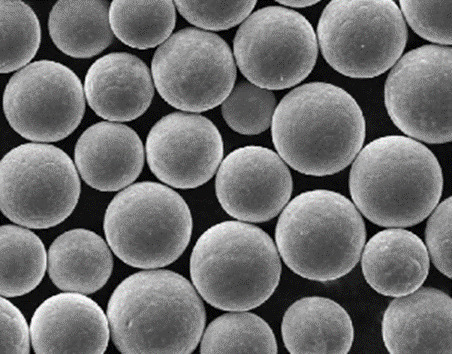
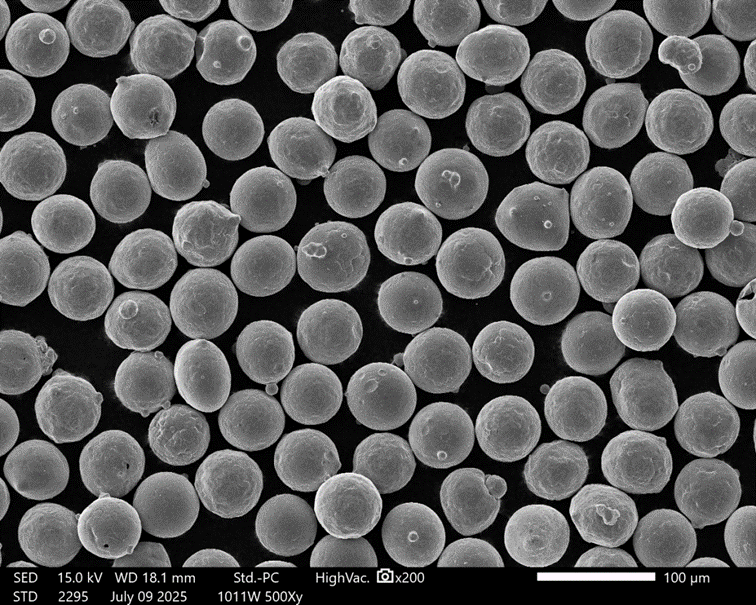
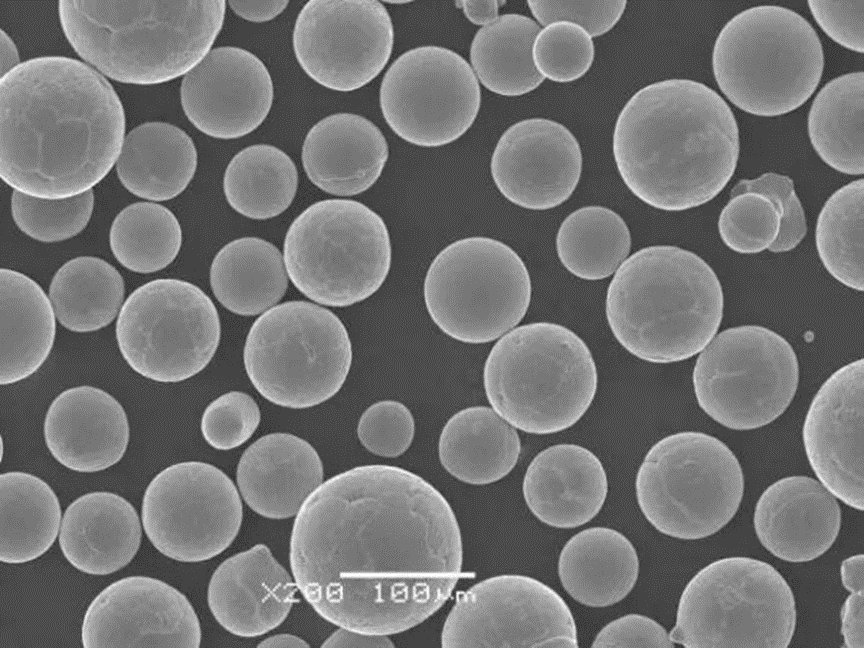
Spherical 316L powder is a particulate form of 316L stainless steel manufactured so that individual particles are predominantly round or near-round rather than irregular. In the additive manufacturing context, that morphology is not cosmetic; it directly affects how the powder spreads, packs, feeds, and melts. A spherical powder with controlled size distribution behaves very differently from crushed or water-atomized powder, even if the underlying alloy chemistry is similar.
The alloy itself belongs to the molybdenum-bearing austenitic stainless steel family. The “316” designation identifies a chromium-nickel stainless grade with added molybdenum for better pitting and crevice corrosion resistance than 304-type stainless steels, while the “L” suffix indicates low carbon content. That low-carbon chemistry is important for preserving corrosion resistance after thermal exposure, welding, or layer-by-layer remelting.
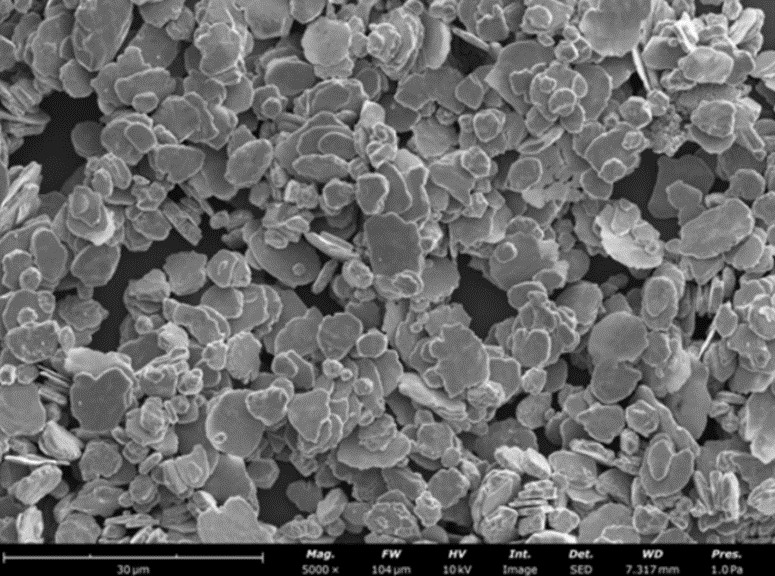
Why Spherical Morphology Matters in AM Powder
In powder bed fusion and other powder-fed processes, flowability and packing consistency are foundational. Spherical particles reduce friction between particles, move more predictably through hoppers and recoaters, and create more uniform powder layers. That helps stabilize energy absorption and improves the chance of producing dense, low-defect parts.
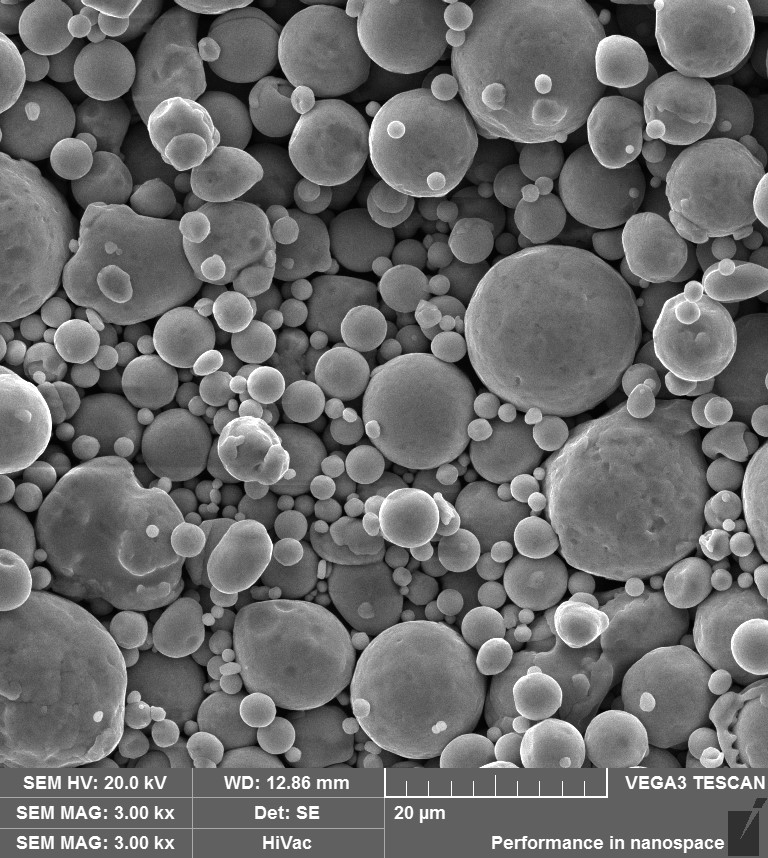
The effect is especially visible in fine AM size cuts. Powders that are too irregular, too satellite-heavy, or too broad in distribution can generate uneven layers, inconsistent melt pools, and higher risk of porosity. Spherical 316L powder exists to solve those process problems while preserving the familiar corrosion performance of 316L stainless.
316L Within the Stainless Steel Powder Family
Not all stainless powders serve the same purpose. Ferritic, martensitic, precipitation-hardening, and austenitic stainless families each offer different trade-offs in strength, corrosion behavior, magnetism, and post-processing. 316L is one of the most widely used austenitic grades because it balances chemical resistance, toughness, weldability, and manufacturability better than many alternatives.
That is why it is often treated as a reference material in additive manufacturing. Engineers frequently use it when qualifying a new machine, validating a new build strategy, or comparing stainless against broader ferrous options such as those in an 鉄系粉末製品群.
Core Characteristics of Spherical 316L Powder
The core characteristics are corrosion resistance, ductility, low-carbon chemistry, and 高い流動性 when the powder is properly atomized and classified. In practical use, spherical 316L powder is valued less for extreme strength than for its balanced processing behavior. It tends to print with fewer metallurgical complications than many harder or higher-strength steels.
Another reason it remains popular is familiarity across the supply chain. Designers, machinists, welding engineers, and quality teams already understand 316L as a material family. That makes transition from conventionally manufactured parts to AM parts easier than it is with less familiar specialty alloys.
In metal additive manufacturing, 316L is often chosen because it offers the broadest balance between corrosion performance and process reliability.
How Spherical 316L Powder Differs from Conventional 316L Feedstock
Bulk 316L in bar, sheet, or plate form is specified mainly by chemistry and mechanical properties. Powder feedstock adds another layer of requirements: particle shape, particle size distribution, oxygen content, apparent density, tap density, and flow behavior. As defined in ISO/ASTM 52900 の用語, feedstock characteristics are part of the additive manufacturing process chain, not just a raw material detail.
That distinction matters because a powder can meet nominal alloy chemistry and still perform poorly in a 3D printer if its particulate characteristics are not well controlled. In other words, spherical 316L powder is both an alloy and a process-engineered material.
化学組成
The chemical composition of 316L is the metallurgical basis for its corrosion resistance and austenitic stability. Chromium provides the passive surface film, nickel stabilizes the austenitic phase, molybdenum improves localized corrosion resistance, and low carbon helps protect the alloy from sensitization during thermal cycling. In powder form, those functions remain the same, but chemistry must be paired with low contamination and controlled interstitials.
| エレメント | Typical Content (wt%) | Common Specification Range | 冶金上の役割 |
|---|---|---|---|
| フェ | バランス | バランス | Base matrix of the alloy system |
| Cr | 16.5–18.0 | 16.0–18.0 | Forms passive film and provides general corrosion resistance |
| ニー | 10.0–14.0 | 10.0–14.0 | Stabilizes austenite, improves toughness and ductility |
| モ | 2.0–3.0 | 2.0–3.0 | Increases pitting and crevice corrosion resistance |
| ムン | 0.5–2.0 | ≤ 2.0 | Assists deoxidation and melt processing |
| Si | 0.3–1.0 | ≤ 1.0 | Acts as a deoxidizer and affects oxidation behavior |
| C | 0.01–0.03 | ≤ 0.03 | Low carbon reduces carbide precipitation risk |
| P | 0.01–0.03 | ≤ 0.045 | Residual element; excess can reduce toughness |
| S | 0.001–0.01 | ≤ 0.03 | Residual element; excess can hurt ductility and corrosion resistance |
| N | 0.03–0.10 | 可変 | Supports austenite stability and can modestly strengthen the alloy |
The Function of Chromium, Nickel, and Molybdenum
Chromium is the defining stainless element because it forms a self-healing oxide layer that protects the surface in oxidizing environments. Without sufficient chromium, the alloy would not develop the passivity associated with stainless steels.
Nickel preserves the austenitic microstructure and contributes to toughness, elongation, and weldability. Molybdenum gives 316L one of its most useful distinctions from 304L: improved resistance to pitting and crevice attack, especially in chloride-containing service. For many industrial users, that alone justifies the use of 316L over lower-alloy stainless grades.
Why Low Carbon Still Matters in Powder Form
The “L” grade designation remains meaningful in additive manufacturing. During laser or electron-beam processing, previously built layers are repeatedly reheated, creating a complex thermal history. Lower carbon content reduces the risk of chromium carbide formation at grain boundaries and therefore supports better corrosion performance in the final part.
This is one reason 316L has become a default stainless AM feedstock rather than plain 316. In practice, the lower carbon range helps retain the alloy’s corrosion benefits after printing and post-processing.
Residual Elements, Oxygen, and Powder Quality
Chemistry control for powder includes more than the major alloying elements. Oxygen, nitrogen, sulfur, and phosphorus influence powder behavior, microstructure, and final properties. Oxygen is especially important because higher surface oxide burden can affect powder flow and melt-pool dynamics.
That is why technical data sheets for spherical 316L powder usually include both chemistry and powder-condition data. Users evaluating a full stainless, titanium, nickel, and cobalt portfolio often move from 316L into a titanium alloy powder family only when weight reduction or biocompatibility outweigh the benefits of stainless corrosion resistance and cost structure.
物理的および機械的特性
The properties of spherical 316L powder must be assessed in two different states: as powder and as consolidated metal. Powder-state properties determine how the material handles in the machine, while consolidated mechanical properties determine whether the printed, sintered, or deposited component can survive service loads and environmental exposure.
| プロパティ | 代表値 | 単位 | Test Standard / Basis |
|---|---|---|---|
| 真の密度 | 7.95–8.00 | g/cm³ | Typical 316L alloy reference value |
| 見かけ密度 | 4.2–4.8 | g/cm³ | Typical powder characterization |
| タップ密度 | 4.8–5.6 | g/cm³ | Typical tapped powder measurement |
| 融点範囲 | 1370–1400 | °C | Typical 316L alloy interval |
| Ultimate tensile strength | 540–720 | MPa | Typical dense AM-built or HIPed condition |
| 降伏強度 | 170–520 | MPa | Route- and heat-treatment-dependent |
| 破断伸度 | 25–55 | % | Typical dense condition |
| 硬度 | 140–220 | HV | Typical as-built or annealed condition |
| 熱伝導率 | 13–16 | W/m-K | Approximate room-temperature value |
Powder-State Performance of Spherical 316L Powder
Apparent density and tap density indicate how effectively powder occupies a given volume before melting or sintering. In powder bed systems, more consistent packing generally improves layer quality and reduces local process variation. Hall flow or similar flow metrics are also useful because powder that does not move consistently through hoppers or feed systems is less likely to produce repeatable parts.
Spherical morphology improves this behavior by reducing interparticle friction. The benefit is not theoretical; it directly influences recoating smoothness, feeder stability, and the uniformity of the build layer.
Mechanical Properties After AM Consolidation
Once consolidated, 316L typically offers moderate strength with strong ductility and toughness. In laser powder bed fusion, yield and tensile strength can exceed those of annealed wrought 316L because rapid solidification creates a finer microstructure. However, exact values vary with build orientation, scan strategy, porosity level, and post-processing.
The more important point for most buyers is that 316L rarely fails because it is too brittle. Its real strength is the ability to absorb manufacturing variation better than many high-strength alloys while still delivering robust corrosion performance and straightforward finishing.
Corrosion, Ductility, and Service Balance
The combination of corrosion resistance and ductility is why 316L remains so widely specified. Many industrial components do not need maximum hardness; they need to resist moisture, cleaning chemicals, chloride contamination, or general industrial corrosion without becoming difficult to machine or polish.
This balance makes 316L valuable in instruments, manifolds, housings, internal channels, and low-volume parts where geometry complexity and surface finishing matter as much as load-bearing performance.
Why Published Property Ranges Vary
Data sheets show wide ranges because different manufacturing routes produce different microstructures. A binder-jetted sintered 316L part, a laser powder bed fusion tensile coupon, and a directed energy deposition wall are all valid 316L products but do not necessarily share the same density, grain structure, or strength profile.
When quality teams formalize acceptance criteria, they often align test strategy with broader guidance from ASTM additive manufacturing standards. The critical lesson is that powder identity alone does not define final performance; process route and post-processing matter too.
仕様および取り扱いグレード
Commercial spherical 316L powder is typically purchased by both chemistry and particle engineering characteristics. Buyers specify particle size distribution, oxygen level, morphology, flow, density metrics, and packaging condition according to the intended process. The same 316L chemistry may therefore be supplied in several grade cuts for LPBF, SLM, DED, cladding, MIM, PM, and thermal spray.
| Typical Grade | PSD Range (µm) | 見かけ密度 (g/cm³) | Tap Density (g/cm³) | Hall Flow (s/50 g) | Oxygen Content (wt%) | Sphericity / Standards Cross-Reference |
|---|---|---|---|---|---|---|
| 上質なLPBFグレード | 15-45 | 4.2–4.5 | 4.9–5.2 | 16–24 | 0.03–0.08 | High; common for fine layer thickness and detailed parts |
| 標準AMグレード | 15-53 | 4.3–4.7 | 5.0–5.4 | 14–21 | 0.02–0.07 | High; general-purpose powder bed fusion grade |
| Medium-Cut Process Grade | 20-63 | 4.4–4.8 | 5.1–5.5 | 13–19 | 0.02–0.06 | High to very high; broader AM and binder route use |
| Coarse Feed Grade | 45-105 | 4.5–4.9 | 5.2–5.7 | 11–17 | 0.01–0.05 | Very good; suited to DED, cladding, and feeder-based systems |
| Standards Mapping Row | By machine route | By lot | By lot | By lot | By lot | Typically reviewed against ASTM, AMS, GB, ISO, and DIN customer requirements |
Particle Size Distribution for Spherical 316L Powder
Fine cuts such as 15–45 µm and 15–53 µm are most common in powder bed fusion because they support thin layers and good feature resolution. These grades are often preferred for parts with fine channels, thin walls, and tighter geometric detail.
Coarser cuts such as 45–105 µm are more suitable for directed energy deposition and laser cladding, where nozzle feed stability matters more than powder-bed layer smoothness. Matching particle size to process architecture is therefore a core specification step, not a secondary purchasing detail.
Standards, Qualification, and Cross-Reference Practice
There is no single global rule that captures every AM powder requirement for 316L. Instead, customers typically cross-reference alloy chemistry, powder characterization, internal process qualifications, and machine-specific parameters. General material background on 316 stainless chemistry and family classification is summarized in the 316 stainless steel reference entry.
Grade Selection by End Process
For LPBF and SLM, the emphasis is usually on narrow PSD, high sphericity, low oxygen, and stable recoating behavior. For DED, flow stability through feeders becomes more important than very fine powder fraction control. For PM or MIM-related routes, compaction and sintering behavior may drive grade selection instead.
This is why a buyer should not treat all spherical 316L powder as interchangeable. The powder must be specified for the process, not just for the alloy name.
製造工程
The route used to make spherical 316L powder has a direct effect on morphology, oxygen pickup, cleanliness, and particle size control. Powders with the same nominal chemistry can behave differently because their atomization conditions, melt handling, and classification methods differ. In additive manufacturing, the production route is part of the powder’s identity.
| プロセス | Typical Sphericity | Oxygen Pickup Risk | PSDコントロール | スループット | 相対的なコスト | Typical Fit |
|---|---|---|---|---|---|---|
| GA (Gas Atomization) | 高い | Low to moderate with inert handling | グッド | 高い | ミディアム | Mainstream production for LPBF, DED, PM, and cladding |
| VIGA (Vacuum Induction Gas Atomization) | 高い | 低い | 良い~非常に良い | ミディアム | ミディアムハイ | Cleaner melt handling and better interstitial control |
| EIGA (Electrode Induction Gas Atomization) | 非常に高い | 低い | 非常に良い | ミディアム | 高い | High-cleanliness powder with reduced crucible interaction |
| PREP(プラズマ回転電極プロセス) | 非常に高い | 非常に低い | Narrow, often coarser | 低~中 | 高い | Premium morphology and low satellite content |
| 水の霧化 | 低~中 | より高い | Good for bulk PM | 高い | より低い | Economical PM route, generally less suited to premium AM |
Gas Atomization and Spherical 316L Powder
Gas atomization is the dominant industrial route for spherical 316L powder. The alloy is melted and disintegrated by high-pressure inert gas into droplets that solidify rapidly into near-spherical particles. The powder is then classified, sieved, inspected, and packaged under controlled conditions.
This route is popular because it balances quality, throughput, and cost better than most alternatives. For many users, gas atomization provides sufficiently high sphericity and sufficiently low oxygen without the premium cost associated with more specialized methods.
PREP、VIGA、およびEIGAのトレードオフ
PREP is often associated with excellent roundness and very low satellite formation because material is converted to powder from a rotating electrode melted by plasma. VIGA improves cleanliness by pairing vacuum induction melting with gas atomization, while EIGA can reduce contamination risks linked to melt handling.
These are meaningful advantages, but they come with cost and throughput penalties. For 316L, which is already a forgiving AM alloy, the benefit of a premium process must be evaluated against the actual performance requirement rather than assumed automatically.
Which Process Variables Matter Most
The process acronym matters less than execution quality. Melt superheat, chamber atmosphere, atomization gas purity, nozzle design, powder recovery, classification efficiency, and packaging discipline often have a larger effect on end-use performance than whether a supplier uses one premium route or another.
For buyers, this means the most useful questions concern measured powder outcomes: oxygen level, satellite content, flow, density, and lot consistency. Those parameters determine whether the powder will behave predictably in the machine.
Powder Handling After Production
Even well-made powder can degrade if handled poorly. Exposure to humidity, repeated uncontrolled sieving, fines segregation, and contamination during recycling can all change the way powder spreads and melts. In real manufacturing environments, powder preservation is as important as powder production.
When 316L is no longer sufficient for temperature or corrosion demands, engineers frequently compare it with higher-performance options from a nickel alloy powder lineup, especially for hotter or more chemically aggressive service.
業界別の用途
Spherical 316L powder is one of the most versatile stainless feedstocks in metal additive manufacturing. Its appeal comes from a practical combination of corrosion resistance, printability, and post-processing familiarity. It is not selected because it is the highest-strength alloy in the market; it is selected because it solves a wide range of manufacturing problems without requiring exotic process control.
Medical and Laboratory Components
316L is widely used for laboratory tools, fixtures, trays, housings, fluid-contact components, and selected medical-adjacent hardware. The alloy’s corrosion resistance and finishability make it well suited to environments that require regular cleaning, chemical exposure, or polished surfaces.
In additive manufacturing, it is particularly useful for customized low-volume parts and complex geometries that are difficult to machine conventionally. Engineers still need application-specific qualification, but the underlying material family is familiar to many medical and laboratory users.
Chemical Processing, Oil and Gas, and Energy Systems
Because 316L contains molybdenum, it performs better than 304-type stainless in many chloride-bearing or mildly aggressive process environments. This makes it a common candidate for manifolds, pump components, valve hardware, sensor housings, couplings, and fluid routing structures.
AM is especially valuable where those parts benefit from internal channels, part consolidation, or low-volume customization. In energy and process sectors, that combination of design freedom and corrosion resistance is often more important than peak strength.
Automotive, Industrial Equipment, and Tooling
In automotive and industrial settings, spherical 316L powder supports fixtures, grippers, low-volume brackets, manifolds, custom mounts, and functional prototypes. The alloy is also relatively easy to machine, tap, grind, and polish after printing, which simplifies hybrid manufacturing routes.
This matters because many production programs do not rely on near-net-shape printing alone. Instead, parts are printed for geometric efficiency and then conventionally finished to final tolerance.
Aerospace and Advanced Manufacturing
316L is not the first choice for temperature-critical turbine hardware or minimum-weight flight structures, but it still has an important place in aerospace tooling, ducting prototypes, support hardware, and fluid-handling parts. Its stable print behavior makes it a good development alloy for machine qualification and design iteration.
Where weight savings become critical, titanium often becomes more attractive. Where wear, heat, or biomedical performance takes priority, users may instead investigate cobalt-based alloy powders.
Where Spherical 316L Powder Delivers the Best Value
The alloy performs best when the design brief combines corrosion resistance, geometric complexity, moderate strength, and manageable processing risk. It is less compelling when the main objective is extreme lightweighting, maximum hardness, or high-temperature creep resistance. In those scenarios, a more specialized AM material can justify its higher cost.
代替材料との比較
Material selection in additive manufacturing is always comparative. Spherical 316L powder is rarely the absolute best in a single metric, but it is often the best-balanced option across cost, printability, corrosion resistance, and ductility. That is why it remains one of the first materials considered in stainless AM projects.
| 素材 | 密度 (g/cm³) | 一般的な筋力レベル | 印刷適性 | 耐食性 | 相対的なコスト | Best-Fit Application |
|---|---|---|---|---|---|---|
| Spherical 316L powder | 7.95–8.00 | Moderate with good ductility | 素晴らしい | 高い | ミディアム | General-purpose corrosion-resistant AM parts |
| 304L stainless powder | 7.9–8.0 | 中程度 | 非常に良い | グッド | ミディアム | Less aggressive service and cost-sensitive stainless builds |
| 17-4 PH ステンレス粉末 | 7.7–7.8 | High after aging | 非常に良い | 中程度~良好 | ミディアム | Strong structural components needing heat-treatable stainless |
| インコネル625粉 | 8.4–8.5 | 中~高 | グッド | 非常に高い | 高い | Corrosive and elevated-temperature environments |
| Ti-6Al-4V粉末 | 4.4–4.5 | 高い比強度 | 非常に良い | 高い | 高い | Lightweight aerospace and medical applications |
Spherical 316L Powder vs Other Stainless Options
Against 304L, 316L typically wins where chloride-related corrosion is a concern. Against 17-4 PH, it usually loses in peak strength but wins in ductility, corrosion reliability, and simpler post-processing. For many users, those trade-offs make 316L the safer all-around stainless powder.
When Nickel or Titanium Becomes the Better Choice
Nickel superalloys are stronger at elevated temperature and often superior in aggressive chemical environments. Titanium alloys are much lighter and provide far better specific strength. Yet both categories usually come with higher cost and narrower economic justification, which is why 316L remains a balanced AM material for a large share of production work.
Why 316L Often Wins the Qualification Decision
Qualification programs favor materials that are understandable, repeatable, and tolerant of process variation. 316L meets those needs well. It offers enough performance for many real industrial duties without imposing the qualification burden associated with more specialized alloy systems.
当社
Shanghai Truer Technology Co., Ltd., which operates am-printing.com, was established in 2009 and created its additive manufacturing business in 2019. According to the company profile, its activities include integrating 3D printing powder-making equipment and services with metal powder supply to support engineering applications of additive manufacturing. The company states that its core technologies include Selective Electron Beam Melting equipment, Plasma Rotating Electrode Process powder-making equipment, and gas atomization capability; its powder portfolio includes TiNi, TiTa, TiAl, TiNbZr, CoCrMo, and spherical nickel-based, cobalt-based, titanium-based, copper-based, aluminum-based, and stainless steel powders for SLM, SEBM, DED, laser cladding, powder metallurgy, MIM, HIP, spraying, welding, and coating across 3C electronics, hand tools, remote control cars, medical, aerospace, and nuclear power. Additional factual background is available on the 会社概要ページ.
よくあるご質問
Q1. Is spherical 316L powder better than irregular stainless steel powder for additive manufacturing?
For most AM applications, yes. Spherical particles generally flow more consistently, pack more efficiently, and spread into smoother layers than irregular particles. That improves process stability and usually supports better final density and repeatability.
Q2. What particle size is typical for spherical 316L powder in metal 3D printing?
For laser powder bed fusion, common commercial ranges are 15–45 µm and 15–53 µm. Directed energy deposition and cladding often use coarser cuts such as 45–105 µm because those sizes feed better through powder delivery systems. The correct range depends on layer thickness, feature resolution, and machine architecture.
Q3. Why is 316L stainless steel so common in AM powder portfolios?
It combines corrosion resistance, ductility, weldability, and a comparatively broad processing window. Many other alloys can outperform it in a single metric, but fewer match its balance of printability and service reliability. That makes it a frequent starting point for new AM programs.
Q4. Can spherical 316L powder be reused after printing?
Yes, but reuse should be controlled with a defined powder management protocol. Users typically monitor oxygen content, particle size drift, contamination, and flow behavior before blending recycled material back into production. Uncontrolled reuse can gradually reduce consistency even if the alloy chemistry remains nominally correct.
Q5. Does spherical 316L powder require heat treatment after additive manufacturing?
Often it does, although the exact purpose varies. Stress relief is common after LPBF, while annealing, HIP, passivation, polishing, or machining may follow depending on density goals and service requirements. Compared with many high-strength AM alloys, 316L is usually straightforward to post-process.
Q6. Which industries rely most on spherical 316L powder?
Medical-adjacent manufacturing, chemical processing, energy, tooling, automotive, and general industrial equipment are among the most common users. These sectors value the alloy’s corrosion resistance, process stability, and finishing flexibility. It is especially useful for low- to medium-volume parts with complex geometry and stainless service requirements.