簡単な回答
CM247LC PREP spherical powder is a nickel-based, gamma-prime-strengthened superalloy powder made from the low-carbon CM247LC composition and processed into highly spherical particles for additive manufacturing feedstock. It is chosen for AM parts when engineers need high-temperature strength, creep resistance, oxidation performance, and clean powder morphology for demanding builds. In practice, it is most relevant to aerospace, energy, and industrial hot-section components, although its relatively high crack sensitivity in laser powder bed fusion means powder quality, process strategy, and post-processing must be managed very carefully.
What Is CM247LC PREP spherical powder
CM247LC is a derivative of the older MAR-M247 nickel superalloy family, reformulated with lower carbon and tighter impurity control for high-temperature cast turbine hardware. In additive manufacturing discussions, the material is usually classified as a precipitation-strengthened nickel-base superalloy with a high volume fraction of gamma-prime, making it attractive for creep-loaded parts but also challenging to print compared with more forgiving grades such as Inconel 718.
The “LC” in CM247LC stands for low carbon, and that distinction is important. Lower carbon helps improve castability and service behavior relative to the parent chemistry, but it does not turn the alloy into an easy AM material. The alloy still retains a chemistry that was originally optimized for hot-section strength rather than for melt-pool crack resistance in modern powder bed systems.
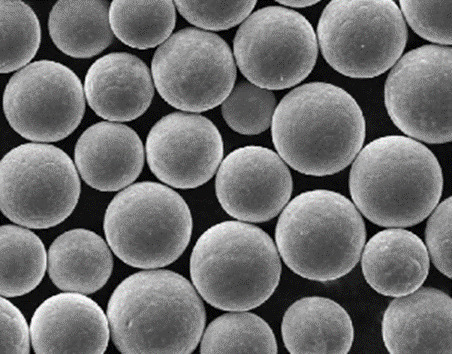
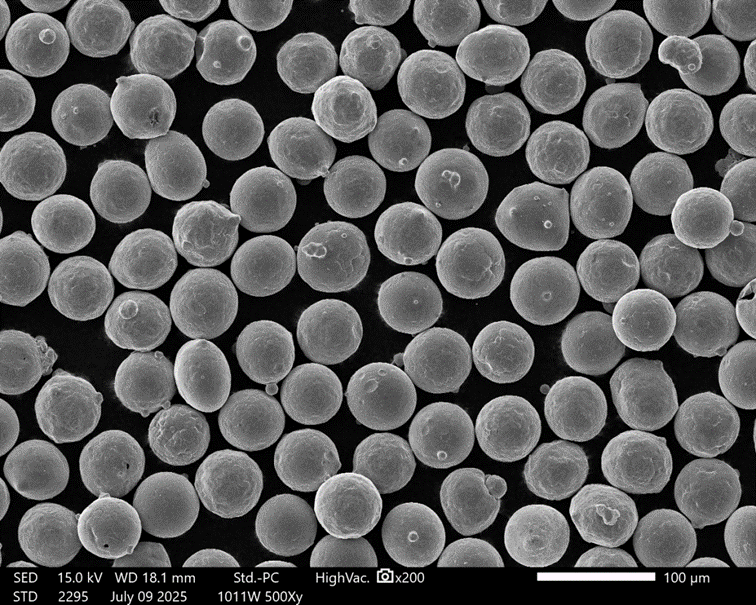
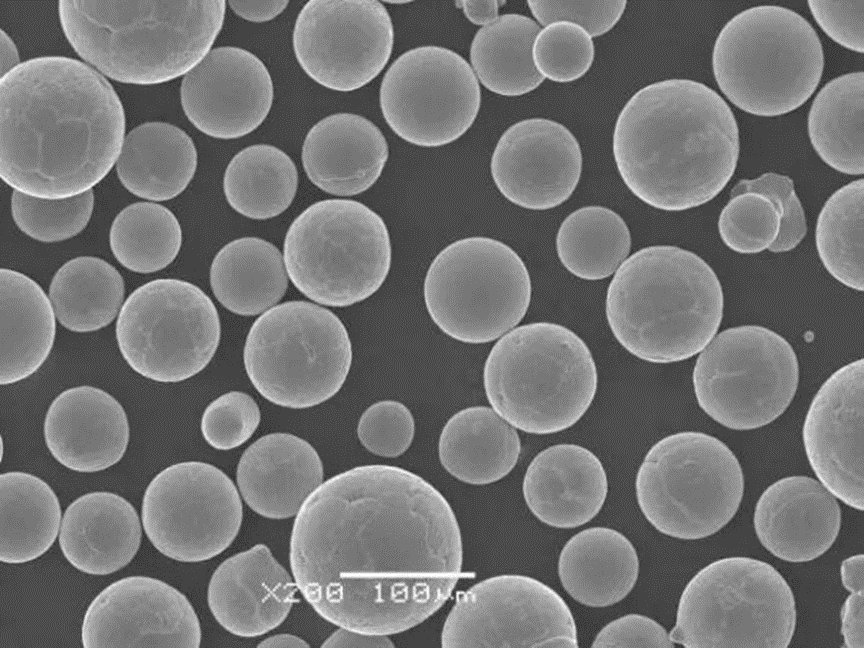
PREP refers to the Plasma Rotating Electrode Process, a route that produces highly spherical metal powder by melting the end of a rotating electrode rod and ejecting droplets by centrifugal force. That route is widely associated with clean, spherical, low-contamination powders, although it often produces a coarser size distribution than fine gas-atomized feedstock. For CM247LC, PREP is especially relevant because the alloy’s print performance is strongly affected by internal cleanliness, satellite level, and powder morphology.
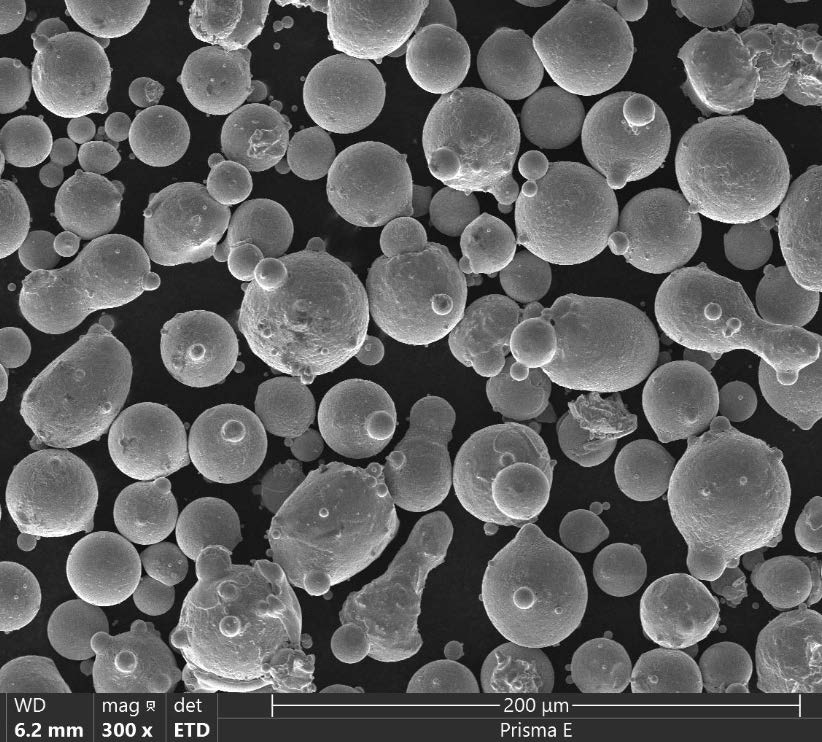
Why CM247LC PREP spherical powder matters in metal AM
The central attraction of CM247LC PREP spherical powder is its ability to bring a proven hot-section superalloy chemistry into powder-based manufacturing routes. Designers evaluating turbine-adjacent AM parts are often trying to capture complex geometry, internal cooling, repair capability, or near-net-shape economics without abandoning the high-temperature pedigree of conventional nickel superalloys. CM247LC sits directly in that discussion because its chemistry was built for severe thermal exposure and high gamma-prime strengthening.
CM247LC PREP spherical powder vs conventional spherical powder
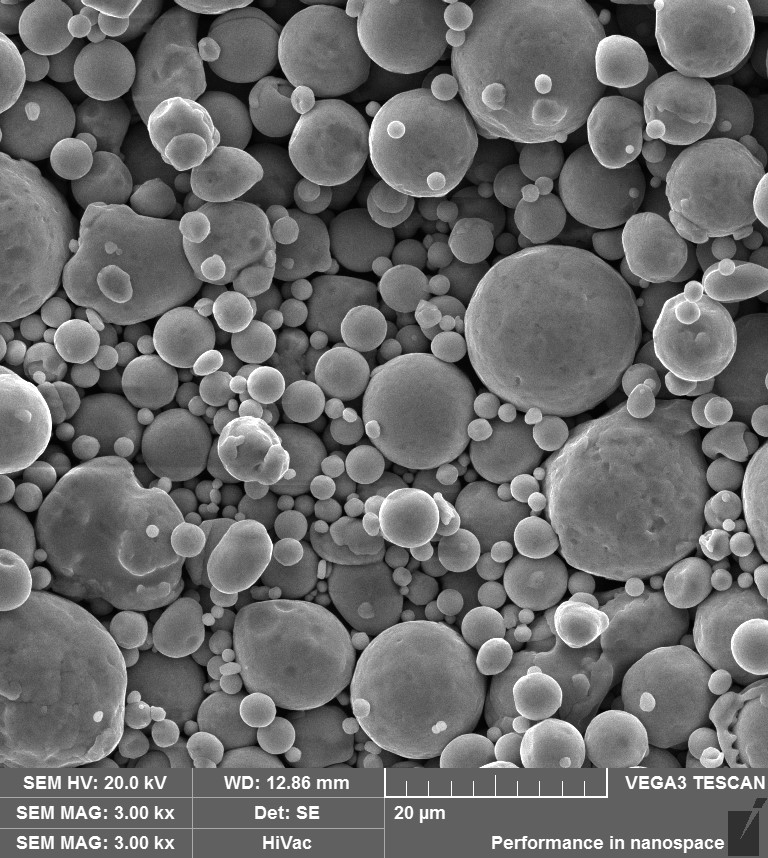
Not every spherical powder behaves the same way in AM. A PREP-made powder and a gas-atomized powder may share nominal chemistry but differ in internal porosity, particle size profile, satellite population, and surface cleanliness. Those differences can influence layer spreading, apparent density, recoating stability, and defect formation during printing.
Core characteristics of CM247LC AM powder
In metallurgical terms, CM247LC is best understood as a gamma-prime-strengthened nickel superalloy with substantial additions of Al, Ti, Ta, W, Co, Cr, and Hf. That chemistry supports excellent elevated-temperature capability, but it also widens the freezing range and increases solidification sensitivity. As a result, the same composition that makes CM247LC valuable in turbine environments is also what makes it relatively difficult in laser-based additive manufacturing.
CM247LC is attractive in AM not because it is easy to print, but because it offers a route to very high-temperature capability when powder quality and process control are good enough.
For readers comparing the grade with other high-temperature feedstocks, the broader nickel superalloy powder portfolio provides useful context on where CM247LC sits within the AM materials landscape.
化学組成
CM247LC is a multicomponent nickel-base superalloy whose performance depends on a carefully balanced chemistry rather than on one dominant strengthening element. Published nominal compositions are generally consistent across technical literature, with nickel as the balance and a high gamma-prime-forming addition set built around Al, Ti, and Ta, plus solid-solution and environmental-resistance contributors such as Co, Cr, W, and Hf.
Typical CM247LC PREP spherical powder composition
| エレメント | Typical wt% | 冶金上の役割 | AMの関連性 |
|---|---|---|---|
| ニー | バランス | Matrix phase; high-temperature stability | Base element for gamma/gamma-prime superalloy structure |
| Cr | 8.0-8.5 | Oxidation and hot corrosion resistance | Supports environmental durability in hot gas paths |
| Co | 9.0-9.5 | Matrix strengthening; phase stability | Influences hot strength and thermal response |
| W | 9.0-10.0 | Strong solid-solution strengthening | Raises high-temperature strength but increases density |
| アル | 5.4-5.8 | Gamma-prime formation | Critical to precipitation strengthening |
| タ | 3.0-3.5 | Gamma-prime strengthening; creep resistance | Improves elevated-temperature performance |
| Hf | 1.2-1.5 | Grain-boundary and carbide effects; castability support | Important for hot-section behavior, but can affect crack behavior |
| ティ | 0.6-0.8 | Gamma-prime contribution | Works with Al and Ta in precipitate strengthening |
| モ | 0.4-0.7 | Solid-solution strengthening | Secondary high-temperature strength contributor |
| C | 0.05-0.09 | Carbide formation | Controlled low-carbon level distinguishes CM247LC from MAR-M247 |
| B | 0.01-0.02 | Grain-boundary strengthening | Trace but important for creep and rupture response |
| Zr | 0.01-0.02 | Grain-boundary modification | Supports elevated-temperature integrity in conventional use |
The chemistry most often cited for CM247LC in AM literature is approximately Cr 8.1, Co 9.2, W 9.5, Al 5.6, Ta 3.2, Hf 1.4, Ti 0.7, Mo 0.5, C 0.070, B 0.015, and Zr 0.015 wt%, with Ni as balance. Some powder lots show small deviations around those targets, which is normal so long as the heat remains within supplier and application limits.
Element-by-element role in CM247LC PREP spherical powder
Aluminum, titanium, and tantalum are the main gamma-prime formers. Together they generate the precipitation-hardening framework that gives CM247LC much of its elevated-temperature strength. Tungsten, cobalt, and molybdenum then strengthen the gamma matrix and help the alloy resist deformation under thermal load.
Chromium is present at a moderate level rather than an extreme one. That reflects the design compromise typical of turbine superalloys: enough Cr for oxidation and corrosion resistance, but not so much that it undermines the balance of hot strength and phase stability. Hafnium, boron, carbon, and zirconium exist in smaller amounts, yet they strongly affect carbides, grain boundaries, and creep behavior.
Impurity control in CM247LC powder
For AM powder, impurities can matter almost as much as nominal composition. One widely cited CM247LC powder analysis reported oxygen near 0.007 wt% and sulfur below 0.001 wt%, illustrating the low contamination levels expected for premium feedstock. In practice, oxygen, sulfur, and silicon are watched closely because they can influence surface oxide formation, flowability, and crack initiation during printing.
物理的および機械的特性
CM247LC is not selected because it is lightweight or inexpensive. It is selected because it retains useful strength deep into the temperature range where many common AM alloys soften rapidly. Reported values vary with product form, test orientation, porosity, and heat treatment, so published data are best treated as typical ranges rather than universal guarantees.
Typical properties of CM247LC PREP spherical powder builds
| プロパティ | 代表値 | 単位 | 試験規格/試験条件 |
|---|---|---|---|
| 密度 | 8.2-8.4 | g/cm³ | Typical nominal alloy density from composition and cast literature |
| ソリダス温度 | 1235-1250 | °C | Typical DSC/literature range |
| 液相線温度 | 1385-1395 | °C | Typical DSC/literature range |
| 極限引張強さ | 850-1100 | MPa | Typical room-temperature AM/HIP or cast heat-treated condition |
| 降伏強度 (0.2%) | 600-900 | MPa | Typical room-temperature AM/HIP or cast heat-treated condition |
| 伸び | 3-10 | % | Highly condition-dependent; room temperature |
| 硬度 | 350-450 | HV | Typical aged or consolidated material range |
| 熱伝導率 | 10-18 | W/m-K | Approximate room-to-intermediate temperature engineering range |
The solidus and liquidus values commonly reported for CM247LC are about 1249 °C and 1391 °C, respectively, with a high gamma-prime fraction around 71.7% at 871 °C in one TMS-reported composition summary. Those numbers help explain both the alloy’s hot strength and its additive manufacturing difficulty: a relatively wide solidification interval increases the chance of hot cracking during rapid thermal cycling.
Room-temperature tensile behavior is strongly process-dependent. One recent additive study reported room-temperature properties around 660 MPa yield strength, 891 MPa ultimate tensile strength, and 7.56% elongation for defect-free material from a non-fusion AM route, while newer L-PBF studies have shown that optimized conditions can push high-temperature tensile performance near or above 1100 MPa tensile strength at elevated temperature in some orientations. This spread is typical of CM247LC because cracking, segregation, and heat treatment history strongly influence results.
Strength, creep, and oxidation behavior
For turbine-adjacent service, the key property is not merely room-temperature strength but retained capability under heat. CM247LC was developed for aero-engine and industrial gas-turbine conditions, where creep resistance and oxidation stability matter as much as tensile data. That design intent is the main reason the alloy remains attractive in advanced AM despite its processing challenges.
Thermal conductivity and density implications
CM247LC has a relatively high density compared with titanium or aluminum AM powders, and its thermal conductivity is modest rather than high. In the build chamber, that means heat dissipation is limited compared with copper-rich systems, while the part still carries significant thermal mass. The result is steep thermal gradients and residual stress, both of which contribute to the alloy’s well-known crack sensitivity in laser powder bed fusion.
Why mechanical data vary so much
A single CM247LC number can be misleading because the alloy is sensitive to process history. Powder origin, PSD, oxygen level, build plate temperature, scan strategy, relative density, HIP, solution treatment, and aging all change the final microstructure. Engineers therefore qualify the material as a powder-process-post-process system, not as a composition alone.
仕様および取り扱いグレード
Commercial CM247LC powder is typically specified by chemistry, particle size distribution, powder morphology, cleanliness, and intended process route. Because there is no single globally dominant AM purchase specification for every CM247LC powder product form, most suppliers use internal grade naming combined with industry-standard powder characterization and additive manufacturing vocabulary. The terminology framework most often referenced in AM documentation is ISO/ASTM 52900 の用語, while feedstock and process qualification are increasingly aligned with the broader ASTM 積層造形規格カタログ.
Typical supply ranges for CM247LC PREP spherical powder
| Supply Grade / Condition | PSDレンジ | 見かけ密度 | タップ密度 | ホールの流れ | Oxygen / Sphericity / Cross-Reference |
|---|---|---|---|---|---|
| CM247LC-P15-45 | 15-45 µm | 4.6-5.1 g/cm³ | 5.0-5.8 g/cm³ | 15-22 s/50 g | O typically ≤0.03 wt%; very high sphericity; fine PBF-LB grade |
| CM247LC-P15-53 | 15-53 µm | 4.7-5.2 g/cm³ | 5.1-5.9 g/cm³ | 14-21 s/50 g | O typically ≤0.03 wt%; common laser powder-bed fraction |
| CM247LC-P45-105 | 45-105 µm | 4.8-5.3 g/cm³ | 5.3-6.0 g/cm³ | 12~18秒/50 g | O typically ≤0.03 wt%; suited to EBM, DED, and cladding |
| CM247LC-P53-150 | 53~150 µm | 4.9-5.4 g/cm³ | 5.4-6.1 g/cm³ | 11-17 s/50 g | O typically ≤0.03 wt%; coarser PREP fraction for larger-particle processes |
| Test / Standards Context | - | ASTM B212 typical | ASTM B527 typical | ASTM B213 typical | Powder characterization often paired with ISO/ASTM 52907 and supplier chemistry specs |
The powder cut chosen for a project depends on the machine architecture. Laser powder bed fusion usually favors the fine 15-45 µm or 15-53 µm window because thin layers need stable recoating and tight melt-pool control. Electron-beam routes, directed energy deposition, laser cladding, and thermal spraying often use coarser fractions where flow consistency and feeding behavior are more important than ultra-thin layers.
Standards and grade cross-reference
CM247LC itself is better known from cast-superalloy literature than from universally harmonized powder procurement standards. As a result, users commonly build specifications around nominal chemistry, powder test methods, and machine-specific validation rather than relying on a single AMS or ASTM composition standard. For background on the alloy’s traditional identity, the ASM Alloy Digest entry for CM 247 LC is often cited in technical discussions.
What buyers usually ask for
A serious buyer will usually request PSD, oxygen, nitrogen, flow, apparent density, tap density, sphericity or satellite analysis, chemistry certificate, and reuse guidance. For CM247LC, it is also prudent to ask whether the powder is intended for laser PBF, electron beam processing, DED, cladding, or PM/HIP, because a premium PREP morphology does not automatically eliminate printability constraints in a crack-prone alloy.
製造工程
CM247LC powder can be made by several routes, but PREP attracts special attention because of its ability to generate highly spherical, low-contamination particles. That matters for superalloys whose AM outcomes are sensitive to inclusions, internal pores, and irregular particle shape. Route selection affects not only powder cost but also morphology, chemistry retention, and the practical process window in downstream AM.
CM247LC spherical powder process comparison
| プロセス | 球形度 | 酸素ピックアップ | PSDコントロール | スループット | 相対的なコスト |
|---|---|---|---|---|---|
| ガスアトマイズ(GA) | 高い | Low to moderate with good inert control | グッド | 高い | ミディアム |
| 真空誘導ガスアトマイズ法(VIGA) | 高い | Lower than standard GA | 良い~非常に良い | 中~高 | ミディアムハイ |
| 電極誘導ガスアトマイズ法(EIGA) | 非常に高い | 非常に低い | 非常に良い | ミディアム | 高い |
| プラズマ回転電極プロセス(PREP) | 素晴らしい | 非常に低い | Often coarser, narrower useful fractions | ミディアム | 高い |
| Plasma Atomization / Related Plasma Routes | 素晴らしい | 非常に低い | 非常に良い | Lower to medium | 高い |
PREP for CM247LC PREP spherical powder
In PREP, a rotating alloy electrode is melted at the tip by plasma, and centrifugal force throws off droplets that solidify into spherical particles. One official PREP equipment description notes that coarse powder fraction is a known limitation of the route, which is consistent with broader literature describing PREP as a premium cleanliness process rather than the lowest-cost path to fine powder production.
For CM247LC, that trade-off can be acceptable. The alloy is often targeted at high-value applications where purity, low satellite content, and smooth flow may justify higher powder cost. PREP is therefore especially interesting for coarser powder-bed fractions, EBM, DED, cladding, HIP canning feedstock, or applications where powder cleanliness outweighs the need for the finest possible cut.
GA, VIGA, and EIGA alternatives
Gas atomization remains the most scalable route for many nickel superalloy powders. It offers flexible PSD control and strong production economics, but gas-atomized powder generally has more satellites and more route-dependent internal porosity risk than PREP or other plasma-based routes. That does not make GA inferior in every case; it simply means the route must be matched to application, machine, and cost target.
VIGA adds vacuum induction melting before atomization, which can improve chemistry control and cleanliness. EIGA goes further by avoiding crucible contact during melting, reducing contamination risk. For advanced nickel alloys, these routes are often considered when the user needs fine spherical powder but still wants lower oxygen pickup and tighter chemistry than conventional atomization can reliably provide.
Processability in additive manufacturing
Even with premium powder, CM247LC remains difficult in L-PBF because its composition promotes hot cracking under rapid thermal cycling. Recent reviews consistently describe cracking as the main obstacle for AM of 247-series alloys, with mitigation strategies including preheating, scan optimization, remelting, composition modification, and tailored heat treatment. In other words, PREP powder quality improves the starting point, but it does not erase the alloy’s underlying metallurgical challenge.
For users screening adjacent materials, both the cobalt alloy powder range そして、その refractory metal powder category offer useful contrasts in temperature capability, density, and print difficulty.
業界別の用途
CM247LC PREP spherical powder is a specialized AM feedstock rather than a general-purpose metal powder. Its most credible applications are those where geometry complexity intersects with high-temperature mechanical demand, especially in turbine-related environments. That focus naturally pushes the alloy toward aerospace, energy, repair, and selected industrial components rather than commodity metal printing.
Aerospace and gas-turbine hardware
The alloy’s historical identity is tied to directionally solidified turbine blades and vanes, so aerospace is the first industry most engineers associate with CM247LC. In AM, the material is relevant to combustor-adjacent structures, turbine development hardware, hot-section demonstrators, repair geometries, and complex parts with internal features that are difficult to cast or machine. Its value proposition lies in temperature capability, not ease of printing.
Industrial gas turbines and energy
Industrial gas turbines operate in thermally severe environments where creep and oxidation resistance are essential. CM247LC powder can therefore be considered for prototype vanes, nozzle features, repair applications, shrouds, and other hot-zone components where advanced geometry or restoration strategy justifies an AM route. Qualification remains demanding because defect tolerance is low in creep-loaded service.
Repair, remanufacture, and hybrid production
One underappreciated use case for CM247LC powder is repair. Directed energy deposition, laser repair welding, and hybrid restoration workflows can benefit from a composition already familiar to turbine maintenance ecosystems. In these situations, the powder must match not only AM process needs but also substrate compatibility, post-repair heat treatment, and service exposure.
Automotive, motorsport, and advanced tooling
CM247LC is rarely a volume automotive material, but it can be relevant in motorsport turbocharger-adjacent hardware, thermal test coupons, burner parts, and small hot-flow components. It may also appear in tooling or furnace fixtures where oxidation resistance and retained strength matter more than cost or low density. These are niche but technically credible uses.
Why medical and oil-and-gas use is limited
Medical applications are uncommon because CM247LC is a turbine superalloy, not a mainstream implant alloy. Oil-and-gas use is possible in hot corrosive equipment, but many projects favor alloys with easier weldability or more established corrosion qualification. As a result, CM247LC remains concentrated in thermally demanding applications rather than broadly distributed across all AM sectors.
A wider overview of downstream sectors appears in the supplier’s metal AM application fields, where high-temperature powder use sits alongside cladding, PM, HIP, and other process routes.
代替材料との比較
Material selection for hot-section AM almost always involves trade-offs. CM247LC competes not only against other nickel superalloys, but also against cobalt systems and, in some designs, lower-density titanium alloys that sacrifice temperature capability for mass reduction. The best comparison is therefore application-specific rather than purely compositional.
CM247LC PREP spherical powder vs alternative AM powders
| 素材 | 密度 (g/cm³) | 一般的な筋力レベル | Relative Powder Cost | 印刷適性 | Corrosion / Oxidation and Best-Fit Use |
|---|---|---|---|---|---|
| CM247LC PREP spherical powder | 8.2-8.4 | Very high at elevated temperature | 高い | Challenging in L-PBF; cleaner in premium powder form | Excellent hot strength, creep resistance, turbine-focused use |
| インコネル718 | 8.1-8.2 | 高い | ミディアムハイ | Much better established in AM | Strong all-round superalloy for aerospace and energy |
| IN738LC | 8.0-8.2 | Very high at high temperature | 高い | Challenging, similar crack concerns | Hot-section alloy with strong oxidation resistance |
| CoCrMo | 8.3-8.6 | 中~高 | 高い | グッド | Better wear/corrosion profile than extreme hot-section creep use |
| Ti-6Al-4V | 4.4-4.5 | 高い比強度 | 高い | 素晴らしい | Best where weight dominates and temperatures are much lower |
Against Inconel 718, CM247LC generally offers higher gamma-prime content and stronger hot-section pedigree, but at the cost of far harder AM processing. Against IN738LC, it sits in a similar high-temperature design space, with both alloys known for elevated-temperature capability and nontrivial crack risk in powder-bed fusion. Compared with cobalt alloys, CM247LC is more creep-oriented, while cobalt systems are often selected for wear, corrosion, or biomedical familiarity rather than maximum turbine-style precipitation strengthening.
The practical decision is usually less about which alloy has the “best” data sheet and more about which one can be qualified with acceptable defect population, post-processing burden, and service-life confidence. For many production programs, Inconel 718 still wins because its AM process maturity is much higher. CM247LC becomes attractive when service temperature or creep demand justifies the added manufacturing difficulty.
当社
Shanghai Truer Technology Co., Ltd., the operator of am-printing.com, was established in 2009 and created its additive manufacturing business in 2019. The company works across metal AM powder making equipment and powder supply, with capabilities related to Selective Electron Beam Melting equipment, Plasma Rotating Electrode Process equipment, and gas atomization. Its published powder portfolio includes TiNi, TiTa, TiAl, TiNbZr, CoCrMo, and spherical nickel-, cobalt-, titanium-, copper-, aluminum-, and stainless-steel-based powders for SLM, SEBM, DED, laser cladding, powder metallurgy, MIM, HIP, cold or hot spraying, welding, and coating, serving industries such as medical, aerospace, nuclear power, 3C electronics, hand tools, and remote-control vehicles. Additional company background appears on the company information page.
よくあるご質問
Q1. Is CM247LC PREP spherical powder good for laser powder bed fusion?
It can be used in laser powder bed fusion, but it is not considered an easy alloy. CM247LC has a well-documented tendency toward cracking because of its high gamma-prime chemistry and wide solidification behavior, so successful printing usually depends on careful parameter optimization, preheating strategy, and post-processing rather than powder choice alone.
Q2. Why use PREP instead of gas atomization for CM247LC powder?
PREP is often chosen when high sphericity, low contamination, and clean particle morphology are top priorities. For CM247LC, those attributes can improve powder handling and feedstock consistency, although PREP commonly yields coarser fractions and higher cost than gas atomization.
Q3. What particle size is typical for CM247LC PREP spherical powder?
Typical commercial cuts include 15-45 µm or 15-53 µm for laser powder-bed systems and 45-105 µm or 53-150 µm for coarser-feed processes such as EBM, DED, and cladding. One early SLM study on CM247LC specifically used argon gas-atomized powder in the +15/-53 µm fraction, which remains a representative fine-powder benchmark for this alloy family.
Q4. Is CM247LC PREP spherical powder better than Inconel 718?
Not universally. CM247LC is generally more attractive when elevated-temperature strength and creep resistance are more important than printability, while Inconel 718 is far more mature and forgiving in production AM. The right choice depends on service temperature, qualification budget, allowable defect level, and part geometry.
Q5. What are the main risks when buying CM247LC PREP spherical powder?
The main risks are not only chemistry deviation but also high oxygen, poor morphology, excessive coarse fraction, lot-to-lot inconsistency, and a mismatch between powder size distribution and the intended machine. Buyers should also confirm whether the supplier has data relevant to the exact downstream route, because a powder suitable for cladding or HIP feedstock may not be ideal for fine-layer laser PBF.
Q6. Which industries rely most on CM247LC PREP spherical powder?
Aerospace and industrial gas turbines are the most credible end-use sectors because the alloy was developed for severe hot-section service and remains valued for creep strength and oxidation stability. Additional use appears in repair, remanufacture, and specialized energy or motorsport programs, but it is still a niche powder compared with more broadly adopted AM superalloys.