簡単な回答
ヘインズ 188 コバルト合金粉末 これは、非常に高い温度下でも強度と耐酸化性を維持しなければならない積層造形部品向けに設計された、コバルト・ニッケル・クロム・タングステン系超合金の原料です。通常、低コストや加工のしやすさよりも熱的安定性が重視される燃焼器部品、移行ダクト、ライナー、その他の高温部向け積層造形部品に採用されます。 多くの鉄系合金や析出硬化型合金と比較して、Haynes 188は、適切なプロセス認定を経た後、溶接性、熱疲労耐性、および高温耐久性を強力に兼ね備えています。.
ヘインズ188コバルト合金粉末とは何か
ヘインズ188コバルト合金粉末は、過酷な高温環境下で使用される、定評のあるコバルト基耐熱合金「合金188」の粉末形態です。 超合金の分野において、この合金は、主に耐酸化性、熱安定性、および高温ガス流への長期曝露下での強度保持を目的として設計されたコバルト基材料のクラスに属しています。 この合金は、UNS 指定番号 R30188 でよく識別され、その高温特性の基盤となる Co-Ni-Cr-W の化学組成で広く知られています。.
析出強化に大きく依存する時効硬化型ニッケル超合金とは異なり、ヘインズ188はむしろ次のように表現するのが適切である。 コバルト基超合金 主に固溶効果と炭化物の寄与によって強度が向上しています。そのため、積層造形において独特な加工特性を示します。一般的に、周期的な熱、局所的な高温箇所、および酸化性雰囲気にさらされる部品において、加工性と使用時の信頼性を兼ね備えている点が高く評価されています。.
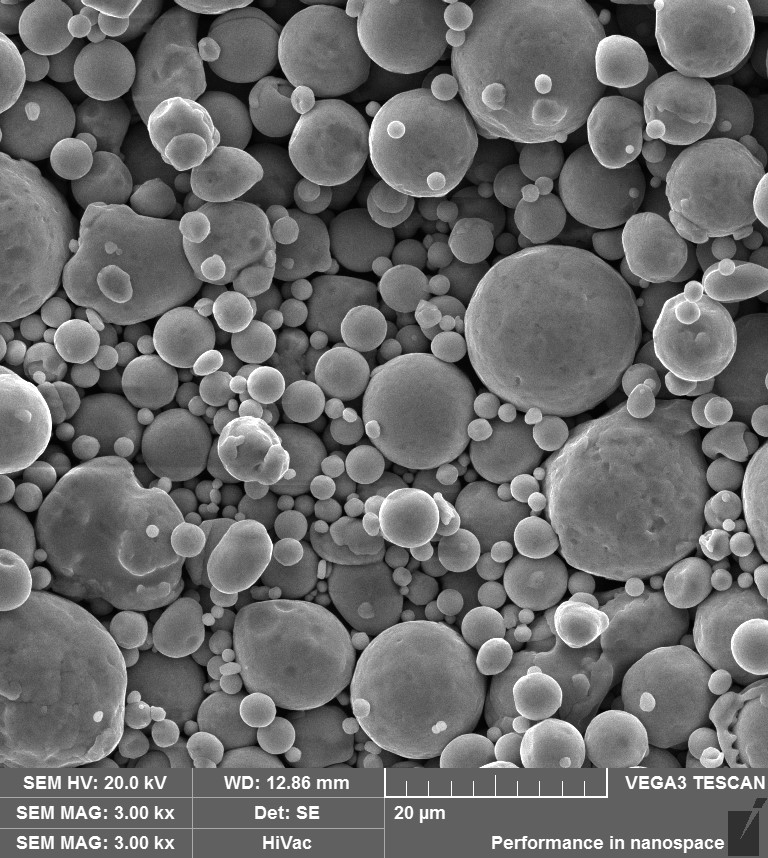
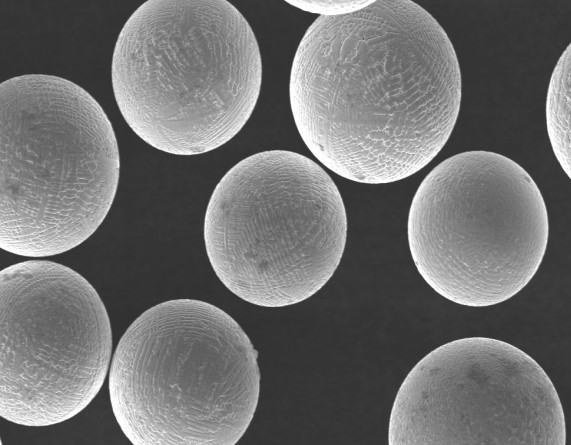
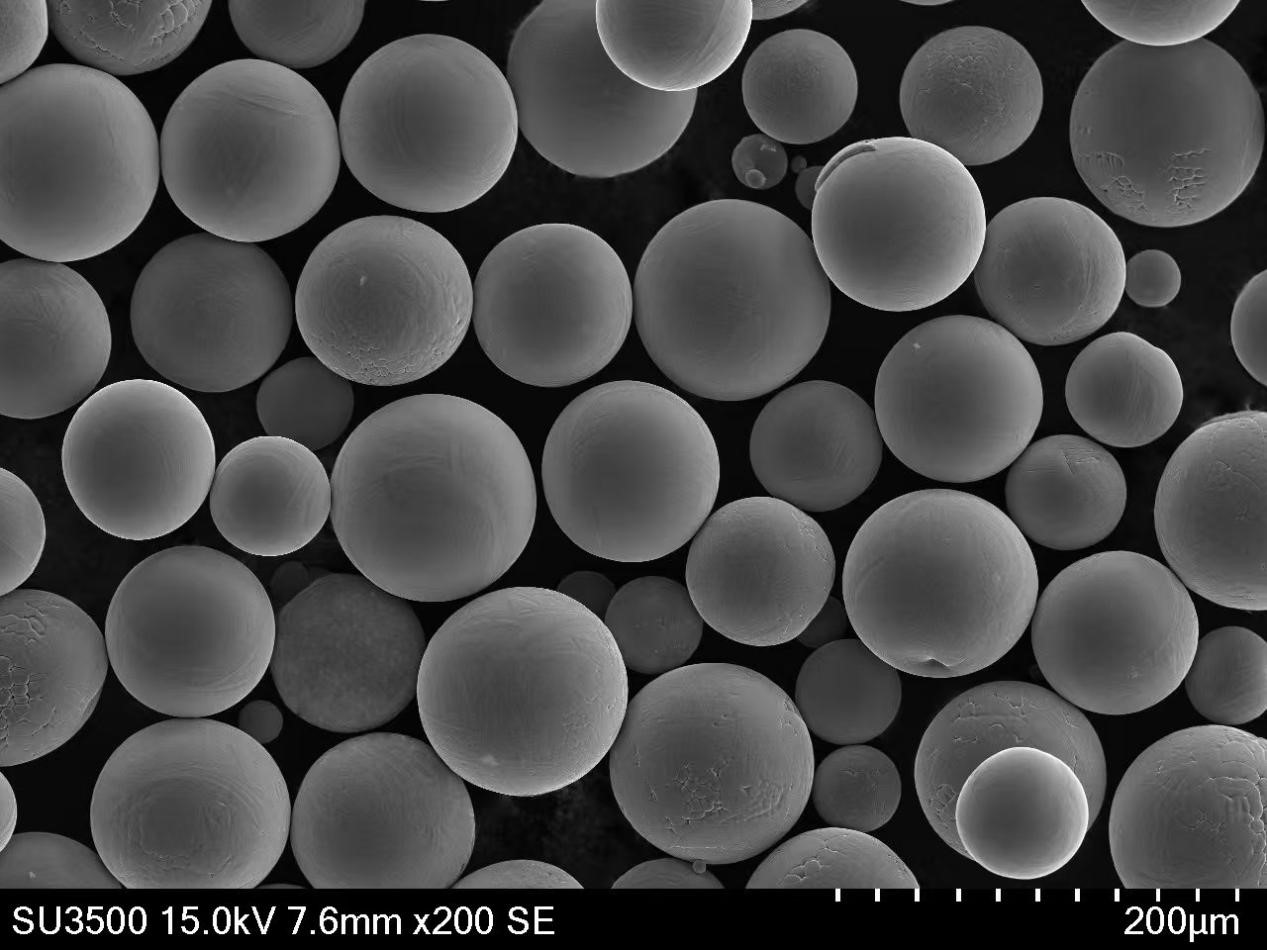
粉末状のこの合金は、通常、レーザー粉末床溶融法、指向性エネルギー堆積法、および関連する金属積層造形プロセス向けの、球形度の高い原料として供給されます。で用いられている用語体系によれば、 ISO/ASTM 52900 積層造形用語集, 、これは、ニアネットシェイプ部品を層ごとに積層して成形するために使用される金属粉末の一種です。これは重要な点です。なぜなら、名目上の化学組成だけでなく、原料の品質が、層の広がり、エネルギー吸収、気孔率、および再現性に直接影響を与えるからです。.
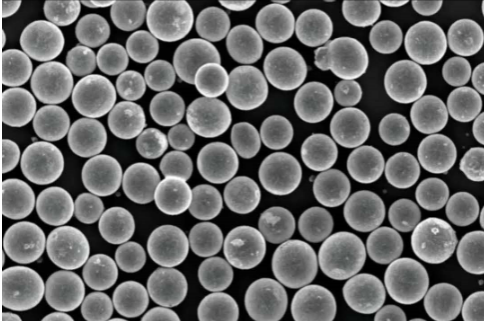
ヘインズ 188 スーパーアロイ・ファミリーに属するコバルト合金粉末
ヘインズ188は、CoCrMoなどの汎用コバルト・クロム系生体用合金や、インコネル718やヘインズ230などのニッケル超合金とは異なるニッチを占めています。その主な設計理念は、生体適合性や室温での最大強度ではありません。 むしろ、この合金は、部品が持続的な熱や酸化に耐えつつ、製造、溶接、および後処理にも耐えなければならない場合に使用される。.
エンジニアがこの耐熱性AM用粉末を使う理由
この合金がAM(積層造形)で採用される主な理由は、高温領域のハードウェアにおける設計の自由度にある。燃焼器構造体には依然として従来の板金加工や溶接が広く用いられているが、設計者が一体型の冷却機能、形状の統合、開発サイクルの短縮、あるいは「購入から飛行まで」の比率の低減を必要とする場合、積層造形が魅力的な選択肢となる。こうした状況において、この合金が本来備えている 耐高温酸化性 粉末を用いた製造技術が持つ幾何学的利点と組み合わせることができます。.
他の耐熱合金との違い
ヘインズ188は、ハステロイX、ヘインズ230、およびニッケル基のタービン周辺用合金とよく比較されます。多くの代替材料と比較して、酸化性の燃焼環境に対する優れた耐性と有用な熱疲労特性を備えていますが、鉄基の材料に比べて通常は密度が高く、コストも高くなります。 関連する高温システムの選定を行うエンジニアは、しばしばこれをより広範な合金群と比較検討する。 コバルト超合金の粉末グレード 最終的な仕様を確定する前に。.
実際のAM選定においては、高温での耐酸化性が、密度の低下やコバルトコストの増加といったデメリットを上回る場合、通常はヘインズ188が選ばれる。.
化学組成
ヘインズ188コバルト合金粉末の化学組成は、コバルト、ニッケル、クロム、タングステンを主成分とし、炭素とランタンを少量添加したものです。 この合金の設計コンセプトは単純明快でありながら極めて効果的です。クロムは耐酸化性を高め、タングステンは固溶強化を促進し、ニッケルは相の安定性と高温延性を向上させ、ランタンは高温暴露時の酸化皮膜の付着性を高めます。AM用原料においては、造形の一貫性と使用時の性能を維持するために、これらの元素を酸素やその他の残留物とともに適切に管理する必要があります。.
| エレメント | 代表的な内容(wt.%) | 標準範囲/限界値 | 冶金上の役割 |
|---|---|---|---|
| コバルト | バランス | バランス | 基材マトリックス。高温強度、相安定性、および耐熱性を付与する |
| クロム(Cr) | 22.0 | 20.0–24.0 | 保護用の酸化皮膜を形成し、耐酸化性を向上させる |
| ニッケル(Ni) | 22.0 | 20.0–24.0 | 微細組織を安定させ、延性を高め、溶接性を向上させる |
| タングステン(W) | 14.0 | 13.0–16.0 | 主要な固溶強化剤。高温下での強度を向上させる |
| 鉄(Fe) | 1.5 | 最大3.0 | 残留不純物/基質不純物の管理。一般的に、過剰なレベルは望ましくない。 |
| マンガン (Mn) | 0.8 | 最大1.25 | 脱酸素を助け、加工上のわずかな利点をもたらす |
| ケイ素 (Si) | 0.20 | 最大0.40 | 脱酸剤。含有量が多すぎると、靭性や熱間加工性に影響を及ぼす可能性がある |
| カーボン(C) | 0.10 | 0.05-0.15 | 超硬合金の形成を促進し、クリープおよび摩耗に対する耐性を高める |
| ランタン (La) | 0.05 | 0.02–0.12 | 酸化スケールの付着性と高温酸化挙動を改善する |
| リン+硫黄(P/S) | 残留量が少ない | 各限定 | 許容範囲内の不純物。過剰になると延性や溶接品質が低下する恐れがある |
ヘインズ188コバルト合金粉末の元素組成
この合金の設計上の最大の特徴は、Co-Cr-Ni-Wを骨格とする構成です。クロムは高温の酸化性ガス流の中で表面を保護し、一方、タングステンは従来の析出硬化サイクルを必要とせずに、主要な強化効果をもたらします。このため、ヘインズ188は広く 固溶強化 一部のニッケル超合金に見られるガンマプライムが支配的な挙動とは異なり、.
炭素、炭化物、および熱的安定性
炭素は、少量ではあるが重要なレベルで含まれている。これは、特に使用後の暴露や制御された熱処理の後において、高温強度と微細組織の安定性を支える炭化物の形成に寄与する。しかし、AM部品においては、炭化物の分布は、造形直後の熱履歴と、その後の応力除去処理や溶体化処理の工程の両方に依存する。.
残留物と粉末冶金における管理
粉末を使用する場合、化学組成は適格性評価の一部に過ぎません。酸素、窒素、吸湿、および不純物含有量は、粉末の流動性、レーザーとの相互作用、および欠陥の発生に影響を与える可能性があります。そのため、ヘインズ188原料の購入者は通常、同一の仕様書において合金化学組成と粉末特性の両方を要求し、多くの場合、以下の情報に基づいた内部プロセスバリデーションも併せて求めます。 NISTの積層造形用材料に関する研究.
物理的および機械的特性
Haynes 188 cobalt alloy powder is primarily selected for what it does at temperature, not because it delivers the lowest density or the highest room-temperature tensile strength. As with most AM superalloys, reported properties vary with machine platform, scan strategy, orientation, heat treatment, hot isostatic pressing, and final density. The values below represent typical engineering ranges associated with Haynes 188 alloy and should be treated as indicative starting points for design rather than universally guaranteed AM allowables.
| プロパティ | 代表値 | 単位 | 試験規格/試験条件 |
|---|---|---|---|
| 密度 | 8.98–9.14 | g/cm³ | 室温における代表的な合金の値 |
| Solidus | around 1315 | °C | 代表的な合金の範囲 |
| Liquidus | around 1410 | °C | 代表的な合金の範囲 |
| 極限引張強さ | 900–1050 | MPa | Typical room-temperature value, condition dependent |
| 降伏強度 (0.2%) | 380–520 | MPa | Typical room-temperature value, condition dependent |
| 伸び | 35–55 | % | Typical room-temperature ductility |
| 硬度 | 200–280 | HB | Depends on thermal condition and product form |
| ヤング率 | around 220–235 | GPa | 室温における代表的な値 |
| 熱伝導率 | around 9–12 | W/m-K | Typical at room temperature |
| Useful Service Temperature | up to about 1095 | °C | Oxidation-resistant service environment, design dependent |
Room-Temperature Strength Versus Elevated-Temperature Capability
At room temperature, Haynes 188 is not always the strongest option when compared with heavily age-hardened nickel alloys. Its real advantage emerges as temperature rises and oxidizing exposure becomes more severe. The alloy retains usable structural performance in conditions where lower-grade steels soften rapidly and where oxidation behavior becomes a limiting factor.
Thermal Fatigue and Hot Gas Exposure
For combustor-style service, resistance to repeated heat-up and cool-down cycles is often as important as static tensile strength. Haynes 188 performs well in that context because its microstructure and oxide behavior support repeated thermal cycling without the same level of scale instability seen in less specialized alloys. This is one reason designers use it for thin-wall hot gas path structures and fabricated engine hardware.
Conductivity, Density, and Design Trade-Offs
Haynes 188 is denser than titanium and aluminum alloys and usually heavier than many nickel alloys as well. That limits its attractiveness in parts driven primarily by weight reduction. But where thermal durability outranks density, the alloy’s combination of oxidation resistance, formability, and high-temperature capability remains compelling for hot-section AM parts.
仕様および取り扱いグレード
In commercial supply, Haynes 188 cobalt alloy powder is defined by chemistry, particle size distribution, morphology, flow behavior, apparent density, tap density, and controlled residual gases. AM users typically match the powder cut to the intended process, with finer fractions for powder bed systems and coarser fractions for blown-powder deposition or repair. Because superalloy qualification is application-specific, purchase specifications usually combine nominal alloy identity with process-facing powder metrics and lot traceability requirements.
| 学年/PSDクラス | 代表的な粒子径分布 | 見かけ密度 | タップ密度 | ホールの流れ | 酸素含有量 | 真球度/形態 | 代表的な規格の相互参照 |
|---|---|---|---|---|---|---|---|
| 上質なLPBFグレード | 15-45 µm | 4.7~5.4 g/cm³ | 5.1~5.9 g/cm³ | 14~22秒/50 g | 通常、0.10 wt.%以下 | Highly spherical, low-satellite powder preferred | Alloy chemistry aligned to UNS R30188 / Haynes 188 procurement practice |
| 標準LPBFグレード | 15–53 µm | 4.8~5.5 g/cm³ | 5.2~6.0 g/cm³ | 14~21秒/50 g | 通常、0.10 wt.%以下 | 球状ガスアトマイズ粉末 | Used for many laser powder bed fusion parameter sets |
| Medium DED Grade | 45-105 µm | 4.9~5.6 g/cm³ | 5.4–6.2 g/cm³ | 13~20秒/50 g | 通常、0.12 wt.%以下 | 球形からほぼ球形 | Sized for blown-powder DED and repair |
| 粗目クラッディンググレード | 53-150 µm | 5.0~5.7 g/cm³ | 5.5–6.3 g/cm³ | 13~19秒/50 g | 通常、0.12 wt.%以下 | Spherical, broader PSD | Used in laser cladding and high-deposition applications |
| 相互参照行 | プロセス固有の | プロセス固有の | プロセス固有の | プロセス固有の | 購入仕様書による | 噴霧法による | Chemistry often specified to UNS R30188; powder control may reference internal QA plus methods such as ASTM powder characterization resources and ISO test practice |
Particle Size Distribution for Haynes 188 AM Powder
Powder bed fusion generally favors narrow, fine cuts because recoating uniformity and melt-pool stability depend on predictable layer packing. Directed energy deposition and cladding use larger particle bands that feed consistently through nozzles and tolerate higher deposition rates. The same alloy can therefore exist in several commercial forms, each optimized for a distinct additive workflow.
Standards and Cross-Reference Practice
There is no single universal AM material specification that covers every Haynes 188 powder supply situation across every machine family. In practice, buyers use UNS alloy identity, producer chemistry certificates, PSD and morphology targets, and internal print qualification plans. Flow, density, and sieve methods are often selected from broader powder standards, while AM vocabulary and process definitions remain aligned with international terminology.
Available Grades and Neighboring Superalloys
A supplier handling cobalt superalloys may offer Haynes 188 alongside CoCrMo and other heat-resistant cobalt systems, while also stocking nickel-based alternatives for hotter or more creep-driven applications. Buyers who need to compare cobalt and nickel solutions in one workflow often review a broader nickel superalloy powder portfolio before finalizing the material route.
製造工程
The manufacturing route has an outsized effect on Haynes 188 powder quality because high-temperature superalloys are sensitive to contamination, morphology, and size consistency. Most industrial lots are made by inert gas atomization or vacuum-controlled atomization methods, with PREP and EIGA used where very clean, highly spherical particles are needed. After atomization, powders are typically screened, classified, tested, and packed under controlled conditions to reduce contamination risk.
| プロセス | 粉末の形状/真球度 | 酸素ピックアップ | PSDコントロール | スループット | 相対的なコスト | Typical Haynes 188 Use Case |
|---|---|---|---|---|---|---|
| ガスアトマイズ(GA) | 高い。衛星がいくつか見える可能性がある | 低~中程度 | グッド | 高い | 中程度 | Main route for commercial LPBF, DED, and cladding grades |
| 真空誘導ガスアトマイズ法(VIGA) | Very high and generally cleaner | 低い | 非常に良い | 中~高 | 中~高 | Premium AM feedstock requiring strong lot consistency |
| プラズマ回転電極プロセス(PREP) | Excellent, very smooth particles | 非常に低い | Moderate after screening | ミディアム | 高い | Specialty spherical powder for demanding flowability needs |
| 電極誘導ガスアトマイズ法(EIGA) | 非常に高い | 非常に低い | 良い~非常に良い | ミディアム | 高い | Low-contamination production for critical superalloy batches |
| 水の霧化 | 不規則~半不規則 | 酸化リスクの高まり | 幅広い | 高い | 低い | Generally unsuitable for LPBF-grade Haynes 188 |
Gas Atomization for Spherical Powder Production
Gas atomization is the workhorse process for Haynes 188 AM feedstock because it balances cost, throughput, and acceptable morphology. Under inert gas, the molten alloy is broken into droplets that solidify into mostly spherical particles, then classified into application-specific size ranges. For many industrial users, this route provides the right combination of performance and scalability.
PREP and Vacuum Routes for High-Quality Haynes 188 Powder
PREP and vacuum-controlled atomization routes become more relevant when cleanliness, satellite reduction, or especially consistent shape is required. These processes can improve flowability and reduce contamination risk, though they usually come at higher cost and sometimes lower throughput. Producers with experience in both powder equipment and finished feedstock, including organizations described in the 会社概要ページ, often evaluate these trade-offs at the process-development stage rather than after defects appear in builds.
Post-Atomization Conditioning
Screening, sieving, blending, and controlled packaging are not secondary steps; they are part of making AM-grade powder usable. A well-atomized lot can still perform poorly if the fines fraction is uncontrolled, if satellites are excessive, or if moisture is absorbed during storage. This is especially important for high-value superalloys where build failures carry a significant economic penalty.
Why Morphology Affects Printability
A smoother, more spherical particle population generally spreads more evenly and improves powder bed density. That can reduce local lack-of-fusion risk and help stabilize the melt pool over thin-wall geometries. For designers comparing deposition routes and part classes, a broader survey of 積層造形技術の応用分野 often shows how strongly powder morphology influences process choice.
業界別の用途
Haynes 188 cobalt alloy powder is a specialist material, not a universal one. Its best applications are concentrated in industries where sustained heat, oxidation, and thermal cycling define the operating envelope. In those settings, additive manufacturing can unlock part geometries that improve flow control, weight, cooling, or assembly simplification without changing the underlying hot-section alloy family.
Aerospace Combustor and Engine Components
Aerospace is the clearest fit for Haynes 188 in additive manufacturing. Typical targets include combustor liners, transition pieces, flame holders, nozzle-adjacent hardware, and thermal shields that see oxidizing gas streams and repeated temperature cycling. The alloy’s long-standing use in fabricated hot-section parts gives engineers a familiar metallurgical baseline when moving to AM qualification.
Gas Turbine and Energy Hardware
Industrial gas turbines and stationary energy systems also use materials with strong oxidation resistance at temperature. Haynes 188 can be relevant for combustor subassemblies, hot ducting, burner components, and repair structures where local geometry is difficult to produce conventionally. AM is especially useful when low-volume replacement parts or iterative redesigns are needed.
Repair, DED, and Cladding Workflows
Not every use case involves building a complete net-shape component. Coarser Haynes 188 powder can support DED repair or cladding operations on high-value hardware that would be expensive to scrap. In such cases, alloy compatibility, dilution control, and post-repair thermal treatment become as important as the powder itself.
Automotive and Industrial Thermal Systems
Haynes 188 is less common in mainstream automotive manufacturing because its cobalt content and superalloy price push it beyond most commercial vehicle cost targets. However, motorsport, prototype exhaust development, and niche thermal hardware may justify it where very high exhaust temperatures or repeated thermal shock are involved. Similar logic applies to specialty industrial furnace hardware.
Medical and General Engineering Limits
This alloy is not usually chosen for implant applications or for general structural parts at ambient temperature. Medical AM more often favors cobalt-chromium-molybdenum or titanium grades, while ordinary industrial brackets and housings can often be served by lower-cost steels or stainless powders. When oxidation resistance is not the primary requirement, Haynes 188 is often more alloy than the application truly needs.
代替材料との比較
Material selection for Haynes 188 usually happens within a narrow band of high-temperature candidates. Engineers compare it with nickel superalloys, other cobalt systems, and oxidation-resistant fabricated alloys depending on the target temperature, dwell time, atmosphere, and cost ceiling. The most important comparison points are oxidation resistance, elevated-temperature strength, density, weldability, and process maturity in AM.
| 素材 | 密度 (g/cm³) | 高温強度 | 耐酸化性 | 相対的なコスト | AMの印刷適性 | 代表的な最適な活用事例 |
|---|---|---|---|---|---|---|
| ヘインズ 188 コバルト合金粉末 | 8.98–9.14 | 高い | 素晴らしい | 高い | 適切なパラメータが指定されている場合は問題ありません | Combustor parts, hot ducts, thermal shields |
| ハステロイXパウダー | around 8.2–8.3 | 高い | 非常に良い | 高い | 非常に良い | Combustors, transition hardware, furnace parts |
| インコネル718粉末 | around 8.19 | Very high to moderate at elevated heat | グッド | 中~高 | 素晴らしい | Structural aerospace parts, turbines, fasteners |
| ヘインズ230パウダー | around 8.97 | 高い~非常に高い | 素晴らしい | 高い | グッド | Advanced hot-section hardware and furnace components |
| CoCrMo粉末 | around 8.3–8.5 | Moderate for extreme heat service | グッド | 中~高 | 非常に良い | Medical, wear parts, corrosion and wear applications |
Haynes 188 Versus Hastelloy X
Hastelloy X is one of the closest practical alternatives because it also targets combustor and furnace environments. It is often considered easier to source across AM ecosystems and can offer strong fabrication behavior. Haynes 188 tends to stand out when oxidation performance and cobalt-alloy thermal fatigue behavior are the deciding factors.
Haynes 188 Versus Inconel 718
Inconel 718 is more common in general metal AM because its printability and qualification depth are strong across the industry. But it was not designed primarily for thin oxidizing combustor environments. When the application is more structural than combustor-centric, 718 may be preferred; when hot gas oxidation dominates, Haynes 188 can be the more appropriate choice.
Haynes 188 Versus CoCrMo and Other Cobalt Alloys
CoCrMo is widely known in biomedical and wear applications, not as a direct replacement for ultra-hot combustor hardware. Haynes 188 serves a higher-temperature, more oxidation-driven role. Users comparing the two should focus less on both being cobalt-based and more on the fact that they were engineered for fundamentally different service environments.
当社
Shanghai Truer Technology Co., Ltd., operating am-printing.com, was established in 2009 and created its additive manufacturing business in 2019. According to the company’s published profile, its AM activities combine powder-making equipment and services with metal powder supply, including SEBM equipment, PREP powder-making equipment, GA-related capabilities, and spherical powders across cobalt-, nickel-, titanium-, copper-, aluminum-, and stainless steel systems, as well as alloys such as TiNi, TiTa, TiAl, TiNbZr, and CoCrMo. The stated process scope includes SLM, SEBM, DED, laser cladding, powder metallurgy, MIM, HIP, cold and hot spraying, welding, and coating for industries including medical, aerospace, nuclear power, 3C electronics, hand tools, and remote control car components.
よくあるご質問
Q1. Is Haynes 188 cobalt alloy powder good for laser powder bed fusion?
Yes, Haynes 188 cobalt alloy powder can be processed by laser powder bed fusion when the powder morphology, PSD, oxygen level, and machine parameters are properly controlled. The alloy is most attractive in LPBF when the part requires thin walls, integrated features, or geometric consolidation for high-temperature service.
Q2. What is the main advantage of Haynes 188 cobalt alloy powder over Inconel 718?
The main advantage is its stronger fit for oxidizing hot-section environments and thermal cycling rather than maximum room-temperature or intermediate-temperature structural strength. Inconel 718 is often the broader AM workhorse, but Haynes 188 is better aligned with combustor-style heat exposure.
Q3. Which particle sizes are typical for Haynes 188 cobalt alloy powder?
Fine powder cuts such as 15–45 µm or 15–53 µm are common for powder bed fusion, while 45–105 µm and 53–150 µm are more typical for DED and cladding. The correct range depends on layer thickness, nozzle design, energy density, and the deposition process being qualified.
Q4. Does Haynes 188 cobalt alloy powder need heat treatment after printing?
In most critical applications, yes. Stress relief is commonly used after building, and additional thermal processing may be applied to reduce residual stress, homogenize the microstructure, and support the targeted combination of ductility and elevated-temperature performance.
Q5. Is Haynes 188 cobalt alloy powder corrosion resistant?
It has very good oxidation resistance at high temperature, which is one of its defining strengths. That does not mean it is the best answer to every wet corrosion problem, so service environment, temperature, gas chemistry, and exposure mode still need to be evaluated separately.
Q6. Which industries rely most on Haynes 188 cobalt alloy powder?
Aerospace and gas turbine sectors are the strongest users because they need materials that can withstand high heat, oxidizing gases, and thermal cycling in complex parts. Repair operations, specialty energy hardware, and niche motorsport thermal systems also use the alloy when geometry and temperature demands justify a cobalt superalloy route.